Running a Puppy With a Finished Dog: Does This Pairing Help?
· 5 min read · HuntWithDog
Assess both dogs, separate company from hunting skill, and decide whether a shared outing, separate activity or professional help is the useful next step.
On this page
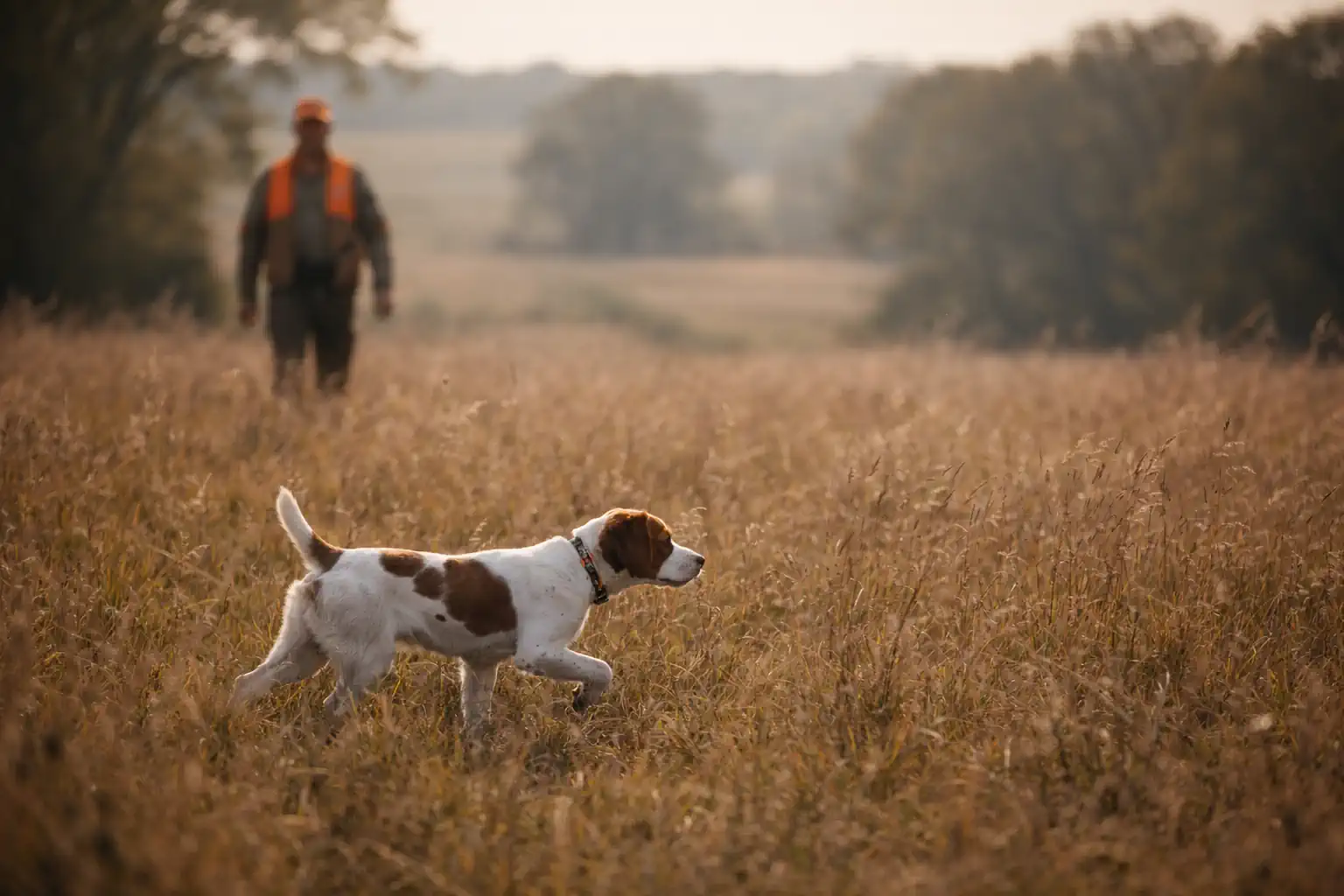
An experienced dog can be company, but its presence does not establish that a puppy is learning to hunt. Decide whether the two dogs are comfortable together, whether you can manage each of them, and what the puppy actually does. Seeing the puppy move when the adult moves is an observation; it does not establish independent hunting skill.
Start with the dogs you have, rather than an ideal mentor story. An adult that finds birds well may want space from a puppy. A puppy that enjoys its company may still need separate help with familiar cues. Neither dog owes the other a lesson.
Separate three different questions
| Question | Useful evidence | What it cannot establish |
|---|---|---|
| Are these dogs comfortable together? | Their behavior during supervised, manageable interactions, including opportunities to move apart | That they will be comfortable in every place or activity |
| What can the puppy do? | The puppy's own observed actions, with the setting, cues and help identified | That following the adult proves independent search, recall or pointing |
| Are they prepared for the proposed hunt? | Each dog's relevant preparation and your ability to manage the actual outing | That the adult's experience fills a gap in the puppy's preparation |
These questions lead to different decisions. You might keep suitable companionship while teaching a response separately. You might also decline a paired outing altogether. For the demands of an actual hunt, use first-hunt readiness; bringing an adult does not remove those demands.
Choose compatibility before credentials
Ask how this adult behaves around this puppy, not merely whether someone calls it “finished.” Can both move away? Does either repeatedly crowd the other? Can each rest undisturbed? Has the adult shown discomfort, and can the handlers prevent the puppy from pursuing it?
Dogs Trust's introduction guidance emphasizes individual compatibility, supervision, space and breaks. It describes introductions, not a hunting or bracing protocol. If the dogs have not met comfortably, arrange appropriate help with that first; a field outing is a poor place to discover an unresolved conflict.
The adult's needs count too. Protect its rest and respect existing activity restrictions. Do not choose a tired or uncomfortable dog because it appears less likely to move quickly. Stop activity for a new limp, apparent pain or a concerning change in either dog's usual behavior, and contact your veterinarian. AAHA's pain-sign guidance explains that movement and behavior changes can reflect pain; this guide cannot identify the cause.
Make the proposed activity small enough to assess
Define the purpose before including another dog. “See whether both can enjoy a familiar walk with their own handlers” is clearer than “let the old dog teach her.” Keep the option to leave separately. If one person cannot manage both dogs safely, choose separate activities or obtain suitable help.
Check the setting and each dog's health needs before going. Ask your veterinarian about appropriate exercise, infection protection and contact with other dogs. PDSA's puppy-exercise guidance supports gradual, individual activity and rest; it does not support matching a puppy's distance or pace to an adult's. It also rejects the familiar five-minutes-per-month formula as an evidence-based prescription.
An ordinary walk does not need birds or shooting. Use the first-field-walk guide for planning that activity. Adding an adult is one more condition to manage, not permission to add the rest of a hunt.
Watch both dogs, then choose
Read the whole body and surrounding events. A wagging tail, still posture or moment of following cannot tell the whole story; Dogs Trust's body-language guide explains why context and individual differences matter.
This table is an editorial decision aid, not a compatibility test or a progression score.
| What you observe | A proportionate next decision |
|---|---|
| Both investigate comfortably, remain manageable and have room to move apart | Keep the activity within that manageable scope. More time or difficulty is optional. |
| The puppy follows whenever the adult moves | Record following. Do not count it as independent search or a response to your cue. |
| Either dog repeatedly turns away or withdraws as the other approaches | Create space and end the interaction if needed. Do not make one dog tolerate the other for a lesson. |
| Barking, lunging or snapping toward the other dog, or an injury | Separate safely. Seek qualified behavior advice before another introduction; an injury needs prompt veterinary care. |
| Handling or the environment prevents a safe separation | Leave or change the plan. Do not continue to discover whether they will sort it out. |
The response to tension follows the introduction source above. Do not punish warnings or leave the adult to discipline the puppy. AVSAB's current training position recommends reward-based methods throughout training and behavior work.
Example: following is the observation
The people, dogs and events here are fictional. Leah and Tom take puppy Pip and adult Fern on a familiar, permitted walk with one handler for each dog. Pip sniffs beside Leah, then moves when Fern moves. When Fern stops, Pip stops nearby. Neither handler knows what Pip detected.
Leah initially calls this “learning to hunt.” Her actual observation is narrower: Pip investigated some ground and followed Fern's movements. The shared walk gives her no evidence that Pip located a bird or learned an independent response.
Later, Fern turns away when Pip approaches, and Pip keeps trying to follow. The handlers create space and end the shared part. They do not keep Fern there to teach Pip manners. Leah keeps suitable familiar activities available for Pip and asks her instructor what separate observation would clarify her question. She does not recreate tension or abruptly remove Fern to test for “dependence.”
Keep the puppy's evidence its own
During suitable individual activities, notice what the puppy does under the conditions you can manage. Record the actual cue and assistance. Coming along because the adult moved is different from returning after your familiar cue. A change when the adult is absent raises a question; it does not diagnose dependence, fear or a permanent limitation.
If the puppy stops behind a pointing dog, use the backing and honoring guide to distinguish what was visible from what remains unknown. For fuller records, use the training journal.
There is no universal age, solo-to-paired ratio or number of outings that settles this decision. Continue appropriate companionship only while it works for both dogs. Teach missing skills with humane instruction, and let separate activities remain a useful choice rather than a verdict on either dog.
Where to go next
Choose the step that matches the question you still need to answer.
Prerequisite
Can the puppy's own field visit be managed?The adult dog's experience does not supply the puppy's preparation.
Next decision
Separate the puppy's evidence from the adult's workRecord what each dog did and what assistance was present.
Related problem
What if the puppy avoids or misses a familiar task?Choose an appropriate next question instead of assuming the mentor pairing will solve it.
Browse guides by question or find your training starting point.