Field Introduction for Pointing Dogs
· 2 min read · HuntWithDog
A complete guide to field introduction for pointing dogs, focusing on confidence, bird exposure, and timing to build natural hunting instincts.
On this page
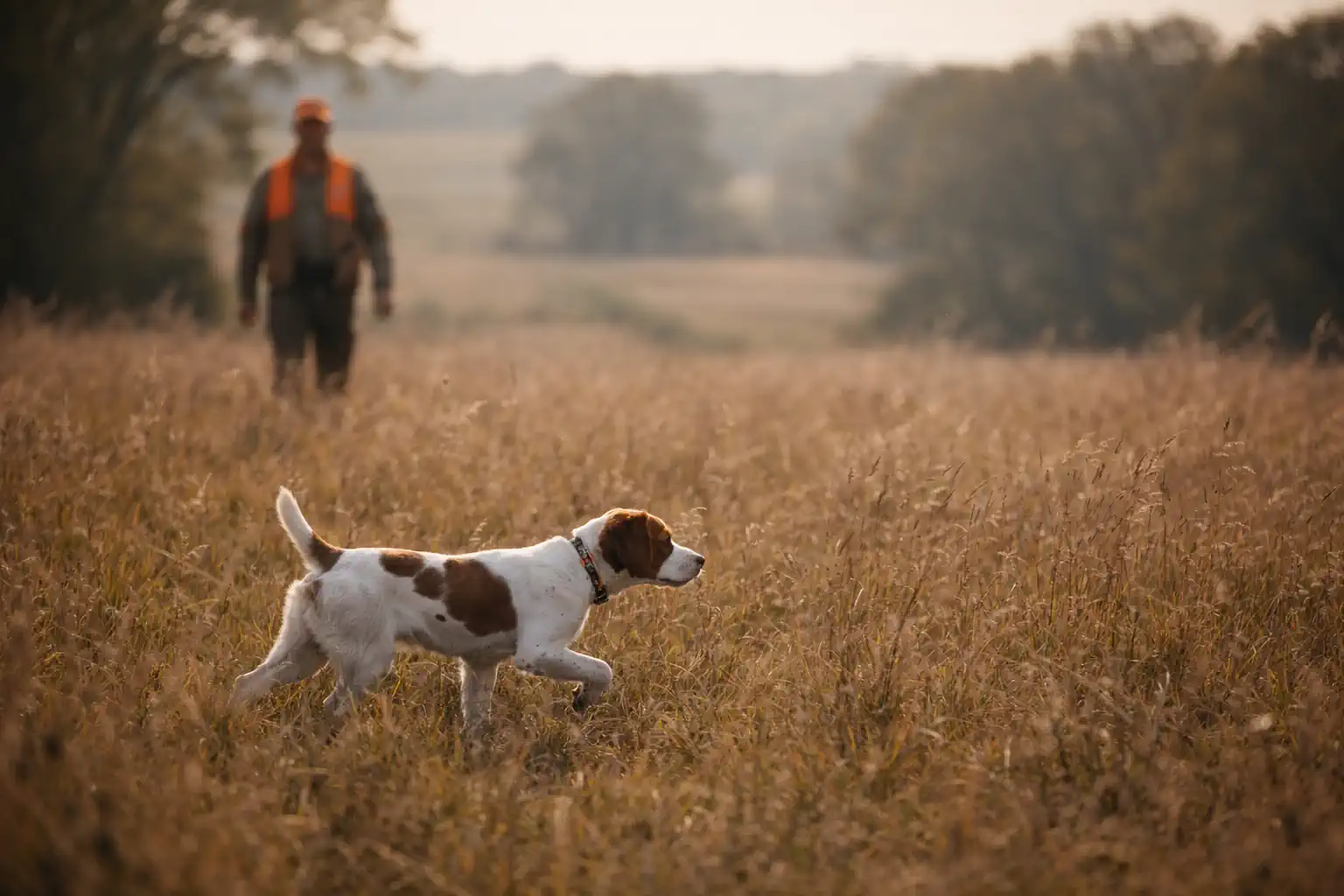
Teaser
The field is where pointing dogs are born.
First impressions matter more than commands.
Get this stage right, and everything else comes easier.
Key Takeaways
- Confidence comes before control.
- Birds give meaning to the field.
- Short sessions prevent stress.
- Pressure has no place early.
- Let instincts surface naturally.
Context
Field introduction is not training—it’s exposure. This stage shapes how a dog feels about the field for the rest of its life. Dogs that associate the field with freedom and excitement develop range, confidence, and drive.
Mistakes here often take months—or years—to undo.
Before You Start
Before heading out, ensure your dog:
- Is comfortable away from home
- Shows curiosity rather than caution
- Has basic physical conditioning
- Is not overloaded with obedience rules
If uncertainty shows up, simplify everything.
Field-Proven Guide
Choosing the Right Location
The environment sets the tone.
- Open visibility
- Light to moderate cover
- Minimal hazards
- Quiet surroundings
Let the Dog Lead
Your role is observer, not director.
- Walk into the wind
- Avoid calling or whistling
- Follow at a distance
- Allow independent movement
Introducing Birds Naturally
Birds activate instincts.
- Strong-flying birds preferred
- No correction during chase
- One or two contacts per session
- Stop while excitement is high
Reading Body Language
The dog will tell you everything.
- Tail carriage
- Head position
- Range expansion
- Willingness to re-enter cover
Ending on a High Note
Always quit early.
- Before fatigue
- Before frustration
- Before boredom
- Success defines memory
Safety in the Field
- Avoid extreme heat or cold
- Carry water at all times
- Check paws after each session
- Watch for barbed wire
- Avoid thick, punishing cover
- Monitor breathing and posture
- Keep sessions short
- Use blaze orange when required
Common Mistakes and Fixes
- Mistake: Calling the dog constantly
Fix: Stay silent and let exploration happen - Mistake: Overusing check cords
Fix: Remove control tools unless needed for safety - Mistake: Expecting points
Fix: Reward curiosity, not form - Mistake: Long sessions
Fix: Multiple short outings beat one long one
Real-World Examples
- A young pointer ranges wider after pressure-free outings.
- A cautious dog gains confidence in open terrain.
- Early bird exposure sparks natural pointing months later.
- Short sessions prevent avoidance behaviors.
- Dogs introduced slowly transition faster into formal training.
Choosing Gear Wisely
- Lightweight collar
- Minimalist check cord (rare use)
- Comfortable crate for transport
- Water and shade
- Simple whistle for future stages
Editorial Insight
Most pointing dogs already know how to hunt. Our job is not to teach it—but to avoid interfering with it. The best field introductions feel uneventful to the handler and unforgettable to the dog.
Restraint is the real skill.
Next Step
Once your dog confidently explores and shows interest in birds, you’re ready to layer structured bird work—slowly and intentionally.
Conclusion
Field introduction sets the emotional foundation of a pointing dog’s career. Confidence built here determines range, drive, and style later.
Go slow, stay quiet, and trust instincts over instructions. A great dog starts with a great first field.
FAQ
Below are common questions answered to help guide your dog’s first experiences in the field.
Frequently asked questions
What is field introduction for pointing dogs?
Field introduction is the first stage where a dog is exposed to terrain, scent, and birds without pressure or formal training.
At what age should field introduction begin?
Age matters less than confidence; most dogs start once they are curious, bold, and physically ready for light activity.
Should obedience be used during field introduction?
No. Early field sessions should be free of obedience to avoid suppressing natural instincts.
Do dogs need to point during early field work?
No. Chasing and curiosity are more important than pointing at this stage.
How long should first field sessions last?
Sessions should be short, typically 10–20 minutes, ending before fatigue or stress appears.
Is bird exposure required during field introduction?
Yes. Birds provide context and motivation, even if the dog only chases initially.
Can multiple dogs be introduced together?
It’s best to start individually to avoid pressure or competition.
What terrain is best for first outings?
Open, forgiving ground with light cover and minimal obstacles is ideal.
Should gunfire be part of early field introduction?
No. Gunfire comes later, only after strong bird drive is established.
What signs show a successful introduction?
A confident dog that ranges naturally, explores freely, and shows excitement rather than hesitation.