Bird Dog Training Journal: Plan One Goal, Then Compare the Records
· 8 min read · HuntWithDog
Use two simple worksheets to plan a small goal, record what actually happened and compare relevant sessions without inventing causes or progress scores.
On this page
- Make a small plan, then record what changed
- A filled session record
- Compare the conditions before comparing the result
- End with a decision you can explain
- Plan and Record One Training Session
- Before practice: a small plan
- After practice: what actually happened
- Compare Training Records Before Choosing the Next Step
- Decide what can be compared
- Choose a practical next decision
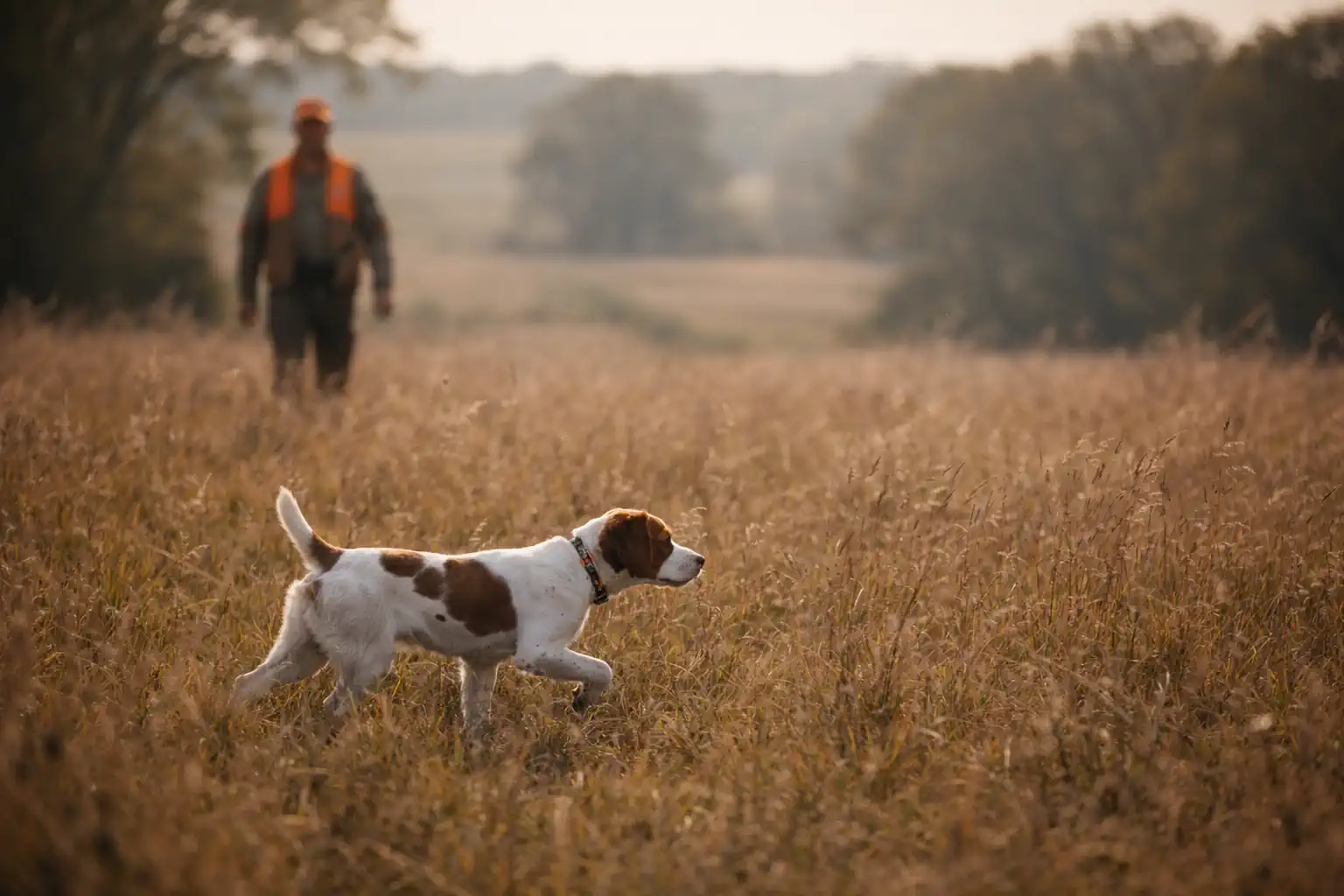
Use a training journal to preserve the task, the help you gave and the dog's observable response. Before changing the next lesson, check whether the records describe comparable situations. A different cue, easier finish or extra assistance changes what you can conclude.
Start with the session plan and record. Use the session comparison worksheet when you have relevant records to review. Copy the blank forms and keep only fields that help your question. They are original, unvalidated planning aids, not diagnostic tests or performance scores.
Make a small plan, then record what changed
Before practice, define an action you could recognize: what the dog would do, on which signal, with what finish. Note what you have already observed, the setting, your planned help and rewards, and how you can end the activity safely. "Work on retrieving" hides more than "release the familiar toy into my offered hand on the familiar cue."
Afterward, record what you actually did and saw. If you repeated a word, showed food earlier than planned or changed position, include it. Keep an untested explanation under "unknown" or "I wonder whether," rather than writing it as a fact.
For field notes, include relevant ground, cover, weather and wind observations when known. A blank is more honest than a reconstructed wind direction, and noting wind does not establish that it caused a result. Use the wind-reading guide for that separate subject.
Describe participation too: "turned away and walked to the doorway" is more useful than a mood grade. Dogs Trust's body-language guidance emphasizes the whole dog and context rather than interpreting one posture in isolation. If a familiar pause or finish signal was used, record the signal and response without turning stillness into a score.
A filled session record
Every person, dog and event in the following examples is fictional. These records demonstrate the forms; they are not training data or a recommended exercise. Nora is recording an already familiar toy handover with her retriever, Otis. For teaching the parts of that task, use the retrieve-chain guide.
| Worksheet field | Fictional record A |
|---|---|
| Record ID and date | A; fictional first practice |
| Dog and handler | Otis and Nora |
| One observable goal | Release the familiar soft toy into Nora's offered hand after the familiar "give" cue, while beside her. |
| Relevant behavior already observed | Otis has previously released this toy into the offered hand at home. Other settings remain unassessed. |
| Setting and conditions | Quiet room, dry floor, other pets elsewhere; events before practice not recorded. |
| Cue and assistance planned | Nora seated beside Otis; offered hand and familiar word; no additional gesture planned. |
| Rewards prepared | A suitable reward Otis normally accepts, available after the response. |
| Boundaries and end plan | No pursuit or grabbing; end if Otis moves away or the activity becomes difficult to manage. Allow an ordinary break afterward. |
| What actually happened | Nora offered her hand and said the word. Otis released the toy into her hand. She rewarded him and ended the planned practice. |
| Differences, unknowns and timing | No change from the plan noted; actual duration not recorded. This does not establish what would happen elsewhere. |
| Concern requiring help | No concern noted in this invented record; that is not medical clearance. |
| Next decision and reason | Keep the familiar version available and review other relevant records before adding a demand. One observation is not a progression threshold. |
The form preserves the request and the response. It does not need a score, a diagnosis or a claim that the skill is finished.
Compare the conditions before comparing the result
Nora later reviews these three fictional records. Their number is for illustration; there is no required number of sessions to complete.
| Record ID | Goal and requested finish | Setting, cue and assistance | Observable action and how practice ended |
|---|---|---|---|
| A | Familiar release into the offered hand | Quiet room; seated handler; offered hand and word | Released into hand; rewarded; planned practice ended. |
| B | Same requested hand finish | Enclosed patio; handler standing, then crouching; word repeated | Toy dropped on floor. Nora ended without requesting another handover. |
| C | Same requested hand finish | Original room and seated handler; food visible before the word | Released into hand; rewarded; practice ended. |
Her question is: "What do these records establish about the familiar handover under the same conditions?"
- What matches: the dog, familiar toy and requested hand finish.
- What differs: B changes location, handler position and cue repetition; C changes reward presentation.
- What remains unknown: the effect of each difference, and details not recorded before each practice.
- What can be said: hand delivery was observed in A and C, with different reward conditions. B produced a floor drop in a different setup.
- What would go too far: calling C greater independence, calculating an overall success score from these unlike records, or claiming the patio caused the drop.
The records do not offer a clean comparison for every question. Nora's next decision is to retain a manageable familiar version and ask her instructor which detail deserves attention. She does not recreate B to force an answer or demand a harder retrieve. If changed context is the central question, the yard-to-field guide addresses that work in detail.
End with a decision you can explain
Write one next decision tied to the records: repeat a manageable version, simplify the plan, pause, or ask for help. Missing information is an acceptable conclusion. A journal should not turn every unanswered question into another exercise.
How long should a retriever training session last? These worksheets set no universal minutes, repetitions or daily quota. RSPCA training guidance supports short practices, rewards, quiet starting conditions and individual learning rates. Record actual timing only if useful; it is not a target to reach. You can end without obtaining a final successful response, especially when the dog withdraws or you become frustrated.
Put safety and health ahead of completing a form. Stop for apparent pain, a new limp or a concerning behavior change and contact your veterinarian; AAHA's pain-sign guidance explains why movement and behavior changes deserve assessment. A log cannot diagnose the cause or clear a dog to continue.
Bring relevant records to the professional you consult. Dogs Trust recommends existing notes, diaries or videos as useful information for veterinary assessment. Do not stage a worrying event to fill a row or obtain footage. AVSAB's trainer-selection guidance supports individual goals, reward-based methods and appropriate veterinary or behavior help for fear, anxiety or aggression.
If you cannot choose the next question, use the troubleshooting guide. The useful output of the journal is a clearer question and a proportionate decision about what to do next.
Plan and Record One Training Session
Copy this blank form when it helps. Leave a field unknown rather than inventing a detail. This is an observation and planning aid, not a test, diagnosis or required training schedule. You do not have to finish the form or obtain a final performance before ending practice.
See how to use the training journal for a filled fictional example and guidance on comparing records. Deal with an unsafe situation or a concerning change before writing notes; recording it is not a reason to continue.
Before practice: a small plan
- Record ID and date: [your reference]
- Dog and handler, if useful: [your note]
- One observable goal: [what action, on which signal, with what finish?]
- Relevant behavior already observed: [where, with what assistance?]
- Setting and conditions: [place, nearby activity, equipment; unknowns are allowed]
- Cue and assistance planned: [word, gesture, position, lure or other help; distinguish them]
- Rewards prepared: [what is appropriate and valued by this dog]
- Boundaries and end plan: [how you will keep the situation manageable and finish or leave]
Do not turn the plan into an obligation. Changing it, simplifying it or ending practice is a decision you can record.
After practice: what actually happened
| Opportunity or event, if useful | Signal and help actually given | Dog's observable action | What happened next |
|---|---|---|---|
| [your reference] | [your note] | [your note] | [your note] |
| [optional additional event] | [your note] | [your note] | [your note] |
- How and why practice ended: [what you observed and what you did]
- Actual timing, only if useful: [your own start/end or duration; not a target dose]
- Differences from the plan: [what changed, including your own actions]
- Unknown or uncertain details: [not seen, not recorded, or an explanation still untested]
- Concern requiring help rather than another exercise: [your note or not observed]
- Next decision and reason: [repeat a manageable version, simplify, pause, or ask for help]
Write an interpretation separately: "I wonder whether ..." is different from "I observed ...". An encouraging response does not establish reliability in other circumstances. This record is not a score and supplies no automatic threshold for progressing.
Compare Training Records Before Choosing the Next Step
Use records you already have. Do not repeat a worrying or unsafe situation to fill a row. Add or remove rows as useful; this form prescribes neither a number of sessions nor a training dose. It is an unvalidated planning aid, not a clinical or performance score.
See how to use the training journal for a fictional worked comparison. If an essential detail was not recorded, keep it unknown.
The question I want these records to help describe: [your question]
| Record ID | Goal and requested finish | Setting, cue and assistance | Observable action and how practice ended |
|---|---|---|---|
| [your reference] | [your note] | [your note] | [your note] |
| [another relevant record] | [your note] | [your note] | [your note] |
Decide what can be compared
- What genuinely matches? [goal, signal, help, setting, finish or other recorded detail]
- What differs? [include handler actions and changes in assistance]
- What is unknown? [leave gaps visible]
- Are these records comparable for my question? Why or why not? [your explanation]
- What can I say from the observations alone? [a narrow description]
- What would go beyond the evidence? [a cause, motive, diagnosis or guarantee not established]
An apparent improvement with extra help or an easier finish is a different observation, not proof of greater independence. A changed result does not establish which difference caused it. Avoid combining unlike tasks into an average or using a count as a progression rule.
Choose a practical next decision
Decision: [repeat a manageable version / simplify / pause / discuss with a professional]
Reason tied to these records: [your note]
Question to take to the relevant guide or professional: [your question]
Health, distress or safety concerns take priority over further comparisons. A complete-looking table cannot clear a dog to continue work, establish a diagnosis or require a harder task.
Where to go next
Choose the step that matches the question you still need to answer.
Next decision
How will the record fit an ordinary week?Choose manageable activity and practice without treating every day as a performance test.
Related problem
What question does a changed response raise?A journal supports comparison; it cannot diagnose a cause or clear the dog to continue.
Browse guides by question or find your training starting point.