Protecting Your Bird Dog in Rough Cover: Foxtails, Burrs, and Field Hazards
· 7 min read · HuntWithDog
Plan safer upland routes, check a bird dog after rough cover, distinguish loose burrs from embedded awns, and know when to stop and contact a veterinarian.
On this page
- Before the next strip of cover
- Why grass awns deserve separate attention
- Do not turn a coat check into an extraction
- Notice a change; do not diagnose from a checklist
- Loose burrs, mats and painful areas are different jobs
- A post-run check you can repeat
- Route choice first; equipment for a defined job
- When to stop and call
- An example of a useful decision
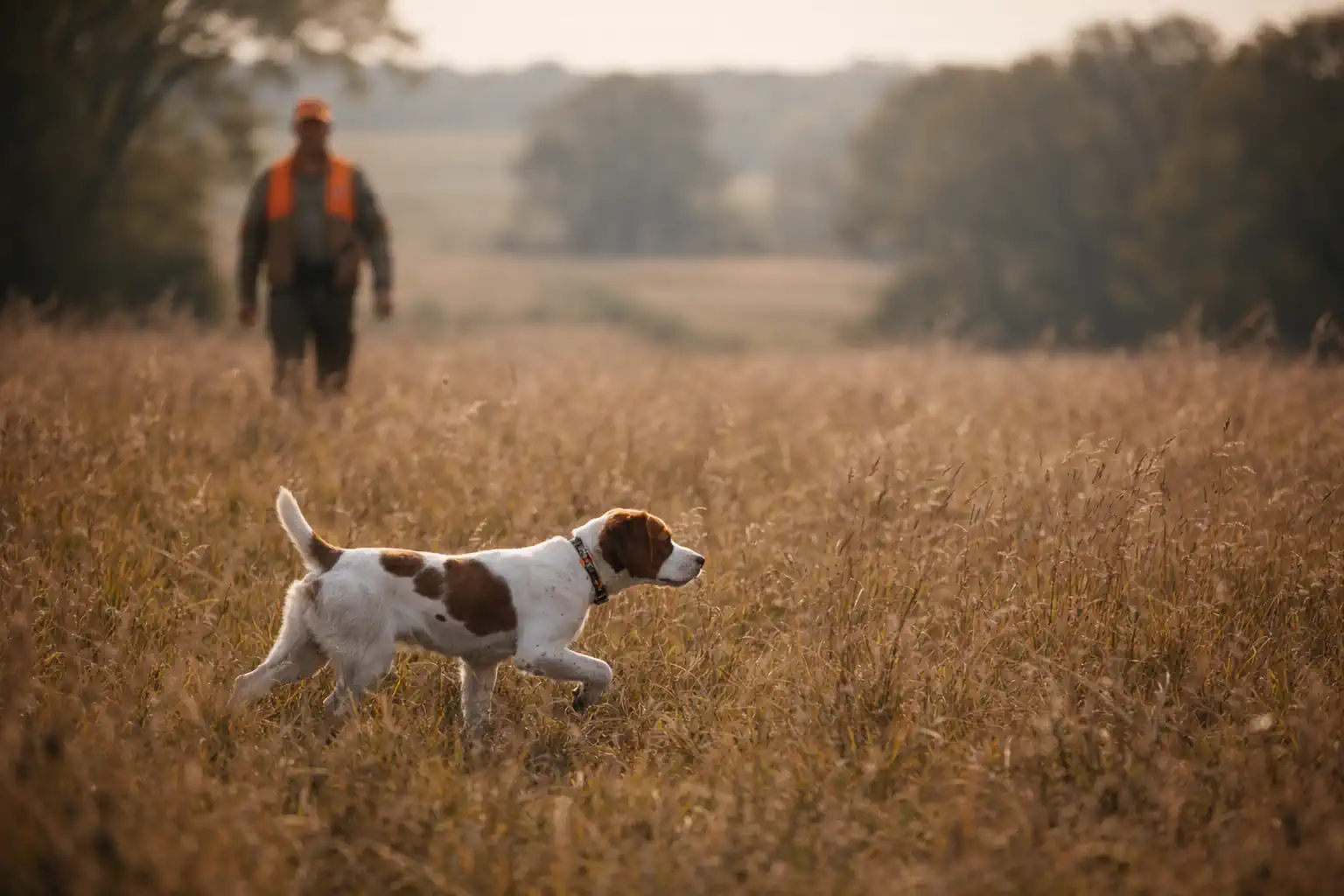
Before the next strip of cover
Choose a route that avoids hazardous seed heads, check the dog after exposure, and stop when you notice discomfort. A vest or boots do not establish that a strip is safe. The useful distinction at the truck is loose debris in the coat versus something embedded or a dog showing signs that need veterinary attention.
For a hunting owner, the decision starts before the dog enters the cover: can you identify the plants, keep the dog out of the worst patch and leave promptly if there is a problem? More birds in a strip do not answer those questions. This guide helps you plan that decision and a post-run check; it does not describe how to explore a wound or remove a foreign body from an eye, nose or ear.
Why grass awns deserve separate attention
A foxtail is a barbed grass seed cluster that can enter tissue and migrate, causing infection or an abscess. A seed caught in the coat is different from one embedded in the dog. Dry, hardened heads are a particular concern; season alone does not rule out exposure. UC Davis explains foxtail foreign bodies.
Do not turn a coat check into an extraction
Removing a loose seed from the coat is different from probing skin. If material is embedded, redness or swelling is present, or you are unsure whether part remains, contact a veterinarian. Do not probe an eye, nostril or ear canal. UC Davis distinguishes accessible material from embedded foxtails.
Notice a change; do not diagnose from a checklist
Paw licking or swelling, eye rubbing or discharge, repeated head shaking and persistent sneezing after grass exposure are reasons to stop and seek veterinary advice. These observations do not identify the cause by themselves. FAAS veterinary guidance describes signs at different entry sites.
Loose burrs, mats and painful areas are different jobs
A small, loose burr may brush or comb out gently. Stop pulling if the area is painful or the material will not come free easily. Extensive mats belong with a groomer or veterinary team; irritated skin needs veterinary advice. Do not reach for scissors beside the skin. VCA explains gentle grooming and why scissors are unsuitable for mats.
Separate that grooming job from a thorn, cactus spine, puncture or sore paw. Finding plant material does not tell you how deep an injury goes. Ending the outing and asking for advice is a useful action; digging for an unseen cause at the tailgate is not a continuation of grooming.
A post-run check you can repeat
After grass exposure, look through the coat and around the feet, visible outer ears, armpits and groin. UC Davis recommends careful grooming and checking after exposure. Do not insert tools into an ear or other opening. UC Davis prevention guidance.
- Choose a manageable stopping place. Give yourself light and room to see the dog rather than rushing the check while packing guns and gear.
- Look before you pull. Note loose coat debris, a mat, a painful area or a change in behavior as different observations. If the dog resists because an area appears sore, stop manipulating it.
- Record what matters. Note the cover, approximate time, affected area and signs. A photograph of a visible seed or plant can help explain the exposure; do not recreate a painful response to record it.
- Make a continuation decision. If there is concern about an embedded object or new discomfort, end the work and contact the veterinary team. A completed check does not certify the dog is free of hidden material.
Route choice first; equipment for a defined job
Avoiding exposure is more useful than assuming equipment seals every entry point. Walk around suspect patches or choose another place to work; do not use a young dog to discover whether a strip is tolerable. UC Davis emphasizes avoiding foxtail areas and observing where the dog goes.
Before buying boots, a vest or a face covering, ask what part of the dog that specific item covers and what it leaves exposed. Follow the item's fitting instructions and inspect it for collected debris. Do not promise yourself protection from awns merely because the dog is wearing something. If the route requires repeated exposure you cannot manage, change the route instead of adding equipment to justify it.
Keep cover risk separate from heat and workload decisions. The fact that one problem is managed does not settle the other. For a new dog, choose the outing using first-season readiness and stopping decisions, rather than treating rough cover as a required toughness exercise.
When to stop and call
Persistent sneezing or head shaking after possible exposure warrants prompt veterinary attention; do not wait for the next planned grooming session. Tell the clinic what the dog ran through and when the signs began. UC Davis advises veterinary care as soon as possible for these signs after exposure.
Pain, a swollen or draining area, eye trouble, coughing or difficulty swallowing also need veterinary assessment. Tell the clinic about worsening signs and follow its advice on urgency and transport. Do not use an absence of a visible seed as proof that there is nothing inside. FAAS describes these possible consequences of foxtails.
An example of a useful decision
Illustrative example, not a reported hunt: a dog finishes a strip containing dry seed heads and starts repeatedly shaking one ear. The owner cannot see a seed. The useful next step is to end the outing, record the exposure and call the clinic, rather than run another strip to see whether the shaking goes away. A second owner finds a loose burr resting on the coat, gently combs it free and sees no irritation. Those observations call for different responses; neither tells you what happened to every dog in the same field.
Before the season, save the number and opening hours of a veterinary facility near the places you plan to hunt. Include the route out and any communication gaps in your trip notes. A short field record is more helpful than a confident guess about which plant caused a problem. Ask your veterinarian about coat care for your individual dog and what to do if a concern appears after hours.
Sources checked October 30, 2026. This is an owner planning guide, not a veterinarian-reviewed extraction or treatment protocol.
Frequently asked questions
What is the difference between a burr and a foxtail on a bird dog?
A loose burr caught in hair is a grooming problem. A grass awn can enter tissue; embedded material or discomfort calls for veterinary advice rather than more grooming.
Should I put a vest on my pointing dog in CRP?
Choose equipment for a specific job and fit it as instructed. A vest does not cover every entry point or establish that a patch of cover is safe. Route choice and post-run observation still matter.
Can I pull a foxtail out of my dog's paw myself?
Remove only material clearly loose on the coat. If it is embedded, the area is sore or swollen, or you are unsure whether fragments remain, contact a veterinarian. Do not probe for it.
How soon after a hunt should I check for grass awns?
Check after exposure, before moving on to another activity. A check cannot rule out hidden material, and new signs later still deserve attention. Do not wait for a scheduled check when the dog is uncomfortable.
Do boots stop foxtails between the toes?
Do not assume boots seal a paw against seed heads. Check the actual item's instructions, what it covers and any debris it collects; choose another route if you cannot manage the exposure.
When is a sneezing fit after hunting a reason to call the vet?
Persistent sneezing after possible exposure deserves prompt veterinary advice, even if you cannot see a seed. Explain the exposure and other signs rather than trying to remove an unseen object.
Where to go next
Choose the step that matches the question you still need to answer.
Prerequisite
Consider ground and exposure before planning the outingThe introductory-walk guide helps frame a manageable route; it does not assess an embedded awn.
Related problem
What changed in comfort or movement after the outing?General observation helps identify a concern to discuss with a veterinarian, not remove a foreign body.
Browse guides by question or find your training starting point.