Start Training a Brittany Puppy for Upland Hunting
· 9 min read · HuntWithDog
A practical, readiness-based roadmap for building a Brittany puppy's confidence, recall, field search, bird desire, and safe introduction to gunfire.
On this page
- Quick answer: what should you train first?
- Why the first months matter
- A practical age-by-age roadmap
- Build the foundation at home without overhandling the dog
- First field walks: exploration before performance
- Bird introduction: let birds create the lesson
- Gunfire introduction: gradual, distant, and tied to confidence
- When to add more control
- Better first-season goals
- Common mistakes that slow a Brittany puppy down
- Treating the calendar as a test
- Making obedience more important than search
- Correcting confusion around birds
- Moving gunfire closer because the puppy has to get used to it
- Training past the useful point
- A simple weekly structure
- Field safety for a growing puppy
- Bottom line
- Sources and further reading
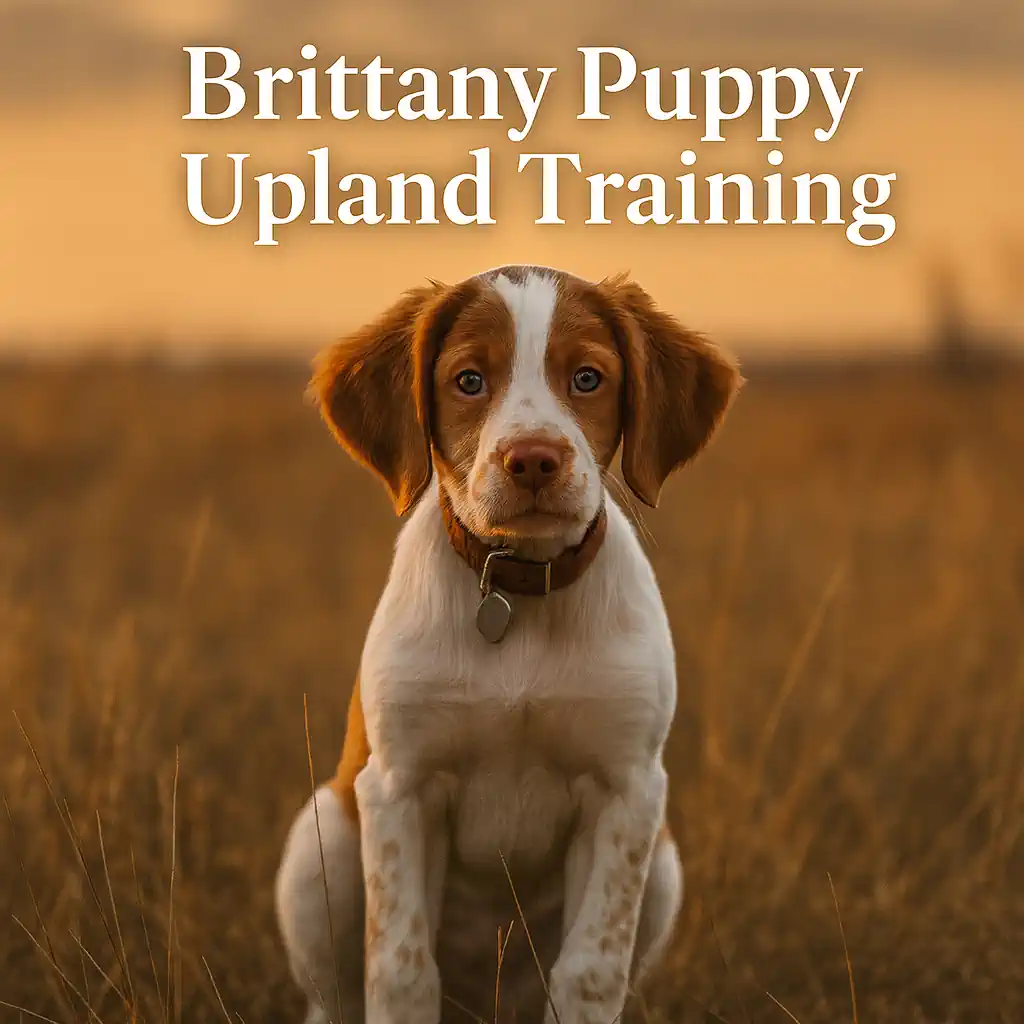
A Brittany puppy does not need a rigid calendar to become a useful upland dog. The early job is simpler: build confidence, cooperation, a reliable recall, comfort in new environments, and a strong desire to find birds. Age matters, but readiness matters more.
This guide uses age ranges as orientation, not deadlines. Move forward when the puppy is relaxed and curious at the current step; back up when you see avoidance, freezing, frantic behavior, or a loss of interest.
Quick answer: what should you train first?
- 8–16 weeks: relationship, safe socialization, name response, recall games, crate and handling, and positive exposure to surfaces, vehicles, people, sounds, and easy outdoor environments.
- 3–5 months: short exploratory field walks, simple recall around distractions, light check-cord familiarity, and confidence moving away from and back toward the handler.
- 4–8 months: bird exposure when the puppy is bold in the field and eager to search. Let scent and birds teach more than your hands do.
- Later: formal steadiness, polished delivery, and any electronic-collar conditioning only after the dog understands the behavior being reinforced and has a strong foundation.
Those ranges overlap. A cautious four-month-old may need more confidence work; a bold puppy may be ready for controlled bird exposure sooner. There is no prize for reaching a milestone first.
Why the first months matter
The American Veterinary Society of Animal Behavior describes the first three months as the most important period for puppy socialization and recommends broad, safe exposure without overwhelming the puppy. The American Kennel Club likewise emphasizes environmental exposure, relationship building, and structure during the 8–16 week period. For a future bird dog, that translates well to practical work: new ground, car rides, body handling, grass, light cover, water edges, people, other appropriate dogs, and calm recovery after excitement.
The goal is not to make the puppy "tough." It is to make unfamiliar things ordinary. A confident dog has more mental bandwidth later for birds, gunfire, range, and handler cues.
A practical age-by-age roadmap
| Typical stage | Primary focus | Good signs | Do not rush |
|---|---|---|---|
| 8–12 weeks | Bond, name response, recall games, crate, handling, safe new experiences | Curious, recovers quickly, follows willingly | Formal field control or loud noise |
| 12–16 weeks | Short outdoor exploration, recall around mild distractions, car and terrain confidence | Explores and checks back without clinging | Long sessions or repetitive drilling |
| 4–6 months | Field search, light check-cord familiarity, first controlled bird encounters if ready | Uses nose, hunts forward, stays enthusiastic | Steadiness pressure or corrections around birds |
| 6–9 months | More varied cover, useful range, bird contacts, gradual gun introduction after bird confidence | Actively searches and remains comfortable with earlier sound steps | Chasing a calendar when the dog shows concern |
| 9–12+ months | First-season experience, stronger recall and cooperation, begin polishing only what the dog understands | Recovers from mistakes and keeps hunting | Expecting finished-dog manners from a young dog |
Build the foundation at home without overhandling the dog
Useful puppy obedience is small and practical. Teach the name, a happy recall, waiting briefly at doors, comfortable crate time, calm body handling, and the ability to settle after excitement. Reward correct choices. Keep sessions short enough that the puppy wants another repetition.
Do not turn every walk into heel work. A pointing dog also needs independence. In safe places, let the puppy move ahead, investigate scent, solve small terrain problems, and learn that checking back does not end the fun.
First field walks: exploration before performance
Choose simple ground with low risk: no traffic, livestock conflicts, deep water, heavy fencing, or cover that can hide dangerous obstacles. Ten minutes of confident exploration can be more valuable than forty minutes of fatigue.
Walk into or across the wind at times, change direction naturally, and let the puppy discover that finding you again is part of the game. If you use a check cord, treat it as a safety and guidance tool rather than a way to drag the puppy into position. In heavy brush or fencing, a trailing line can snag, so match the setup to the ground.
For a deeper progression, see Field Introduction for Pointing Dogs.
Bird introduction: let birds create the lesson
Bird work should begin when the puppy is confident outside, interested in scent, and willing to leave the handler to explore. Strong-flying birds and well-planned setups reduce the chance that a puppy repeatedly catches planted birds and learns to rush every contact.
An accidental catch does not "ruin" a pointing dog, and a puppy that chases is not failing. Early contacts are about desire and scent. Pointing and self-control develop through repeated opportunities, maturity, and later training.
A useful rule is to end bird sessions while the puppy still wants more. If interest drops, simplify the next setup rather than adding pressure.
Gunfire introduction: gradual, distant, and tied to confidence
Gunfire deserves more caution than the old advice to simply make noise around the food bowl. The Merck Veterinary Manual lists gunshots among loud, unpredictable sounds that can trigger fear or phobic responses in dogs. There is no method that makes gun shyness "100% preventable."
A safer field principle is to introduce sound only after the puppy is highly engaged and confident around birds, start at substantial distance with an experienced helper, use the least intense step that produces no concern, and increase intensity gradually across sessions. If the puppy startles and immediately resumes the bird chase, that is different from stopping, fleeing, refusing to hunt, or remaining worried. Any persistent concern is a reason to stop and back up.
NAVHDA's Natural Ability test evaluates young versatile dogs on search, pointing, cooperation, and gun shyness, a useful reminder that confidence and desire are foundational abilities—not something to trade away for an early milestone.
See also How to Prevent Gun Shyness in Bird Dogs.
When to add more control
As the dog matures, add control in layers: recall around stronger distractions, staying connected in larger country, and later steadiness expectations appropriate to your hunting goals. A hunting dog does not need to look finished in its first season. It needs to hunt, learn where birds live, use the wind, and keep cooperating.
If you are considering an electronic collar, first decide what problem you are solving and whether the dog already understands the cue without electronics. A collar should not be used to teach a brand-new behavior or to punish confusion around birds. Our GPS Collar vs E-Collar guide separates location and safety functions from training functions.
Better first-season goals
- The dog wants to hunt when you open the door.
- It searches enough ground to find birds but remains findable and cooperative.
- It learns that wind, objectives, edges, and cover predict bird contact.
- Recall is improving even when excitement is high.
- Bird contacts make the dog more confident, not more worried.
- You finish most days wishing for one more contact rather than grinding the dog into fatigue.
For expectations during the first actual hunting season, read First-Season Expectations for a Young Bird Dog.
Common mistakes that slow a Brittany puppy down
Treating the calendar as a test
Age ranges are planning tools. Development, confidence, health, experience, and the quality of your training ground all change the pace.
Making obedience more important than search
A puppy that never gets permission to explore can become dependent on the handler. Build recall and manners, but also create safe opportunities for independent hunting behavior.
Correcting confusion around birds
Early bird work should create desire and understanding. If a setup goes badly, change the setup rather than escalating pressure.
Moving gunfire closer because the puppy has to get used to it
Habituation requires the dog to remain comfortable. Repeated exposure while frightened can make the problem worse. Distance and emotional state matter more than completing a planned schedule.
Training past the useful point
Young dogs tire mentally and physically. Stop while behavior is still good, and increase workload gradually. For exercise, heat, injury, vaccination, parasite prevention, or any health-specific limit, use your veterinarian's advice for your individual dog rather than a generic internet schedule.
A simple weekly structure
You do not need a seven-day formal program. A useful week for a young puppy might include several two-to-five-minute recall or handling games at home, two or three short exploration walks in different safe environments, normal household socialization, and one field outing when the dog is fresh. Bird work can be occasional and high quality rather than frequent and mediocre.
As the puppy becomes a real hunting companion, field time gradually replaces "training time." That is the point: the dog learns to make useful decisions in the places where you actually hunt.
Field safety for a growing puppy
- Choose ground away from roads and uncontrolled livestock.
- Carry water and shorten work in warm or humid conditions.
- Inspect paws, eyes, ears, and coat after cover.
- Follow your veterinarian's vaccination and parasite-prevention plan for your area.
- Do not use a trailing cord where it can easily snag.
- End the session if the puppy becomes disoriented, overheated, sore, or emotionally shut down.
- Follow local hunting, training-bird, firearm, and public-land rules.
Bottom line
Start a Brittany puppy early, but start with life skills rather than a finished-dog checklist. Build trust and safe socialization first, then field confidence, bird desire, and gradual exposure to the parts of hunting that carry more pressure. Use age as context and behavior as the actual green light. A confident puppy that loves birds gives you far more to work with than a young dog that was pushed through milestones on schedule.
Sources and further reading
Frequently asked questions
What age should I start training a Brittany puppy?
Start relationship building, safe socialization, name response, recall games, crate work, and calm handling as soon as the puppy comes home. Field and bird work should advance by confidence and readiness rather than a fixed birthday.
When should a Brittany puppy first see birds?
When the puppy is confident outdoors, curious about scent, and willing to search away from the handler. Use well-planned setups and strong-flying birds so the early lesson is desire and scent, not repeated catching.
Should a young pointing dog chase birds?
Some early chase is normal and can be part of developing desire. Do not confuse a young dog's enthusiasm with finished steadiness. Formal control can be added later once the dog understands birds and has confidence.
When should I introduce gunfire?
Only after the puppy is confident and highly engaged around birds. Start at substantial distance with an experienced helper, progress gradually, and stop or increase distance if the dog shows persistent concern. No method can guarantee that gun shyness will never occur.
When should I use a check cord?
Use one when it solves a practical safety or guidance problem and the puppy is comfortable exploring. Keep pressure light, and avoid trailing lines where they can snag in fences or heavy brush.
Does a Brittany puppy need an e-collar?
Not for early foundation work. First teach the behavior clearly without electronics. If an e-collar is considered later, it should reinforce a behavior the dog already understands rather than teach a new behavior or punish confusion.
How long should puppy training sessions be?
Short enough that the puppy remains interested and successful. A few minutes of focused work or a brief confident field outing is often more productive than staying out until the puppy is mentally or physically tired.