Blinking in Pointing Dogs: What to Observe and What to Do Next
· 8 min read · HuntWithDog
A dog avoiding bird work needs careful observation, safe management and the right help. Separate the field term from a diagnosis or a promised rehabilitation plan.
On this page
- What hunters mean by blinking
- A label does not identify the cause
- Describe the event without staging a test
- A missed point is not the same history as a changed response
- Choose the next step before another bird exercise
- Pause the exercise and maintain safe management
- Check for changes that need veterinary assessment
- Bring a concise history to qualified help
- Agree on observable conditions for any later work
- Avoid conclusions that make the next session harder
- What this page cannot predict
- Keep future learning manageable
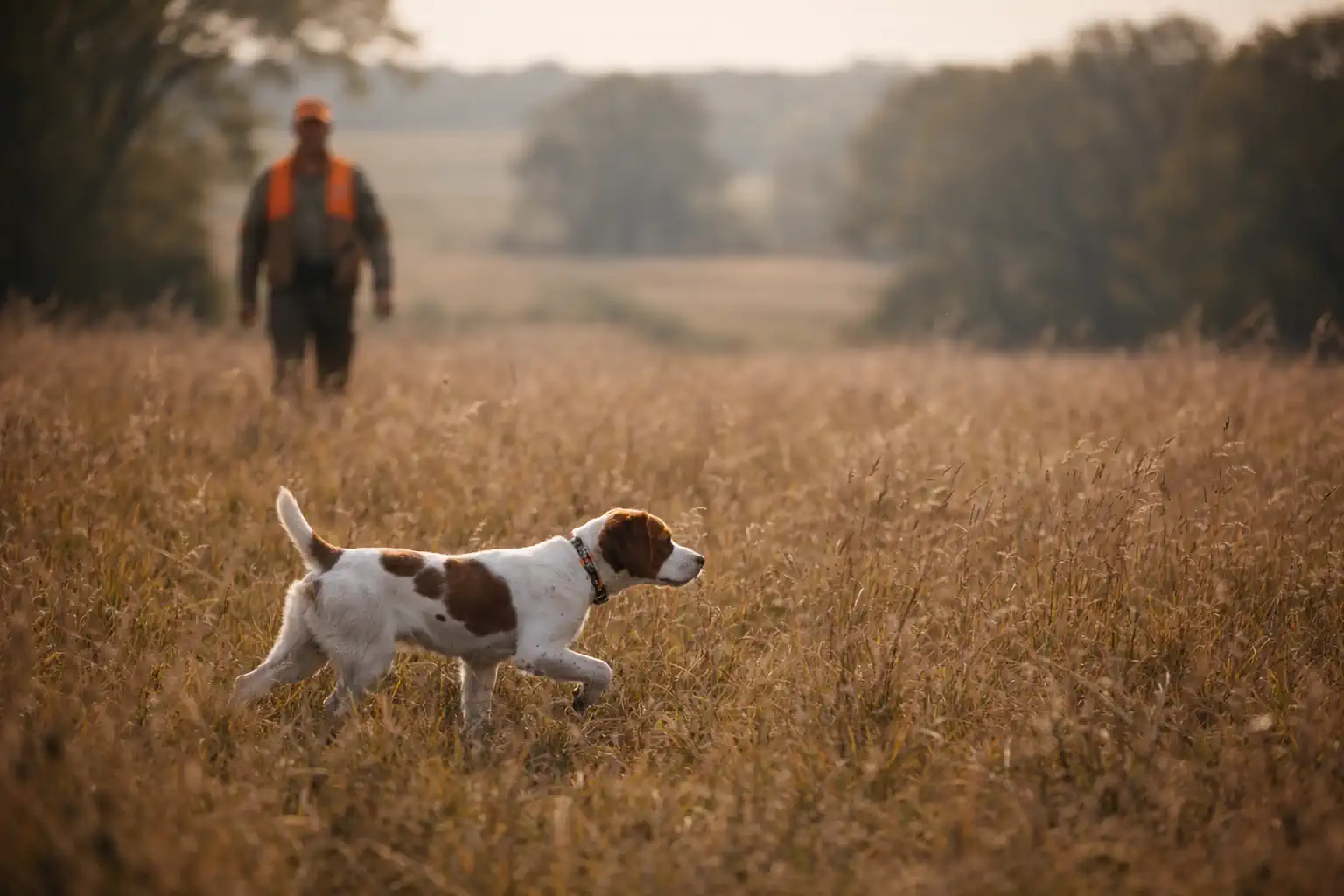
What hunters mean by blinking
In pointing-dog terminology, blinking describes avoidance of game after scenting it. The AKC pointing-breed hunting-test glossary uses that meaning. It is a field term, not a veterinary diagnosis or a way to establish what a dog smelled from its posture alone.
If your dog turns away from likely bird cover, the useful first step is to keep the situation manageable and record what you saw. Do not plant another bird, tighten handling or fire a shot to prove the label. This guide helps you choose what to stop, what information to preserve and whom to consult; it does not prescribe a rehabilitation course.
A label does not identify the cause
Avoidance may prompt questions about previous bird encounters and handling, but this page cannot determine its cause from a turn, a tail movement or a missed point. Keep history separate from explanation: “A correction occurred just before the dog moved away” is information worth sharing, not proof of exactly what association it learned.
AVSAB’s current humane-training position recommends reward-based training and warns against aversive methods. That supports avoiding escalation; it does not establish that every dog called a blinker has the same learning history. Do not assume the problem is harmless, permanently fixed or irreversible because it fits a familiar training story.
Describe the event without staging a test
Watch the whole dog and the surrounding situation. Dogs Trust’s body-language guidance explains that one body part or signal does not fully explain a dog’s feelings. A change of direction, hesitation or brief stillness is an observation. It cannot by itself prove scent detection, deliberate refusal, confidence or a particular cause.
- Before: Where were the dog, handler and any known birds? What had changed in the setting?
- During: What movement or posture did you actually see? Which cues, lead movements or other handling occurred?
- After: Did the dog withdraw, resume an ordinary activity, appear uncomfortable or respond differently elsewhere?
- Unknown: Record bird location, scent availability or earlier history as unknown when they are unknown.
Keep existing footage captured safely, but do not recreate a distressing encounter for a better video. Do not release a dog without suitable control to see whether it will choose birds. The observation is useful only if collecting it does not add risk.
A missed point is not the same history as a changed response
Separate a young dog whose bird experience is limited, an unknown-history dog and one whose behavior has changed in a familiar activity. These histories help a professional ask better questions; none tells you the cause by itself. Lack of pointing on one outing does not prove weak instinct, a sensory deficit or learned avoidance.
If introductory work is the actual question, the early bird-work guide keeps first contacts distinct from formal steadiness. Do not turn that guide into treatment for a dog already showing repeated fear or withdrawal. Gunfire concerns also require their own assessment through the noise-history decision guide.
Choose the next step before another bird exercise
Pause the exercise and maintain safe management
Stop attempts to produce a point when the dog repeatedly withdraws or becomes distressed. Leave the setting safely; a final point is not required. Safe use of a lead or long line for management is different from jerking, dragging or using it to force a position. Do not abandon necessary control because a generic plan says every line must stay home.
Check for changes that need veterinary assessment
AAHA’s pain-sign guidance lists altered movement, reluctance and behavior changes among possible signs of discomfort. Contact your veterinarian when the response is new or accompanies apparent pain, illness or changed behavior in familiar activities. Do not run more birds to rule those concerns out. Labored breathing needs immediate veterinary attention.
Bring a concise history to qualified help
For repeated avoidance, fear or a confusing change, discuss veterinary assessment and qualified behavior support. AVSAB’s trainer-selection statement distinguishes ordinary training help from concerns that need veterinary or behavior expertise. Ask how the professional will assess the history, choose an achievable goal and respond if the dog withdraws. An assurance of a cure is not an assessment.
Agree on observable conditions for any later work
If further bird work is appropriate, ask the professional to explain its purpose, management and stopping conditions before starting. A dog that happens to point has not thereby demonstrated comfort in all field situations or readiness for gunfire, a brace or a hunt. Keep those decisions separate. This page supplies no number of birds, sessions or weeks that establishes recovery.
Avoid conclusions that make the next session harder
- Do not force a point or add stimulation to test whether the dog really means to avoid birds.
- Do not treat a chase or an excited response as proof that concern has resolved. Manage encounters so they can end before pursuit or loss of control.
- Do not recreate the handler action you suspect caused the change merely to compare reactions.
- Do not make the dog finish with a “good” point before you leave.
- Do not interpret one quiet session as evidence that a medical or behavior concern has been excluded.
These boundaries preserve the opportunity to assess the dog without escalating a confusing situation. They are not a claim that every training program uses the same terminology, or that a checklist can replace individual help.
What this page cannot predict
A dog’s age, the severity of an owner’s label and a single field session do not provide a reliable prognosis here. This guide does not classify dogs as permanently damaged or promise a return to hunting. Ask the assessing professional what the current evidence supports, which questions remain open and what would change the plan.
A fictional example: Eli writes, “Moss blinked the planted bird.” After review, his record says, “Moss turned away as I approached; the bird’s exact position was not visible to me. I had repeated a stop cue.” Eli ends the exercise and shares that record rather than staging another contact. The example illustrates a better description; it is not a documented case or a reported recovery.
Keep future learning manageable
Use rewarded foundations, clear goals and settings you can control. Teach recall and a stop cue separately rather than relying on an untrained response around birds. The training troubleshooting guide helps distinguish an unclear lesson from a changed response that needs other help. Keep a record in the session journal without turning observations into a diagnosis.
Choosing reward-based help does not mean ignoring practical safety, and using a lead does not automatically mean punishment. Ask what the handler actually does and how the dog responds. If a plan depends on making the dog afraid to avoid the task, pause and ask for an alternative. No prevention checklist guarantees that an individual dog will never develop a problem.
Frequently asked questions
How do I know if my dog is blinking or just hasn't found birds?
A brief hesitation, change of direction or missed point cannot establish what the dog detected or why it moved away. Describe the whole event and relevant history. Do not plant more birds or force an approach to prove the label.
Can a dog described as blinking return to hunting?
This page cannot give an individual prognosis. Veterinary and qualified behavior assessment can clarify concerns and appropriate goals. A single point, age or fixed schedule does not establish recovery or readiness to hunt.
How long should I pause bird work?
Do not use a fixed recovery clock. End exercises that provoke repeated withdrawal or distress and seek appropriate assessment. Agree on the purpose, management and stopping conditions of any later work before resuming.
Is blinking the same as a dog that won't point for other reasons?
Blinking is a field term for avoidance of game after scenting it. A missed point alone does not show that sequence or its cause. Limited experience, uncertain history and changed familiar behavior need different questions, not an automatic diagnosis.
Should I use a professional trainer for a dog that avoids birds?
Persistent avoidance or fear deserves qualified help. Discuss veterinary assessment for a new change, apparent discomfort or illness, and ask about behavior support. Choose someone who explains reward-based methods, limits and stopping conditions.
Should I remove every lead or check cord from field work?
No blanket rule makes a dog safer. Necessary lead or long-line management differs from jerking, dragging or forcing a point. Keep suitable control, leave an unmanageable setting and do not use the line to impose an untrained response.
Where to go next
Choose the step that matches the question you still need to answer.
Next decision
Describe the concern before assigning a causeAvoidance or a changed response needs context and may require professional assessment.
Next decision
Choose help suited to the concernUse the trainer-selection questions rather than applying an unverified rehabilitation sequence.
Browse guides by question or find your training starting point.