Best Gauge for Pheasant Hunting: Comparing Your Options
· 6 min read · HuntWithDog
Choosing a pheasant shotgun? Compare 12 and 20 gauge options, firearm compatibility, legal ammunition, pattern checks and decisions to pass on a shot.
On this page
- Choosing a pheasant shotgun: the useful answer
- Gauge, bore and load are different choices
- Check the location before choosing ammunition
- 12 versus 20 gauge: compare the actual shotguns
- If you are considering a 12 gauge
- If you are considering a 20 gauge
- Considering a 28 gauge or .410 bore
- Check compatibility, then examine the pattern
- A flushing pheasant does not create a shooting obligation
- Two illustrative decisions, not field-test claims
- What to do before the hunt
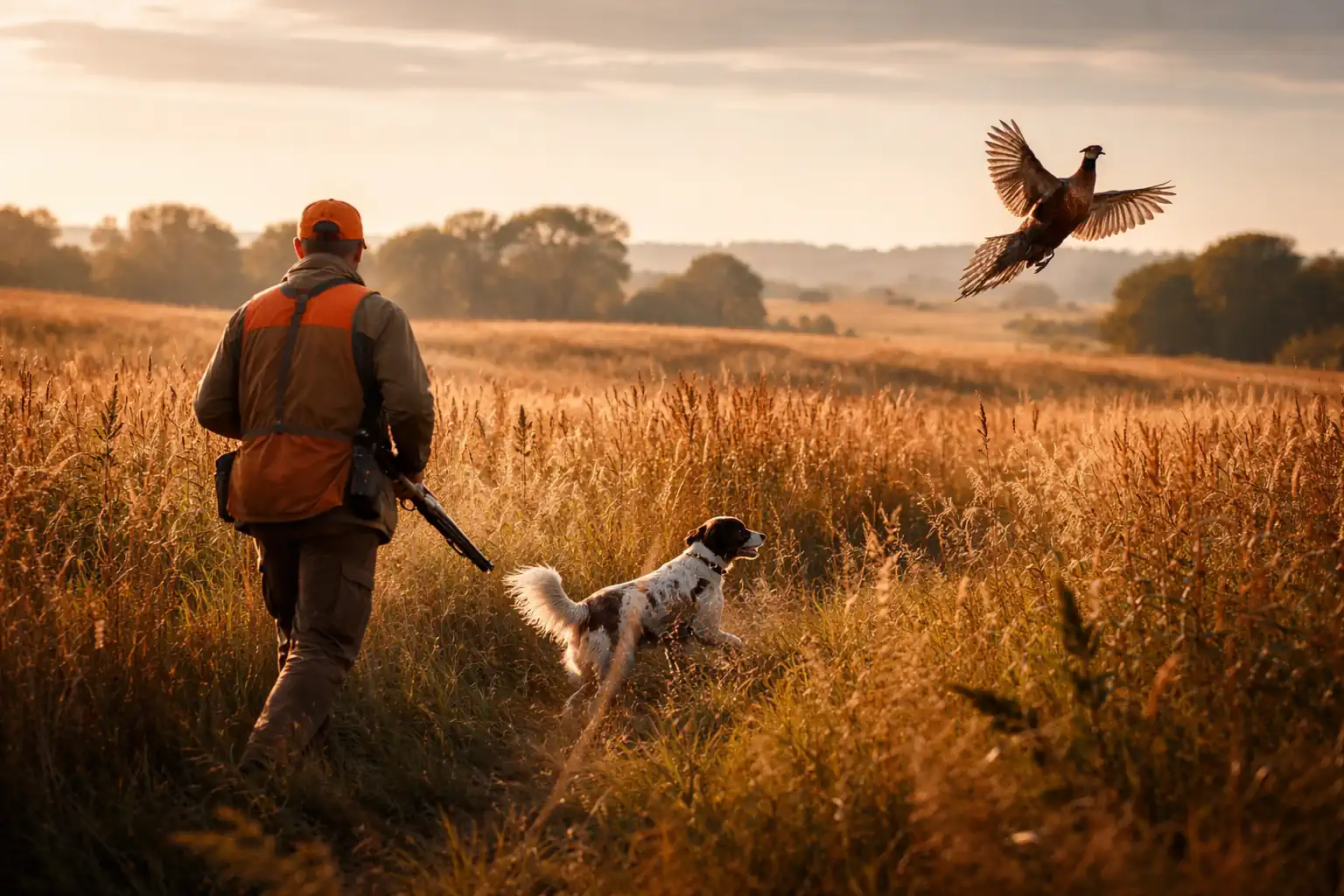
Choosing a pheasant shotgun: the useful answer
If you searched for the best caliber for pheasant hunting, you probably mean shotgun gauge. There is no gauge label that makes a shot safe or guarantees a clean harvest. If you are deciding between a 12 and a 20 gauge, compare the actual guns you can operate comfortably, the legal ammunition they accept and the patterns you can verify before hunting.
Gauge, bore and load are different choices
Gauge describes a shotgun bore and its matching shotshell size; .410 is a bore designation rather than a gauge. A gauge name is not a shot-size recommendation. Hunter Ed explains shotgun gauge and the .410 exception. Keep these questions separate when speaking with an instructor or dealer: which firearm fits your needs, which ammunition is compatible, and what the chosen combination actually does.
Check the location before choosing ammunition
Identify the species, exact property, open area and applicable state and land-manager rules. Do not assume a pheasant hunt allows lead shot simply because it is an upland hunt. For a specific example, Kirwin National Wildlife Refuge’s current upland table requires nontoxic shot for pheasant and other listed upland birds. That is a rule for that refuge, not a nationwide statement. Recheck your own destination before buying or packing shells.
12 versus 20 gauge: compare the actual shotguns
Use the following as a comparison worksheet, not a ranking. A familiar gun is still unsuitable if its condition, compatibility or handling is unresolved.
If you are considering a 12 gauge
Start with the specific model: can you manage its controls, mount it without losing muzzle discipline and carry it comfortably for the planned outing? Ask a qualified instructor to observe your handling. Do not choose it on the promise that a larger gauge solves wind, late-season birds or a distant flush. Those situations still require a separate decision to pass on a shot.
If you are considering a 20 gauge
Make the same checks. Do not infer carry weight, felt recoil or suitability for a beginner from the gauge alone. Compare the actual gun and intended compatible factory load with qualified help. If the combination is uncomfortable or hard to control during practice, pause the selection rather than planning to tolerate it in the field.
Considering a 28 gauge or .410 bore
A smaller bore is not a shortcut around learning safe handling and demonstrating appropriate performance. Before selecting a less familiar setup, establish what legal, compatible ammunition is available and what you can verify with that particular firearm. Neither a dog holding a point nor a close flush supplies that missing evidence.
Check compatibility, then examine the pattern
Read the markings and the current manual for your exact firearm, barrel and choke system. Confirm ammunition gauge or bore, permitted shell length and shot-material compatibility; do not experiment with a shell just because it appears to fit. The Browning Citori manual’s ammunition and choke warnings illustrate why these checks are model-specific. An older or unidentified gun needs manufacturer or qualified gunsmith advice before use.
A choke label alone does not establish the result. Mossberg’s ammunition FAQ notes that patterns can vary with barrels, loads and brands. At a lawful range with an appropriate backstop, follow its rules and work with an instructor to evaluate the actual combination. Record gun, barrel, choke, factory load and target distance; inspect repeated results rather than relying on one favorable target. Hunter Ed’s patterning guidance explains the variables. A paper pattern does not prove you can hit a moving bird consistently or certify a hunting distance.
A flushing pheasant does not create a shooting obligation
Know where partners, dogs and other people are, and keep within a clearly agreed safe shooting sector. Positively identify a legal target and what is in front of and beyond it. If cover hides a dog or the direction is uncertain, pass. Hunter Ed’s primary safety rules and group zone-of-fire guidance are prerequisites; changing gauge cannot repair an unsafe opportunity. Use appropriate eye and hearing protection, and follow your firearm’s unloading instructions before obstacles or transport.
Two illustrative decisions, not field-test claims
- Hypothetical late-season flush: a bird leaves beyond the conditions you have practiced, with a dog no longer visible. The answer is to pass, not to rely on a larger gauge or a tighter choke.
- Hypothetical ammunition change: your destination requires nontoxic shot, but the firearm’s compatibility is uncertain. Resolve it with the manufacturer or a qualified gunsmith and reassess the pattern before the trip; do not improvise at the trailhead.
What to do before the hunt
Write down the exact firearm, approved ammunition and choke combination, then finish the safe-practice and location checks. If the remaining question is the dog’s field work, use the pointing-dog range guide or the pheasant weather-planning article for that separate decision. If gunfire history is uncertain, read the noise-history decision aid; this equipment guide is not a gunfire introduction plan.
Frequently asked questions
What is the best caliber for pheasant hunting?
For a shotgun, the usual term is gauge. Compare the particular firearm, legal compatible ammunition, verified pattern and your safe handling rather than treating a gauge as universally best.
Should I choose a 12 or a 20 gauge for pheasant?
Compare the actual guns with a qualified instructor. Controls, comfort, condition, ammunition compatibility and demonstrated performance matter; neither gauge supplies a universal range or recoil promise.
Is .410 a gauge?
No. It is a bore designation. Use only the ammunition specified for the particular firearm; a similar-looking cartridge or shell is not a substitute.
What shot size or choke should I use?
This guide does not prescribe one combination for every pheasant hunt. Begin with destination rules and manufacturer compatibility, then evaluate the actual legal load and choke safely before the trip.
Is steel shot safe in my older shotgun?
Do not assume it is. Ask the manufacturer or a qualified gunsmith about that exact barrel and choke system. A material being legal for the hunt does not establish firearm compatibility.
How far can I shoot at a pheasant?
There is no yardage on this page that clears a shot. Pattern information, consistent shooting ability, target identification, dog and partner location, and the entire safe shooting direction all matter. Pass when those conditions are uncertain.
Does a pointing dog let me use a smaller gauge?
A dog’s work does not establish ammunition performance or make a shooting direction safe. Assess the firearm and your own demonstrated ability separately, and keep the dog out of the line of fire.
Where to go next
Choose the step that matches the question you still need to answer.
Next decision
Keep handling preparation separate from equipment choiceA firearm choice cannot supply a dog's response or establish a manageable outing.
Next decision
See the existing gear setupUse the equipment overview as context, not as firearm-specific safety or ammunition approval.
Browse guides by question or find your training starting point.