Hunting Pheasants in Different Weather Conditions
· 6 min read · HuntWithDog
Plan pheasant hunts around observable cover, dog control, wind, rain, snow, safe exits, and clear stopping decisions rather than universal weather rules.
On this page
- Start with the decision, not a weather rule
- What to change first
- Use habitat clues without treating them as promises
- Plan the return before entering cover
- Make a separate decision for each condition
- Cold and freezing temperatures
- Windy conditions
- Rain and wet weather
- Snow and ice
- Warm or unseasonably mild weather
- Weather never changes firearm responsibilities
- Replace assumptions with checks
- Two illustrative decisions
- Use equipment to support the plan
- Keep useful observations
- Review the wind and the workload separately
- Adapt the outing to what is observable
- Weather questions
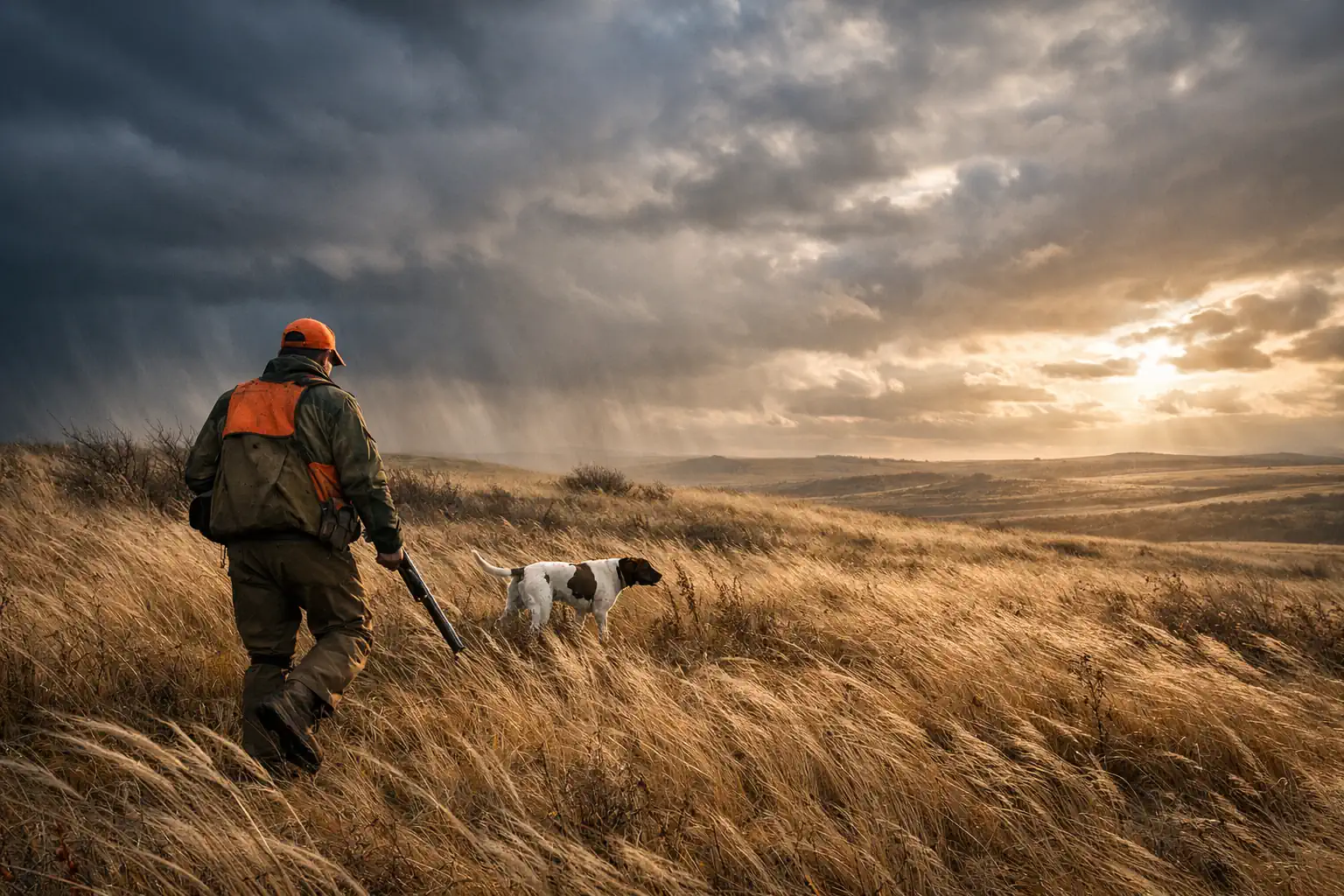
Start with the decision, not a weather rule
Weather can change which cover you can reach, how well you can see your dog, and whether the outing should continue. Use the forecast to build options, then check those options against what you actually find. No weather label guarantees birds or a safe hunt.
What to change first
- Choose a route you and the dog can leave safely if conditions deteriorate.
- Observe the cover and the dog's work before deciding that birds must be in one place.
- Reassess visibility, communication, footing, and workload as conditions change.
- Keep legal shooting hours and property rules separate from tactical preferences.
Use habitat clues without treating them as promises
Nebraska Game and Parks' winter-hunting article describes slower feeding movements on cold mornings and recommends considering areas that combine crops, grasses, brush, and wildlife plantings. These are useful clues from a regional field article, not a timetable for every pheasant. Read the agency’s winter-hunting guidance.
Plan the return before entering cover
Check the local forecast, warnings, legal access, and shooting hours. Identify your return route and a backup area. Agree with companions how to stop and regroup if you lose visibility or cannot communicate. A promising patch of cover is not a reason to enter terrain you cannot manage with the dog.
Make a separate decision for each condition
Cold and freezing temperatures
Use the relationship between feeding areas and protective cover as a scouting question: is usable cover still present, and can you reach it legally? Do not assume that starting later will fix an unsuccessful morning. Choose an outing the dog can manage, monitor its response, and change or end the plan when conditions make continued work unsuitable.
Windy conditions
First establish whether you can keep track of the dog and hear or otherwise reliably communicate with companions. Then use the wind and the dog's actual response to decide which edge to investigate. A sheltered edge is a possibility to inspect, not proof that birds have gathered there. Do not close the group’s spacing simply because it is windy.
Rain and wet weather
A wet day is not a reliable instruction to expect birds to hold, run, or become easier to find. Watch the dog rather than assuming what scent must be doing. If wet cover, poor visibility, slippery footing, or an uncertain return route prevents controlled work, use a different area or stop.
Snow and ice
Assess the route before following tracks into dense cover. Snow can hide changes in footing, and a shortcut across ice is not an acceptable substitute for a known route. Tracks are a clue to investigate; they do not establish that a bird is still present or that the dog should be pushed farther. Keep the return trip in the workload decision.
Warm or unseasonably mild weather
Do not treat a mild forecast, an early start, or the dog's enthusiasm as clearance for prolonged work. Plan water and opportunities to leave, and shorten or cancel if you cannot manage the conditions. For the separate question of heat-related illness, use the bird-dog heat-safety guide rather than a weather-tactics rule.
Weather never changes firearm responsibilities
Texas Parks and Wildlife advises agreeing safe shooting zones and communicating changes as terrain and the hunt change. Decline shots that do not meet the group’s safe arrangement; wind, an unexpected flush, or a bird about to leave range does not justify improvising one. Review TPWD’s firearm-safety guidance.
Thunder is a reason to stop outdoor activity and reach proper shelter, not to finish one more pass. The National Weather Service identifies a substantial building or an enclosed metal-topped vehicle as safe shelter and advises staying there at least 30 minutes after the last thunder. Read NWS lightning guidance before the trip.
Replace assumptions with checks
- “Cold means a noon hunt will work.” Check legal hours and usable habitat; do not substitute a clock for scouting.
- “Rain means easy scenting.” Observe whether the dog can work the actual setting; simplify the outing if it cannot.
- “We can finish the loop.” Reassess the exit when visibility, footing, communication, or the dog's work changes.
Two illustrative decisions
These are hypothetical examples, not reported HuntWithDog outings. After overnight snow, a handler finds the planned return route blocked and selects a shorter accessible field. On a windy afternoon, companions cannot maintain their agreed communication and stop instead of tightening their formation to continue.
Use equipment to support the plan
Check clothing, footwear, navigation, and the dog's equipment before leaving. Gear does not create a safe route or replace control of the dog. If conditions exceed what the group can manage, changing equipment in the parking lot may still leave cancellation as the right decision.
Keep useful observations
Record the conditions, cover, route, what the dog did, and why you changed the plan. Distinguish an observation such as “birds flushed from this edge today” from a broad claim such as “birds always use this edge in wind.”
Review the wind and the workload separately
Use the wind-reading guide for planning a pointing dog's search. Weather observations help select a setup; the dog's response and the ability to end safely determine whether you keep using it.
Adapt the outing to what is observable
A useful weather plan has alternatives and stopping conditions. Look for workable habitat, keep track of the dog and companions, and be willing to leave. Finding birds is one question; being able to continue responsibly is another decision that needs its own answer.
Weather questions
Frequently asked questions
What time of day is best for cold-weather pheasant hunting?
There is no universal best hour. Check the legal shooting hours, usable habitat, forecast, access, and the conditions your dog can manage. A regional observation about feeding does not guarantee a productive time on your parcel.
Should a hunting group move closer together in wind?
Do not change spacing by a blanket wind rule. Maintain the arrangement established through hunter education and competent on-site judgment, reassess communication and safe shooting zones, and stop if the arrangement cannot be maintained.
Does rain guarantee better scenting or tighter-holding pheasants?
No guarantee is supported here. Observe the dog and the cover you actually have instead of using rain as a prediction of one response.
Should I finish the field if a thunderstorm arrives?
No. Follow National Weather Service lightning guidance: stop outdoor activity and reach proper shelter. Do not continue for one more pass.
Where to go next
Choose the step that matches the question you still need to answer.
Prerequisite
Check the local wind before choosing a routeWeather background cannot replace observations at a cover or terrain change.
Next decision
Does the available contact fit these conditions?For a pointing dog, useful range depends on the actual cover, terrain and handling.
Related problem
What change in the dog should end the outing?Use individual observations and appropriate veterinary help rather than a weather label alone.
Browse guides by question or find your training starting point.