What Is a Versatile Hunting Dog? Understand the Tasks Behind the Label
· 5 min read · HuntWithDog
Understand versatile hunting work, natural tendencies and learned skills. Describe the tasks you need without treating a breed label as a finished-dog guarantee.
On this page
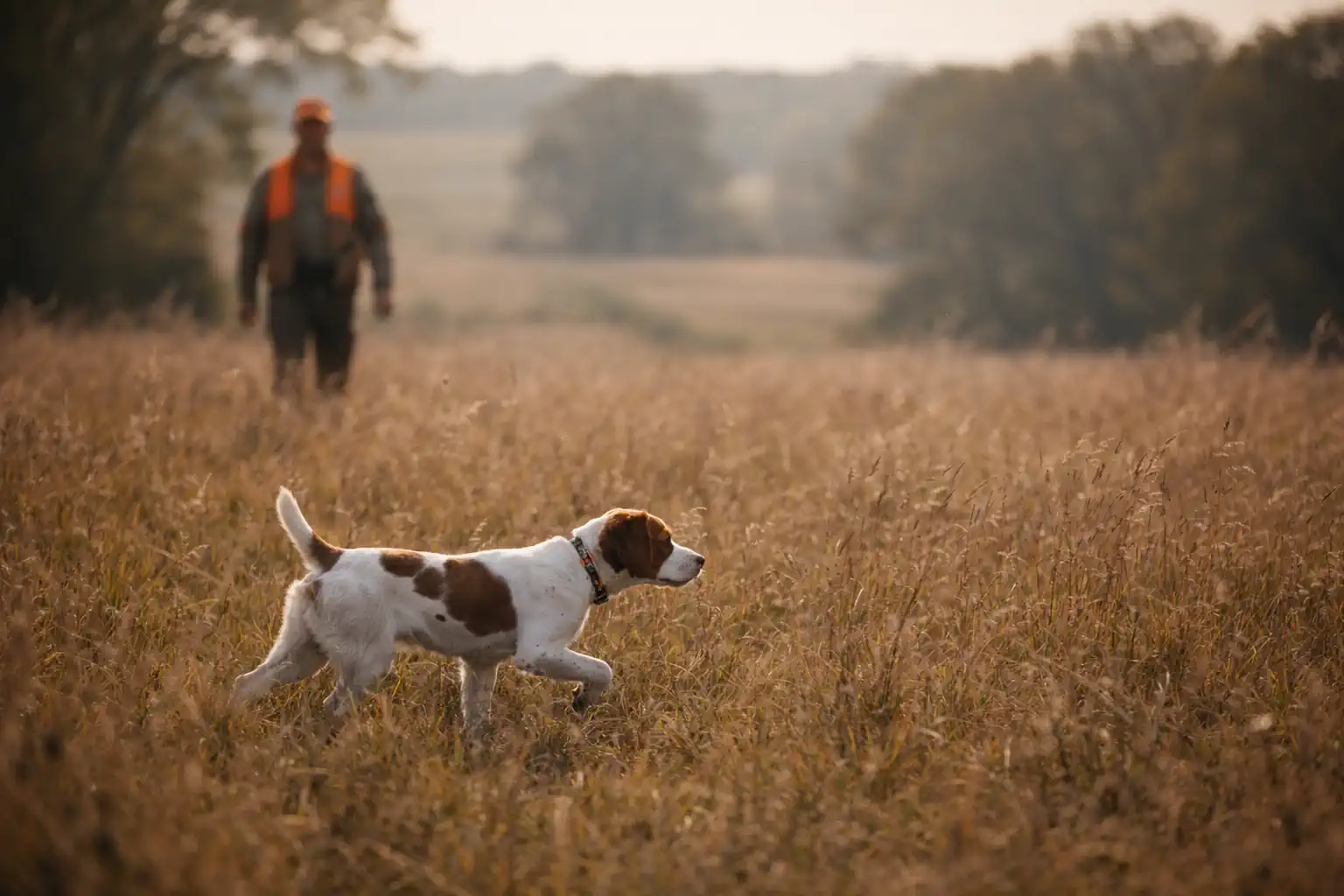
A versatile hunting dog is intended for several connected hunting jobs, rather than one specialty. In NAVHDA's North American framework, those jobs combine finding and pointing game, retrieving on land and water, and tracking wounded game in both environments. The term describes a broad working purpose. It does not tell you that a particular puppy or adult already performs every part dependably.
The North American Versatile Hunting Dog Association's current definition includes both breeding and training. Keep both in the picture when someone describes a dog as versatile. Ask which tasks they mean and what the individual dog has actually demonstrated.
This guide uses that institutional meaning. Other clubs and countries have their own programs and terminology; check the organization behind a claim instead of treating every use of the word as the same qualification.
Name the different jobs
The tasks fit together in an intended hunting role, but they are not interchangeable. A point is not a retrieve, and a retrieve on grass is not evidence of work in water.
| Task | What you are discussing | A useful question about the individual dog |
|---|---|---|
| Search | Looking for game in the field | Where has the dog searched, and what direction or help did the handler provide? |
| Point | Stopping to indicate game before the next part of the encounter | What was actually observed, in what setting, and what happened afterward? |
| Retrieve on land | Finding, collecting and returning game on land | Which parts of the return and delivery were demonstrated? |
| Retrieve in water | Recovering and returning game from water | What water work was actually observed, rather than assumed from swimming interest? |
| Track wounded game | Following a wounded animal's scent as part of recovery on land or water | What kind of recovery work is being described, and what remains unassessed? |
These are questions for discussing existing observations, not instructions to arrange a demonstration with wildlife or unfamiliar water. Do not create a difficult encounter simply to fill a blank in a table.
Communication with the handler also needs its own description. A dog may investigate eagerly without understanding a return signal, or pick up an object without having learned the requested delivery. For a closer look at the latter distinction, use the retrieve-chain guide. There is no need to repeat a whole hunting sequence to identify the question you want help with.
Natural ability does not mean finished performance
People may use "natural" for a response that appears readily, while "trained" describes something deliberately taught. Those labels are not a way to determine the genetic cause of an individual action. A spontaneous point, enthusiastic search or toy pickup gives you an observation; it does not explain everything that produced it or establish the rest of the working repertoire.
NAVHDA's February 2026 rules make a useful distinction. Its Natural Ability Test evaluates qualities the organization describes as hereditary, yet its preparation section explicitly rejects the idea that preparation is unnecessary. It also distinguishes that assessment from expecting a finished hunting dog and cautions against treating the result as an infallible forecast.
Keep your own claims equally specific:
- "She picked up this familiar toy and brought it near me" describes that task.
- "She has demonstrated the agreed retrieve in these conditions" adds a defined task and context.
- "She is versatile, so the other jobs will look after themselves" skips the information you still need.
You can value an encouraging response without making it a promise. A task not yet observed belongs under "unknown," rather than under "automatic" or "incapable."
Turn the label into a useful goal
Start with a short description of the work you want help planning. Separate the desired task from the information already available about the dog.
WORKING LABEL: versatile
        |
WHICH TASK DO I MEAN?
        |
WHAT HAS THIS DOG ACTUALLY DONE, AND WITH WHAT HELP?
        |
Known, manageable task -> discuss suitable practice or maintenance
Missing information   -> ask for assessment; keep the claim narrow
Worry or uncertainty  -> pause the harder plan and seek appropriate help
You might write: "I want to discuss land retrieves with a clear finish. I have seen pickup and carrying with a familiar dummy; I have not seen delivery on a learned cue." That is a usable starting question for an instructor. It is not a conclusion about the dog's potential or a request to force the missing piece.
Keep the goal small enough to describe. "A complete versatile dog" leaves too many questions hidden: the tasks, surroundings, handler assistance and criteria for a useful result. No single birthday, breed label or training calendar settles those questions.
A fictional example: an encouraging beginning is still a beginning
Ari and the dog, Rowan, are an invented example. Ari has watched Rowan point during a supervised field session and bring a familiar toy back on dry ground. Ari is considering an unfamiliar waterfowl outing because Rowan was described as a versatile hunting dog.
Ari separates the information:
- Observed: a point in one managed setting and a toy return on land.
- Not established: the relevant water retrieve, the handling required for the outing, and readiness for its other demands.
- Next decision: postpone that outing and ask an instructor to review the intended tasks and existing preparation.
Nothing in this record proves that Rowan cannot develop the additional work. It also does not justify using the outing as a test. For that broader participation decision, use first-hunt readiness.
Ask about the dog, the methods and the evidence
Useful questions for a breeder, owner or instructor include:
- Which tasks are you describing when you use "versatile"?
- What has this individual demonstrated, and what assistance was involved?
- Which parts remain unfamiliar or need teaching?
- How will you explain the next goal and respond if the dog struggles?
Choose humane help. AVSAB's trainer-selection guidance recommends reward-based methods, individual objectives and alternatives when the dog is worried. Pause an activity that becomes frightening rather than continuing to prove versatility. Fear, anxiety or aggression calls for veterinary and qualified behavior help, not greater pressure.
A test record can add useful information, but it needs the event's name, level and criteria. Read what field trials and hunting tests demonstrate for that separate question. If you are deciding which dog fits your life, use the breed-choice guide; versatility alone does not answer the household and care questions.
The useful goal is a specific job you can discuss, with an honest account of what this dog has done and what still needs attention. More tasks on a description do not make the missing information disappear.
Where to go next
Choose the step that matches the question you still need to answer.
Next decision
Which of these jobs do I actually need?Turn a broad working label into questions about your hunting and home life.
Next decision
What evidence does a test result provide?A named program assesses particular tasks and cannot establish every hunting skill.
Related problem
What kind of retrieve is being described?Land and water work, marking and handler-directed retrieves are separate questions.
Browse guides by question or find your training starting point.