Tick Checks and Lyme Prevention for Bird Dogs After Upland Hunts
· 7 min read · HuntWithDog
Plan tick prevention before upland trips, check your bird dog after cover, and separate tick removal, Lyme tests and vaccination decisions.
On this page
- Before the trip, check the plan for this dog and destination
- Make the tick check a separate job after cover
- Finding a tick: distinguish detection from removal
- Keep a short, factual exposure record
- Notice changes without naming the disease yourself
- Exposure, a positive test and clinical Lyme are different
- Lyme vaccination is one part of a narrower conversation
- Leave with the next question settled
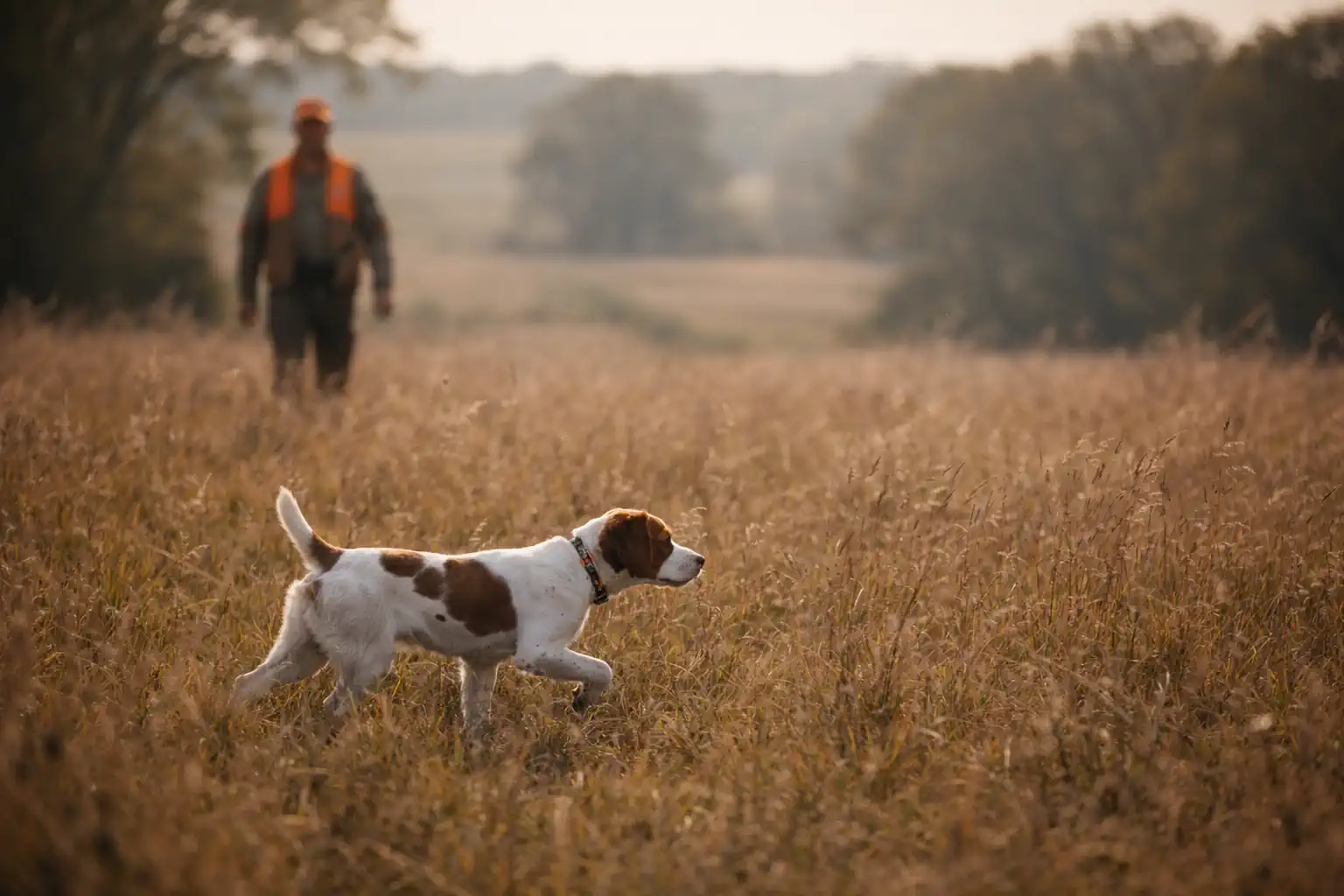
Use a veterinarian-guided prevention plan, check your dog daily and after field outings, and remove attached ticks promptly. A coat check, a Lyme test and a vaccination answer different questions. None should become a reason to ignore a dog that seems unwell. CDC's pet guidance recommends checks, prompt removal and discussing prevention with your veterinarian.
For an upland owner, the useful routine begins before travel and continues after the dog leaves the cover. The goal is to reduce exposure, deal with what you actually find and give the veterinary team useful information. This guide does not diagnose Lyme disease or choose medication for an individual dog.
Before the trip, check the plan for this dog and destination
Tell your veterinarian where you live, where you plan to hunt and what the dog will be doing. Ask whether the current parasite-prevention plan fits that exposure. CAPC's general guidelines, updated April 24, 2025, recommend year-round parasite control and adapting prevention to the individual animal's lifestyle and local exposure.
Do not wait until you find ticks to sort out an uncertain plan. CAPC's dog tick guidance describes geographic and seasonal variation and supports year-round control. This page offers no month or temperature that makes prevention and checks unnecessary.
Before leaving, settle three practical questions:
- Do you know which product the dog is meant to receive and how to follow its label and veterinary instructions?
- If use has been interrupted or you are unsure what was given, have you asked the veterinary team what to do?
- Do you know whom to contact near the destination if removal is difficult or the dog becomes unwell?
This is a preparation check, not a product comparison. Do not improvise extra applications, combinations or a replacement schedule from this article.
Make the tick check a separate job after cover
Give yourself light and enough time to see the dog, rather than treating a quick glance while loading gear as a complete check. CDC's May 2024 guidance calls for daily checks, especially after outdoor activity. Its illustrated check areas include:
- In and around the ears, and around the eyelids.
- Under the collar and front legs.
- Between the toes and back legs.
- Around the tail.
Look carefully without probing an ear canal, eye or skin. If handling a particular area is difficult or uncomfortable for the dog, ask the veterinary team for help rather than forcing the inspection. Not finding a tick is not proof that there was no exposure.
Finding a tick: distinguish detection from removal
Notice whether the tick is moving through the coat or appears attached. Record that observation without turning it into a guess about infection or how long it has been there.
For an accessible attached tick that you can handle safely, CAPC's canine guidance, updated March 30, 2023, describes manual removal:
- Wear gloves.
- Use fine-tipped forceps or tweezers to grasp the tick as close to the skin as possible.
- Pull it away slowly and steadily. Avoid crushing, twisting or jerking it.
If you cannot access or remove it safely, or you are unsure whether removal went properly, contact your veterinarian promptly. Do not keep digging or manipulating the area to resolve the uncertainty yourself. This is not a guide to treating a heavily infested dog, applying chemicals around sensitive areas or using human repellents on a dog.
A tick found despite preventive use is a reason to review the circumstances with your veterinarian, not to assume that more medication is the answer. CAPC notes that ticks can still be found on animals receiving control products. Continue the checks rather than treating preventive use as a guarantee.
Keep a short, factual exposure record
Record what you know while it is easy to remember. Keep observations separate from guesses:
OUTING: date, place and recent travel
FOUND: time noticed, location on the dog, crawling or apparently attached
PREVENTION: product and actual use history to discuss with the veterinarian
CHANGES: behavior, appetite or other concerns you have observed
FOLLOW-UP: veterinary advice received and questions still open
“Found attached near the collar after this outing” is more useful than an unsupported estimate of the exact attachment time. The record helps a conversation; it cannot establish which pathogen was present or whether the dog is ill. Do not delay a call to finish the notes.
Notice changes without naming the disease yourself
After known or suspected tick contact, watch for changes in behavior or appetite, as CDC advises. Tell your veterinarian what changed and describe the exposure. Do not automatically label a change as Lyme, dismiss it as ordinary hunting fatigue or use a vaccination record to rule out a problem.
If the dog is unwell or you are concerned, contact the veterinary team. Do not wait for a supposed symptom window, a future screening appointment or the next hunting day to ask what the dog needs.
Exposure, a positive test and clinical Lyme are different
A tick encounter is not a diagnosis. A laboratory result also needs context. CAPC's Lyme guideline, last updated May 15, 2019, explains that positive serology can occur in dogs without clinical illness and that diagnosis involves compatible signs and other information.
| What you know | What it does not establish by itself |
|---|---|
| The dog visited a place where ticks might occur | That an infected tick fed on this dog. |
| You found a tick | That the dog has clinical Lyme disease. |
| A Lyme antibody test was positive | That the dog is currently ill or that this page can decide treatment. |
| The dog has a concerning change | That Lyme is the cause, or that waiting for a particular test is appropriate. |
Ask the veterinarian what the specific test means for this dog, what other information matters and what follow-up is needed. This guide does not tell you that every positive result requires treatment or that every dog without obvious signs can be left without assessment.
Lyme vaccination is one part of a narrower conversation
AAHA's Lyme vaccination guidance, published August 18, 2022, discusses dogs living in or traveling to endemic areas and says vaccination should be complemented by tick control. Discuss the actual destination and the dog's circumstances with your veterinarian before travel. This page does not choose a vaccine or provide its schedule.
A Lyme vaccine does not replace tick checks or protect against the full range of tickborne diseases. CDC explains why tick-preventive use still matters. Neither vaccination nor the absence of obvious symptoms is a reason to disregard a concerning change.
The sources describe geography and risk, but their older regional figures are not a current risk estimate for your field or county. No local prevalence assessment was performed for this guide.
Leave with the next question settled
Before the next outing, ask your veterinarian:
- Does the prevention plan fit this dog, its actual use history and the destination?
- Can you show me appropriate tick removal and explain when I should ask for help?
- What should I report if I find a tick or notice a change afterward?
- If a test is positive, what does that particular result mean and what happens next?
- Should Lyme vaccination be discussed for where this dog lives or travels?
The useful next step may be confirming the prevention plan, getting help with removal or arranging assessment of a change. It is not automatically another run through cover, another product or a conclusion drawn from a test result alone.
Selected source passages checked November 4, 2026. This is an editorial owner guide, not a veterinarian-reviewed treatment protocol, a complete literature review or a report of field testing.
Where to go next
Choose the step that matches the question you still need to answer.
Related problem
Does this outing also need a snakebite exit plan?Tick prevention does not address other location-specific exposure or emergency extraction.
Next decision
Make observation part of season-long careRecord changes and discuss them with your veterinarian rather than relying on a routine to clear the dog.
Browse guides by question or find your training starting point.