Rattlesnake Country With a Bird Dog: Plan the Outing and the Exit
· 7 min read · HuntWithDog
Plan a bird-dog outing in rattlesnake country: reduce exposure, check the exit, and seek urgent veterinary care after a suspected bite.
On this page
- Decide whether this outing is manageable
- Do not use silence or a calendar as clearance
- Plan the exit before entering the field
- If you suspect a bite, act on that suspicion
- Ask about vaccination without assuming protection
- Keep training separate from a promise of snake avoidance
- Choose the next preparation step
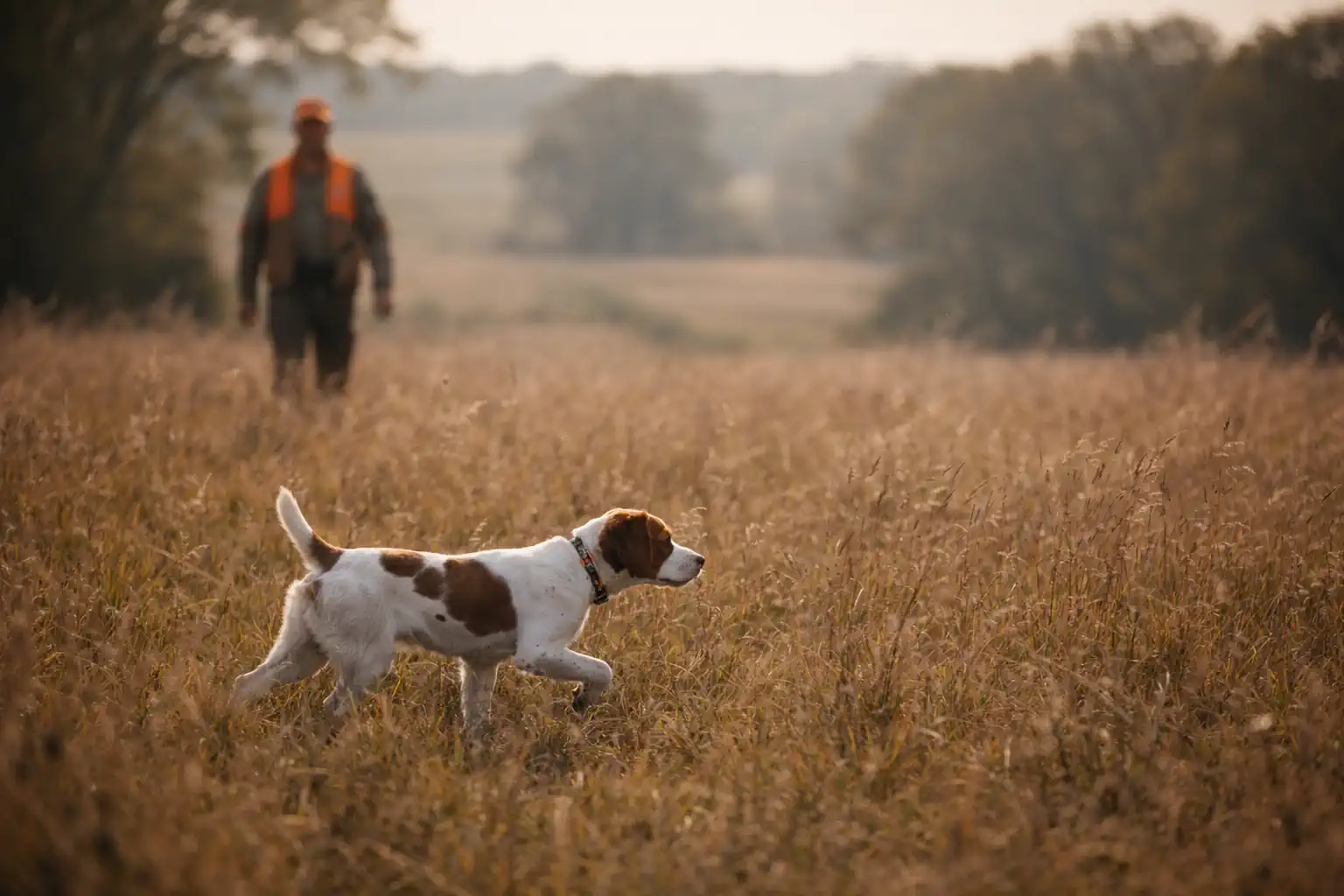
Suspect a rattlesnake bite? Stop the outing and seek urgent veterinary care. Do not wait for symptoms or assume vaccination makes waiting safe. Contact an emergency veterinary facility while arranging care. Merck Veterinary Manual emphasizes prompt treatment; UC Davis's vaccination guidance specifically says vaccinated dogs still need immediate veterinary attention after a bite.
If you are planning ahead, start with two questions: can you limit this dog's opportunities to encounter a snake, and can you get veterinary help if something goes wrong? A productive cover, an enthusiastic dog or a familiar route does not answer either question.
This guide is for bird-dog owners planning upland outings in rattlesnake country. It helps you choose a manageable activity and prepare an exit. It does not teach snake-avoidance exercises or snakebite treatment.
Decide whether this outing is manageable
General outdoor precautions matter, but their limits matter too. UC Davis CCAH's hiking advice recommends a leash and avoiding places such as tall grass, rocks and wood piles. These are precautions for controlled outdoor activity, not evidence that a pointing dog searching cover off leash is protected.
Before choosing the ground, ask:
- Can I keep track of the dog and prevent it from entering cover I cannot manage?
- Does this plan depend on a recall or stop response the dog has not learned reliably in comparable conditions?
- Can I change the route or activity without needing to finish a hunt first?
- If the dog cannot walk out normally, have I discussed a feasible assistance and transport plan for this dog with my veterinarian?
If the answers depend on luck, change the plan. That may mean choosing a different area, doing a controlled outing elsewhere, or canceling. Putting a leash on the dog may change the activity you can do; it does not make the original off-leash hunting plan equally controlled. Completing this checklist is not a certificate that a location is safe.
Suppose a proposed route has dense cover, poor visibility and an uncertain way back to the vehicle. The dog is eager to hunt, but you cannot explain how you would regain control or obtain help. That is a reason to choose another outing, rather than test the plan with the dog already loose. This is an illustrative decision, not a reported field case.
Do not use silence or a calendar as clearance
A rattlesnake can strike defensively without first rattling, according to California Fish and Wildlife. Quiet cover therefore does not establish that there is no snake nearby.
Use local wildlife information to understand the area, while keeping its geographic scope clear. California's description of snake behavior is not a safety calendar for every US hunting destination. This guide offers no temperature, month or time of day that clears an outing. Reconsider the actual terrain, the dog's control and the available exit instead of looking for a supposedly safe number.
If you see a snake, keep the dog away and change your route. Do not approach, disturb or handle it. California Fish and Wildlife warns against handling both living and dead snakes. Do not collect one for identification or let that task delay veterinary care.
Plan the exit before entering the field
Make the emergency plan specific enough that another person could follow it. Before leaving, verify:
| Question | What to settle before the outing |
|---|---|
| Where could the dog receive emergency care? | Contact the facility about its current availability and where it directs suspected snakebite cases. A saved map pin alone is not confirmation. |
| How would you reach it? | Know the vehicle location, the route out and any access uncertainty. Discuss assistance and transport needs for your particular dog in advance. |
| How would you communicate? | Identify reception gaps and arrange how you would obtain help. Do not assume a phone will work everywhere. |
| Who knows the plan? | Give a companion or contact the location and intended route, including changes that affect the exit. |
| What would make you turn back? | Decide beforehand that loss of manageable control or an unresolved exit is enough to change or cancel the activity. |
These are planning questions, not a prescribed way to move an injured dog. Ask your veterinarian about practical preparations before the trip. If you cannot resolve the access or assistance needed for that location, choose a different outing.
If you suspect a bite, act on that suspicion
End the activity and seek urgent veterinary care. Keep the dog as quiet as possible and limit activity while obtaining help; follow the veterinary team's instructions for the dog's condition and transport. Do not spend time on ice, tourniquets, cutting or sucking the wound, or waiting to see whether problems develop. Merck's snakebite guidance warns that these measures can be ineffective or harmful and delay treatment.
Tell the veterinary team what you observed and what remains uncertain. Do not try to decide at home that it was a harmless or nonvenomous bite. This page cannot assess the dog's condition, and it gives no observation period or treatment doses.
Ask about vaccination without assuming protection
The AAHA core and noncore recommendations classify Western diamondback rattlesnake toxoid as noncore: a vaccine considered for some dogs according to lifestyle, geography and exposure risk. That classification is not proof of effectiveness. AAHA's rattlesnake-toxoid chapter, published August 18, 2022, states that published data documenting efficacy in dogs or supporting cross-protection in dogs are lacking. This is a statement from that guideline, not a new 2026 research finding.
UC Davis's guidance, revised in January 2018 and last updated June 25, 2018, describes its hospital's decision not to recommend routine use because of insufficient efficacy information. It is a dated institutional position, not a newly verified consensus among veterinarians.
These sources should not be presented as opposing claims that the vaccine works or does not work. Both identify evidence limits. Discuss your dog's health, destination and likely exposure with your veterinarian. Neither a vaccination record nor a risk-based recommendation replaces an exposure plan or urgent care after a suspected bite.
Keep training separate from a promise of snake avoidance
A recall cue, GPS location or completed training program does not establish that a dog is snake-proof. HuntWithDog's training approach uses rewards, consistent with the American Veterinary Society of Animal Behavior's humane-training position. That position supports the method choice; it does not validate a particular snake-avoidance program.
This guide does not recommend shock-based sessions or exercises involving snakes. Work on ordinary handling foundations in manageable settings, and choose the outing around the control you actually have. If a proposed program claims guaranteed protection, do not use that promise to relax the exposure or emergency plan.
Choose the next preparation step
If ordinary handling is the missing piece, use HuntWithDog's training foundations to choose a manageable starting point. Those foundations help organize learning; they are not a snakebite-prevention guarantee.
Before this particular outing, settle the exposure and emergency-access questions above. If either remains unresolved, the useful next step is a different plan, not another run through the cover.
Sources checked November 4, 2026. This guide is an editorial synthesis of selected source passages, not a veterinary review or a report of field testing.
Frequently asked questions
Can a rattlesnake bite without warning me with a rattle?
Yes. A defensive strike can occur without a rattle. Do not treat silence as clearance to let the dog investigate cover. California Fish and Wildlife explains this behavior.
Should I wait for swelling if I only suspect a bite?
No. Seek urgent veterinary advice and care rather than using a symptom checklist to decide whether to wait. Merck explicitly warns against delaying presentation until problems develop.
Does vaccination mean I can monitor the dog at home?
No. UC Davis says vaccinated dogs still need immediate veterinary care after a bite. Ask your veterinarian about prevention before a trip; do not use the vaccination discussion to postpone care afterward.
What if I cannot manage the dog or arrange a workable exit?
Change the activity or location, or cancel. A bird encounter is not a reason to test an unresolved control or emergency plan.
Where to go next
Choose the step that matches the question you still need to answer.
Related problem
Plan tick checks as a different field taskRoutine checks and prevention do not replace an emergency exit plan for suspected snakebite.
Next decision
Review the broader care and recovery planKeep ordinary observation and preparation separate from an urgent veterinary problem.
Browse guides by question or find your training starting point.