Shotgun and Ammo for Quail Hunting: What to Check
· 6 min read · HuntWithDog
Choose a quail shotgun, legal compatible ammunition and choke with a practical check sequence, pattern notes and clear limits around dogs and partners.
On this page
- Choose a quail setup you have checked before the covey rises
- Begin with the hunt, not a shopping list
- Check both state rules and property restrictions
- A practical selection sequence
- 1. Compare the gun you will actually carry
- 2. Check the complete ammunition label
- 3. Verify the choke and examine what it produces
- A covey rise: identify one legal opportunity or pass
- Use a short pre-hunt comparison record
- Choose the next question after equipment
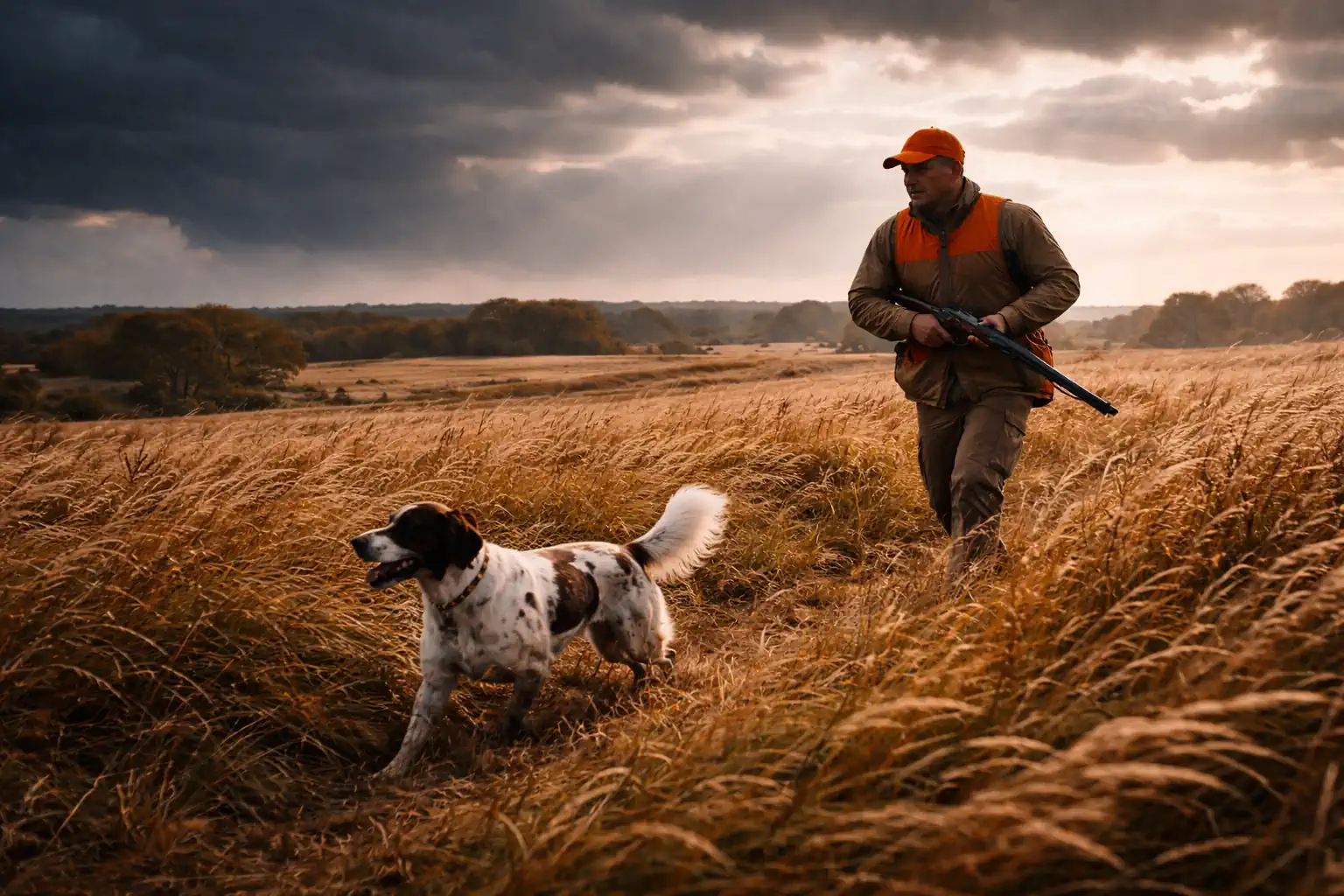
Choose a quail setup you have checked before the covey rises
The useful starting point is a shotgun you can handle safely, with factory ammunition and a choke confirmed compatible with that exact gun and legal at the hunting location. There is no universally best gauge, pellet size or choke for every quail hunt. A fast rise is a reason to have made these decisions earlier, not a reason to shoot faster.
Begin with the hunt, not a shopping list
Describe the outing before comparing equipment: which quail species and property, what cover you can see through, who will hunt with you, and how the dog will be managed. This article addresses equipment and shooting restraint. It does not turn a pointing dog into a flusher or establish a young dog’s readiness for gunfire.
Check both state rules and property restrictions
Confirm season, species identification, permitted methods, access and ammunition restrictions for the actual place. Upland hunting is not an automatic exemption from nontoxic-shot rules. The USFWS upland table for Kirwin National Wildlife Refuge specifically includes bobwhite quail and requires nontoxic shot there. It also directs hunters to state and refuge-specific requirements. Use that as an example of what to check, not permission to hunt somewhere else or to target-practice on hunting land.
A practical selection sequence
1. Compare the gun you will actually carry
If you are comparing 12, 20 or 28 gauge, assess each particular firearm rather than assigning it a job from the number. Check whether you can reach and operate the controls, keep the muzzle safe and repeat an orderly mount under qualified supervision. Ask for help if weight, dimensions, discomfort or unfamiliar controls interfere. The Hunter Ed gauge explanation clarifies the sizing terms; it does not rank models for quail. Do not assume a smaller-gauge gun will automatically feel lighter or more comfortable.
2. Check the complete ammunition label
Match the factory ammunition to the current instructions for your exact firearm and chamber. Read the gauge or bore, shell length and shot material; keep different gauges separated. Resolve uncertain markings or an unfamiliar older gun with the manufacturer or a qualified gunsmith. Browning’s Citori manual gives model-specific ammunition and choke warnings. It is an example of why the actual manual matters, not approval for another shotgun.
Avoid buying solely from a claim that one shot number protects meat, a faster load fixes misses or a lighter load guarantees comfort. Those labels do not resolve legality, compatibility or your own handling. Keep the box information with your practice notes so you can identify what you actually tested.
3. Verify the choke and examine what it produces
A choke influences how the pattern spreads; it is not a guarantee of a hit. Hunter Ed explains the role of choke constriction. Confirm that the installed system and intended ammunition are permitted together. Mossberg’s FAQ specifically warns that steel-shot suitability differs between its barrel systems and that load and brand can change patterns. Do not generalize a maker’s answer to every shotgun.
Use a lawful shooting range, its approved targets and backstop, and qualified instruction when needed. Compare repeat patterns from the actual gun, choke and ammunition rather than accepting a choke name as a result. Record the combination and test distance. Hunter Ed’s patterning guide identifies the variables, but a target cannot reproduce every moving-bird opportunity. Do not use a paper result as automatic permission to shoot farther.
A covey rise: identify one legal opportunity or pass
Before moving into cover, agree how partners will maintain visibility and safe shooting sectors. Keep track of the dog’s location. At a rise, the presence of several birds does not remove the need to identify the target and everything in front of and beyond it. If the dog, another person or the direction is uncertain, do not shoot. Hunter Ed’s primary firearm rules and zone-of-fire guidance take priority over equipment choice. Neither an open choke nor a lighter load makes a shot near a dog safe.
Maintain safe muzzle direction and trigger discipline throughout the walk. Follow the firearm’s instructions for unloading at obstacles and transport. Plan eye and hearing protection and appropriate visibility clothing, including what the location requires. A course and supervised handling practice provide the foundation this equipment article cannot replace.
Use a short pre-hunt comparison record
- Gun and compatibility: model, barrel/chamber markings, applicable manual and confirmed ammunition/choke combination.
- Observed practice: exact factory load, choke, target results and any handling difficulty. Address a problem before hunting rather than changing several things in the field.
- Location: current species and property rules, ammunition requirement and allowed areas.
- People and dog: agreed sectors, visibility, dog management and circumstances in which everyone will stop.
Illustrative example, not a reported hunt: a covey rises across a partner’s side while the dog is hidden in brush. Passing is the decision, even if the ammunition has patterned well. The equipment checks remain useful because they settle one part of preparation; they do not cancel the others.
Choose the next question after equipment
For the outing itself, continue to the quail field-planning guide. For a choice of dog, the foot-hunter’s dog-selection guide addresses compatibility with the work and home. If gunfire history is unknown or fear is present, pause exposure and use the noise-history decision aid rather than testing a new setup around the dog.
Frequently asked questions
What is the best shotgun gauge for quail hunting?
There is no universal winner here. Compare the actual gun’s handling, condition and compatible legal ammunition, then verify the combination in safe practice. Gauge alone does not establish comfort or results.
Is a 12 gauge too much for quail?
The gauge label alone does not answer suitability. Evaluate the particular shotgun and approved load with qualified help; do not assume a smaller gauge, lighter load or open choke automatically makes the hunt safer.
What shot size and choke should I buy?
Start with the property’s ammunition rules and the firearm and choke manufacturer’s instructions. Evaluate the actual compatible combination before hunting. This page does not prescribe one pellet number or choke for every quail hunt.
Can I use steel shot for quail?
Check both the location’s rules and your firearm’s compatibility. Some places require nontoxic shot, but that does not mean every older barrel or choke accepts steel. Ask the manufacturer or a qualified gunsmith if uncertain.
How far are quail shots safe?
A distance alone cannot answer that. You must know the target, the people and dog locations, and what is in front of and beyond the target, as well as your demonstrated ability and equipment limits. Pass if the direction or opportunity is uncertain.
Does a close-working dog make an open choke safer?
No equipment choice makes a shooting direction near a dog safe. Manage the hunt so you know the dog’s location, and do not shoot when the dog or another person may be in the line of fire.
Can I pattern my gun at the hunting property?
Only if that activity is expressly allowed and can be conducted safely under the property’s rules. Access for a hunt is not automatic permission for target practice. A lawful shooting range is the straightforward place to arrange the check.
Where to go next
Choose the step that matches the question you still need to answer.
Next decision
Compare the existing equipment setupAn equipment overview is separate from firearm-specific instruction and current ammunition rules.
Next decision
Separate field context from the buying decisionUnderstanding a route and the dog's search does not make a shotgun or load suitable.
Browse guides by question or find your training starting point.