Pre-Season Conditioning for a Bird Dog: A Practical 6-Week Build-Up
· 10 min read · HuntWithDog
A practical six-week bird dog conditioning framework for building field fitness, foot toughness, heat awareness, and recovery before upland season.
On this page
- The Short Answer: Build Capacity Gradually, Then Make It Look Like Hunting
- Why Pre-Season Conditioning Matters for a Bird Dog
- Before You Start: Establish a Safe Baseline
- A Practical Six-Week Pre-Season Build-Up
- Weeks 1–2: Rebuild the Aerobic Base
- Weeks 3–4: Add Strength, Terrain, and Foot Toughness
- Weeks 5–6: Rehearse the Demands of a Hunt
- Heat, Humidity, and Acclimation
- Condition the Feet, Not Just the Heart
- How to Read the Dog During a Conditioning Session
- What a Balanced Pre-Season Week Can Look Like
- Do Not Confuse Conditioning With Training
- Opening Week: Protect the Fitness You Built
- Bottom Line
- FAQ
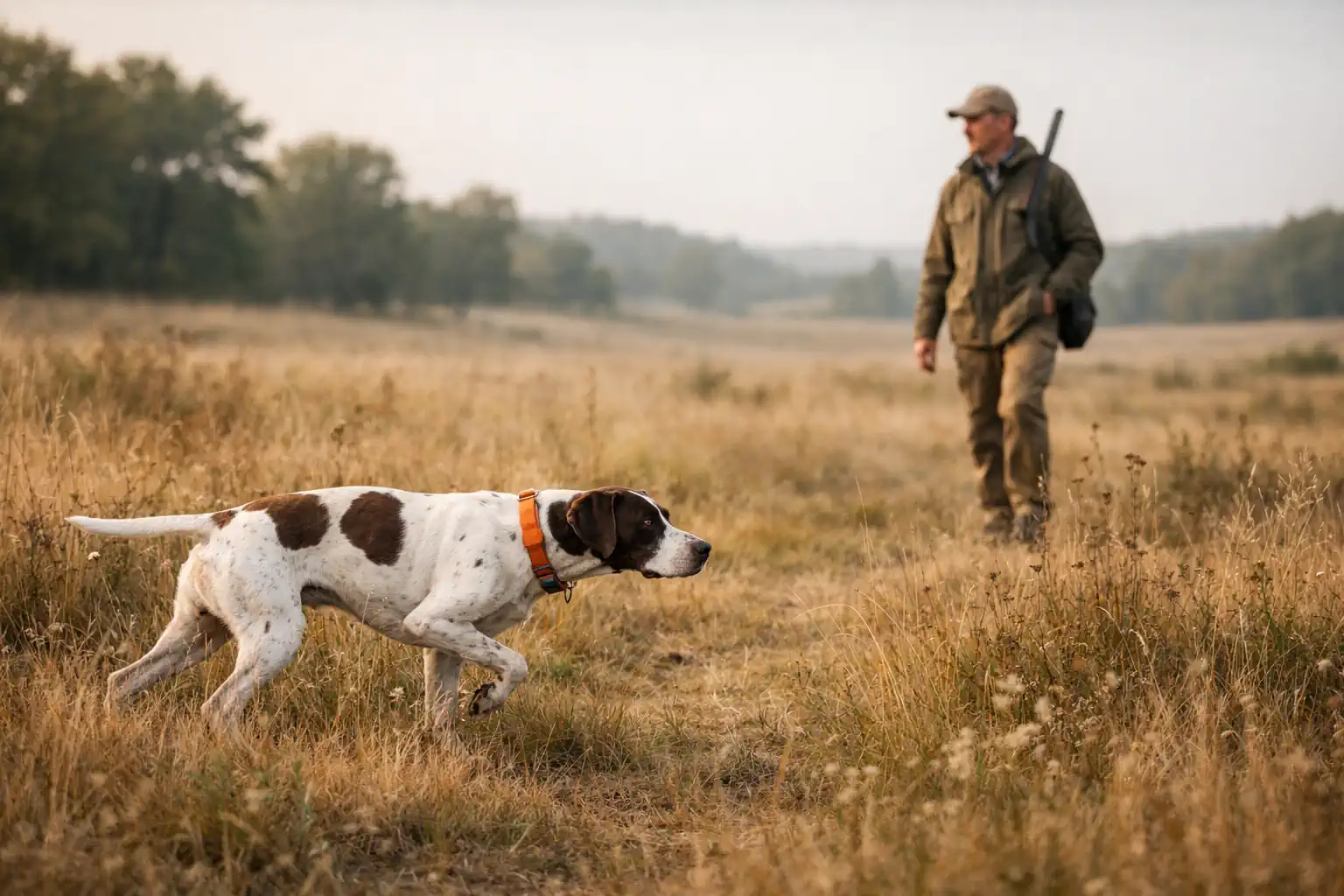
Opening day exposes every shortcut you took in August. A bird dog that has spent months doing only backyard exercise may still have plenty of desire, but desire is not the same as field fitness. Upland work asks a dog to trot, accelerate, turn, climb, push through cover, recover, and keep using its nose while heat and excitement build.
Pre-season conditioning is not about making a dog run until it is tired. It is about arriving at the season with enough aerobic base, strength, foot toughness, heat awareness, and recovery habits that hunting does not become a sudden physical shock. The plan below is a practical framework for a healthy adult dog, not a veterinary prescription. If your dog has been inactive, is very young, is older, has an injury history, or has any health concern, start with your veterinarian.
The Short Answer: Build Capacity Gradually, Then Make It Look Like Hunting
A useful pre-season plan moves from easy, repeatable work toward field-specific work. Start below the dog’s maximum, add only one meaningful stressor at a time, keep recovery days, and judge the dog by how it finishes and recovers—not by how hard it will push for you.
- Weeks 1–2: rebuild regular movement and easy aerobic work.
- Weeks 3–4: add terrain, controlled free running, and short strength or body-awareness work.
- Weeks 5–6: make some sessions resemble hunting: variable cover, changes of pace, turns, short climbs, and realistic field duration.
- Throughout: adjust for temperature, humidity, footing, body condition, age, and previous fitness.
- Stop early: if the dog’s gait changes, it stops responding normally, pants excessively, lags, looks disoriented, vomits, collapses, or otherwise looks wrong.
Why Pre-Season Conditioning Matters for a Bird Dog
A pointing dog does not move through the field like a person on a steady jog. It casts, slows to investigate scent, accelerates to new cover, jumps obstacles, pivots on uneven ground, and may repeat that cycle for hours. That mix makes fitness specific: road miles alone do not prepare feet, stabilizing muscles, coordination, or decision-making in cover.
The Merck Veterinary Manual notes that appropriate physical training improves exercise capacity and that working animals should be acclimated to hot environments before competition or hard work. AKC conditioning guidance makes the same practical point from a sports-dog perspective: canine athletes benefit from intentional conditioning, warm-ups, cool-downs, and veterinary input rather than a weekend-warrior pattern.
For a hunter, the takeaway is simple: the first hard hunt should not be the dog’s first hard day. Merck’s overview of fatigue and exercise in dogs and AKC’s canine-athlete conditioning guidance both support gradual preparation rather than abrupt workloads.
Before You Start: Establish a Safe Baseline
Do not choose the first week by looking at the calendar. Choose it by looking at the dog. A dog that has been running regularly all summer starts in a different place than a dog that has been mostly inactive.
- Health: get veterinary clearance when there is any doubt, especially after injury, illness, long inactivity, or with senior dogs.
- Body condition: extra weight makes heat management and repetitive movement harder; rapid weight loss is not the goal either.
- Feet and nails: check pads, nails, interdigital skin, and any recurring abrasions before mileage rises.
- Current work: write down what the dog can comfortably do now. That is your baseline, not what it did last season.
- Weather: condition for the environment you actually have. Hot, humid days may require shorter early-morning sessions rather than trying to force a schedule.
A good first session should feel almost too easy. You want the dog finishing with normal coordination and enough composure to drink, cool down, and settle. You are building repeatability.
A Practical Six-Week Pre-Season Build-Up
Use the six weeks as phases, not as a rigid mileage chart. The dog’s response controls progression. If a week is too much, repeat or reduce it. If the dog is already well conditioned, the early phases can be shorter while preserving the same sequence.
Weeks 1–2: Rebuild the Aerobic Base
Favor frequent, moderate sessions over one heroic run. Brisk walks, easy trotting on safe surfaces, controlled free movement, and short field walks work well. The goal is to re-establish a rhythm of regular exercise without soreness or excessive fatigue.
- Use mostly forgiving ground before adding rough rock, deep sand, tall grass, or steep hills.
- Keep the dog moving naturally rather than forcing a constant sprint.
- Include easy days and full recovery days.
- Finish with a few minutes of walking so breathing can normalize instead of going straight from hard work to the truck.
Weeks 3–4: Add Strength, Terrain, and Foot Toughness
Now start making the work look more like the country you hunt. Add moderate hills, uneven ground, thicker grass, and short bursts of faster movement. Rotate terrain rather than repeating the same path every day.
Simple body-awareness work can supplement field work: controlled sit-to-stand repetitions, backing a few steps, slow figure eights, or stepping over low obstacles. AKC’s conditioning resources emphasize balance, coordination, and strength as parts of canine fitness, but exercises should be appropriate for the individual dog and done on secure footing.
See AKC’s canine conditioning exercise guide for examples and its recommendation to involve a veterinarian before starting a conditioning program when appropriate.
Weeks 5–6: Rehearse the Demands of a Hunt
In the final phase, at least some sessions should resemble upland hunting without requiring birds. Let the dog cast through real cover, work edges, climb small grades, turn with you, and alternate between steady movement and short bursts. This is where you learn whether fitness transfers from generic exercise to field movement.
- Use the same boots, collar, vest, tracking gear, and water routine you expect to use during the season.
- Practice short water breaks before the dog is desperate for them.
- Include one easier session after a harder field day rather than stacking hard days simply because the calendar says so.
- Stop while movement is still clean. A dog that finishes well gives you better information than one driven to exhaustion.
If opening week arrives before the dog is ready, shorten the hunts. The calendar never gets priority over the dog.
Heat, Humidity, and Acclimation
Early-season bird hunting often begins while summer heat is still hanging on. Dogs create substantial metabolic heat during exercise, and panting is their main cooling mechanism. Humidity makes evaporative cooling less effective. A fit dog can still overheat.
Acclimation matters, but it is not permission to work through unsafe heat. Build exposure gradually during cooler parts of the day and change the session when conditions change. Carry more water than you think you need, know where shade is, and have a route back to the vehicle.
Texas A&M Veterinary Medicine lists warning signs of heatstroke that include excessive panting or drooling, lethargy, vomiting or diarrhea, altered mentation, and collapse. Those are not “tough it out” signs. Stop exercise, begin appropriate cooling, and seek veterinary care. Review Texas A&M’s heatstroke guidance before hot-weather training.
Condition the Feet, Not Just the Heart
A dog can be aerobically ready and still lose a hunt to tender pads. Surface adaptation is one reason a treadmill or neighborhood route cannot be the entire program. Gradually introduce the surfaces you expect: prairie grass, stubble, sand, rocky edges, brush, or wet ground.
- Inspect pads after every rough-terrain session.
- Watch for worn spots, cracks, embedded awns or debris, swelling, and changes in gait.
- Keep nails at a functional length so the foot can load normally.
- Do not try to “toughen” feet by deliberately working through abrasion. Damaged skin needs recovery.
How to Read the Dog During a Conditioning Session
Bird dogs are often bad at self-limiting when excitement is high. A dog may keep going because it wants to hunt, not because its body is coping well. That makes the handler responsible for watching the trend.
- Movement: shortening stride, stumbling, repeated sitting, or an uneven gait means the session is over.
- Responsiveness: delayed reactions to familiar cues can be a fatigue or heat warning.
- Breathing: panting that continues to escalate instead of settling during a break deserves attention.
- Recovery: compare how quickly the dog returns to normal after similar sessions across weeks.
- Next day: persistent stiffness, reluctance to move, or soreness is information that the previous workload was too much or needs veterinary assessment.
Progress is not measured by how tired you can make the dog. It is measured by how much useful work the dog can repeat while staying sound, engaged, and recoverable.
What a Balanced Pre-Season Week Can Look Like
For a healthy adult dog with an established base, a balanced week might contain two moderate aerobic sessions, one terrain-focused field session, one short strength/body-awareness session, and several easy walks or recovery days. That is an example, not a universal prescription.
The important pattern is alternation. Hard work creates the stimulus; recovery is where adaptation happens. If every outing becomes a test, fatigue accumulates faster than fitness.
Do Not Confuse Conditioning With Training
Fitness and bird-dog training overlap in the field, but they are not the same job. A conditioning run is a poor time to fix every handling issue. Constant whistling, repeated corrections, or complicated bird setups can turn a physical session into mental pressure.
Keep conditioning simple, then use separate short sessions for recall, direction changes, steadiness, or bird work. If you are also rebuilding field habits, the guide on staying consistent in the off season is a useful bridge, and reading wind with a pointing dog helps make the final field sessions more realistic.
Opening Week: Protect the Fitness You Built
The most common mistake is completing a sensible build-up and then doubling the workload on opening weekend. Excitement makes handlers ignore the plan.
- Start with a shorter first hunt than your maximum.
- Use water and cooling breaks before the dog asks for them.
- Rotate dogs if you have more than one.
- Check feet and body condition that evening, not only the next morning.
- Give the dog enough recovery before the next hard hunt.
Conditioning does not make a dog indestructible. It gives you more margin—but the handler still has to manage pace, weather, cover, and recovery.
Bottom Line
Pre-season conditioning works when it is boring enough to be repeatable and specific enough to transfer to the field. Start from the dog you have today, progress gradually, add terrain and hunting-like movement, protect feet, respect heat, and stop treating exhaustion as proof of a good workout.
A bird dog should reach opening day eager to hunt and physically prepared to keep making good decisions. Fitness serves the hunt; it should never come at the expense of the dog.
FAQ
These are the questions handlers most often ask when moving from off-season activity into a real pre-season build-up.
Frequently asked questions
How many weeks does a bird dog need for pre-season conditioning?
Six weeks is a useful planning window for many healthy adult dogs, but it is not a rule. Start from the dog’s current fitness and extend the build-up when the dog has been inactive, is older, or needs veterinary guidance.
Should I run my bird dog every day before the season?
Not necessarily. Conditioning improves through a mix of work and recovery. Repeated hard days can accumulate fatigue, so alternate harder sessions with easy movement or rest.
Is road running enough to condition a hunting dog?
It can build aerobic capacity, but upland hunting also requires balance, turns, uneven terrain, foot toughness, and variable pace. Add field-specific movement gradually.
How do I know I am increasing work too fast?
Watch for deteriorating gait, unusual lagging, prolonged panting, poor recovery, next-day stiffness, reluctance to work, or any sign that the dog is not returning to normal. Reduce workload and involve a veterinarian when signs are concerning.
Can I condition a bird dog in hot weather?
Exercise in heat requires caution. Use cooler parts of the day, provide water and shade, build acclimation gradually, and stop immediately at signs of heat illness. Heatstroke can be life-threatening.
Should puppies follow the same six-week plan?
No. Young dogs have different developmental limits, and high-impact or repetitive conditioning may be inappropriate. Discuss age-appropriate exercise with your veterinarian.