Keeping a Working Dog Sound Through the Hunting Season
· 10 min read · HuntWithDog
Practical in-season bird dog care: monitor movement and recovery, plan work and rest, review feeding and hydration, and check paws between hunts.
On this page
- Plan Care Throughout the Hunting Season
- Recognizing Changes During a Hunt
- Physical Signs to Check Each Day
- Changes in Working Behavior
- How Many Hunt Days Per Week Is Realistic?
- Nutrition and Hydration During High-Output Weeks
- Pad Care Under Regular Use
- Set Limits Before the Hunt
- When to Pull Your Dog for the Day
- Frequently asked questions
- How do I know if my dog is just tired or actually injured after a hard hunt?
- Should I increase my dog's food during the hunting season?
- My dog's pads look rough but aren't cut yet — should I rest the dog?
- Is there a general rule for how many consecutive days a bird dog should hunt?
- My dog seems to lose weight every season despite eating well. What should I check?
- What's the most common mid-season handler mistake that shortens a dog's season?
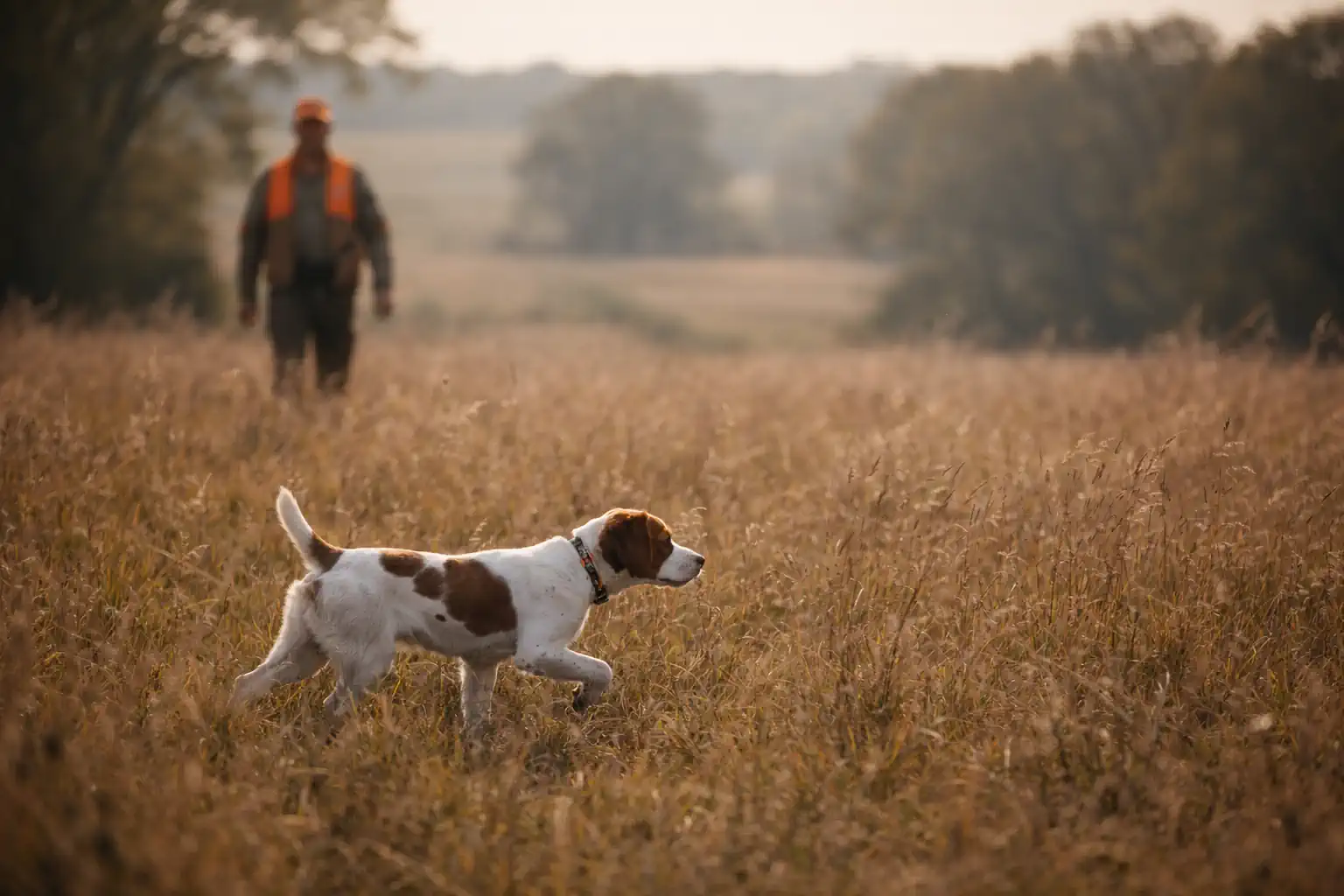
Plan Care Throughout the Hunting Season
Plan each outing around your dog's current condition, recent workload and the terrain and weather ahead. Keep track of movement, appetite, weight and paw condition between hunts so that changes inform the next day's plan.
This guide covers what to watch during and after field work, how to plan work and rest, and what to discuss with your veterinarian about feeding, hydration and return to hunting after an injury.
Recognizing Changes During a Hunt
Watch for changes from your dog's usual movement and behavior during a hunt. Lagging behind, stopping repeatedly or becoming reluctant to enter cover are reasons to stop and assess what has changed. These observations do not tell you the cause. If your dog seems unwell, is in pain or has difficulty moving, stop field work and seek veterinary advice; urgent signs need immediate care.
Physical Signs to Check Each Day
Urgent problems take priority over a routine post-hunt check; see the signs below under When to Pull Your Dog. Otherwise, after a hunt, check pads for cuts, cracks and worn areas. Notice swelling, changes in movement or discomfort without trying to diagnose an injury yourself. Keep track of changes in body condition as well, and discuss concerns with your veterinarian.
Compare your dog's movement and behavior with its usual pattern after a hunt. New stiffness, reluctance to move or limping calls for stopping field work and contacting your veterinarian. Persistent heavy panting deserves attention rather than being dismissed as slow recovery; see the urgent signs below. Looking more comfortable after a few hours or by the next morning does not rule out injury.
Mobility sources: Cornell on limping and veterinary assessment; PDSA on stiffness, limping and urgent signs.
Changes in Working Behavior
Notice when a dog that usually loads eagerly becomes reluctant to approach the truck, or when its usual range and willingness to work cover change. Hunting closer, pulling up short on birds or skipping familiar cover can alert you to a change, but none of these behaviors diagnoses exhaustion. Stop to assess the dog rather than pressing on to test whether its performance improves.
A change in pointing intensity or steadiness is another observation to record, not proof of depleted energy, a training fault or a handling mistake. Consider it alongside changes in movement and well-being. If there is pain, stiffness, limping or other signs of illness, stop field work and contact your veterinarian rather than trying to correct the performance in the field.
How Many Hunt Days Per Week Is Realistic?
Plan hunting days and rest around your dog's health, conditioning and recent workload, along with terrain, weather and outing length. A full day is not a standard unit of effort, and a rest day does not prove that a dog is ready for another hard outing. Build recovery time into the plan, shorten outings when needed and ask your veterinarian about workload if recovery or movement has changed.
Workload context: Virginia Tech on individual fitness and changes during exercise. This hiking guidance does not set a quota for hunting days.
Age, health and the individual dog's history matter when planning work and rest. A young dog building experience and an older dog with a previous injury may need different plans, but age alone does not tell you how much recovery either needs. Discuss the dog's current condition, previous injuries and recent response to exercise with your veterinarian when setting or changing the workload.
Nutrition and Hydration During High-Output Weeks
A hunting dog's food needs depend on its size, health, workload and conditions. More field work may call for more calories, but a fixed calorie increase or off-season multiplier will not fit every dog. Record what your dog eats and track weight and body condition through the season. Review the feeding plan with your veterinarian, including whether a more energy-dense food is appropriate. Persistent or unexplained weight loss needs assessment rather than an assumption that the dog simply needs more food.
Plan meals around field work rather than giving a large meal immediately before a hard outing. Ask your veterinarian about meal size and timing for your dog, especially if it has a history of digestive problems. Agree on a routine that accounts for the day's total food intake and your dog's needs, rather than copying another handler's meal schedule.
Carry fresh drinking water for your dog and plan opportunities to drink before the hunt, during rest breaks and afterward, including in cold weather. Offer frequent drinks rather than leaving all drinking until the day is over. How much water to carry depends on the dog, the outing and conditions; there is no single volume that fits every hunt.
Nutrition and hydration sources: Cornell on activity-specific feeding and drinking water; AAHA on nutritional risk factors; Cornell on meals, exercise and bloat risk. A winter hunting-dog study provides context for energy expenditure and water turnover in specific cold-weather conditions, not a universal feeding or drinking allowance.
Pad Care Under Regular Use
Check your dog's pads before and after field work for cuts, cracks, worn areas and embedded debris. Stop hunting if the pads are raw or irritated, or if your dog is limping.
Contact your veterinarian about a wound, bleeding, persistent paw licking, swelling, discharge or signs of pain. Seek urgent veterinary care if bleeding cannot be controlled or your dog cannot bear weight on a paw. After an injury, ask your veterinarian when and how to resume field work rather than using a fixed number of days as a recovery rule.
If you plan to use boots, introduce them before a demanding outing. Follow the sizing, fastening and fit-check instructions for the specific model, and watch how your dog moves in them. Familiarization is not a guarantee that a dog will be comfortable in a particular boot. Do not use boots or wax as a reason to continue hunting on an injured paw.
Pad-care sources: Virginia Tech on paw checks and boot introduction; VCA Animal Hospitals on pad injuries; American Red Cross on pad-wound signs and veterinary care.
Set Limits Before the Hunt
Finding birds makes it tempting to extend a good day, especially when the dog still wants to hunt. That enthusiasm does not establish that more work is appropriate. Sticking to a limit chosen before the outing can help you resist that temptation, but a time limit by itself cannot guarantee a sound dog for the rest of the season.
Decide your daily time limit before you go out, using your dog's individual plan and the conditions rather than the number of birds you hope to find. Do not extend it just because the last covey flushed ten minutes ago or there may be more birds in the next draw. Whatever limit you choose, it is a ceiling, not a target. Stop sooner if your dog shows concerning signs or conditions worsen.
When to Pull Your Dog for the Day
Limping should end the hunt even if your dog is willing to keep going. Stop field work and contact your veterinarian rather than using eagerness to hunt as reassurance. Severe pain, inability to bear weight or a serious wound needs urgent veterinary care. Do not rely on a rest break or apparent improvement to decide that an injury is safe to work through.
If your dog stops ranging as usual, avoids cover or stays close with its tail down, stop and assess the change. A hunting pattern alone cannot establish fatigue or rule out injury. Do not push on to recover the day's performance. Pain, difficulty moving or signs that the dog is unwell call for veterinary advice, with immediate care for the urgent signs below.
Stop the hunt and seek emergency veterinary care for difficulty breathing, collapse, confusion or marked weakness. Excessive panting with stumbling or these other signs is not something to watch until morning. Panting alone does not establish heatstroke, but suspected heatstroke needs immediate veterinary attention, even if your dog seems to improve at the truck. Do not resume field work after suspected heatstroke without veterinary guidance.
Urgent-sign sources: Animal Medical Center on suspected heatstroke and apparent improvement; Cornell on heat-related warning signs.
Sources for the weight-loss question below: AAHA on nutrition history and body and muscle condition; Companion Animal Parasite Council on individualized preventive testing. The two AAHA sections cited here belong to the same nutrition and weight-management guideline.
Frequently asked questions
How do I know if my dog is just tired or actually injured after a hard hunt?
You cannot reliably separate tiredness from injury by eagerness to hunt, a single check or improvement after sleep. Stop field work and contact your veterinarian about limping, new stiffness, swelling or signs of pain. Get urgent veterinary care for severe pain, inability to bear weight, a serious wound, difficulty breathing, collapse or suspected heatstroke. Do not wait until the next morning for those signs. After an injury, follow your veterinarian's advice on when and how to resume field work.
Should I increase my dog's food during the hunting season?
Your dog may need more calories as its workload increases, but the amount should follow an individual feeding plan. Track food intake, weight and body condition, and review changes with your veterinarian. A higher-fat performance food may suit some dogs doing sustained work; it is not automatically the best choice for every dog. Weight loss is a reason to assess what has changed, not proof of underfeeding.
My dog's pads look rough but aren't cut yet — should I rest the dog?
If your dog's pads have become abraded or sore, stop field work and check them. Do not assume that one day off or an application of wax makes them ready for another hunt. Contact your veterinarian about a wound, bleeding, limping or other signs of pain. Seek urgent veterinary care if bleeding cannot be controlled or your dog cannot bear weight on a paw. After an injury, ask your veterinarian when and how to resume field work.
Is there a general rule for how many consecutive days a bird dog should hunt?
Use an individual plan rather than treating a set number of consecutive hunting days as a quota. Adjust outings and rest for health, fitness, terrain, weather and recent workload. Stop for changes in movement or well-being, and seek veterinary advice rather than waiting for the scheduled rest day. After an injury, follow your veterinarian's return-to-work plan; one day off is not automatic clearance.
My dog seems to lose weight every season despite eating well. What should I check?
Arrange a veterinary assessment for recurring, persistent or unexplained weight loss, even if your dog finishes its meals. Bring a record of food amounts and calorie content, treats, workload, weight changes, appetite and any other changes you have noticed. These observations can help the assessment; you do not need to rule out food quantity, food choice or travel stress first. Discuss body and muscle condition and an appropriate parasite-testing schedule as part of your dog's preventive care, rather than waiting for a fixed point in the hunting season.
What's the most common mid-season handler mistake that shortens a dog's season?
One avoidable mistake is filling every available day with hunting without planning for rest or adjusting to the dog's response. Build recovery time into the schedule and be willing to shorten or skip an outing when movement or well-being changes. Planned rest does not guarantee an injury-free season, and a day off is not clearance to resume after an injury. Seek veterinary advice about concerning changes and follow your veterinarian's return-to-work plan after an injury.
Where to go next
Choose the step that matches the question you still need to answer.
Next decision
Revise the routine between hunting daysAppropriate ordinary activity and rest belong in the plan beyond a single outing.
Next decision
Keep task and condition notes comparableThe journal is a planning aid, not a diagnostic score or clearance to work.
Browse guides by question or find your training starting point.