Taking a Kid Behind a Pointing Dog: Safety, Roles, and What the Dog Must Already Do
· 6 min read · HuntWithDog
Plan a child-observer outing with a pointing dog: separate adult roles, current local rules, protection, dog readiness, and an easy way to leave.
On this page
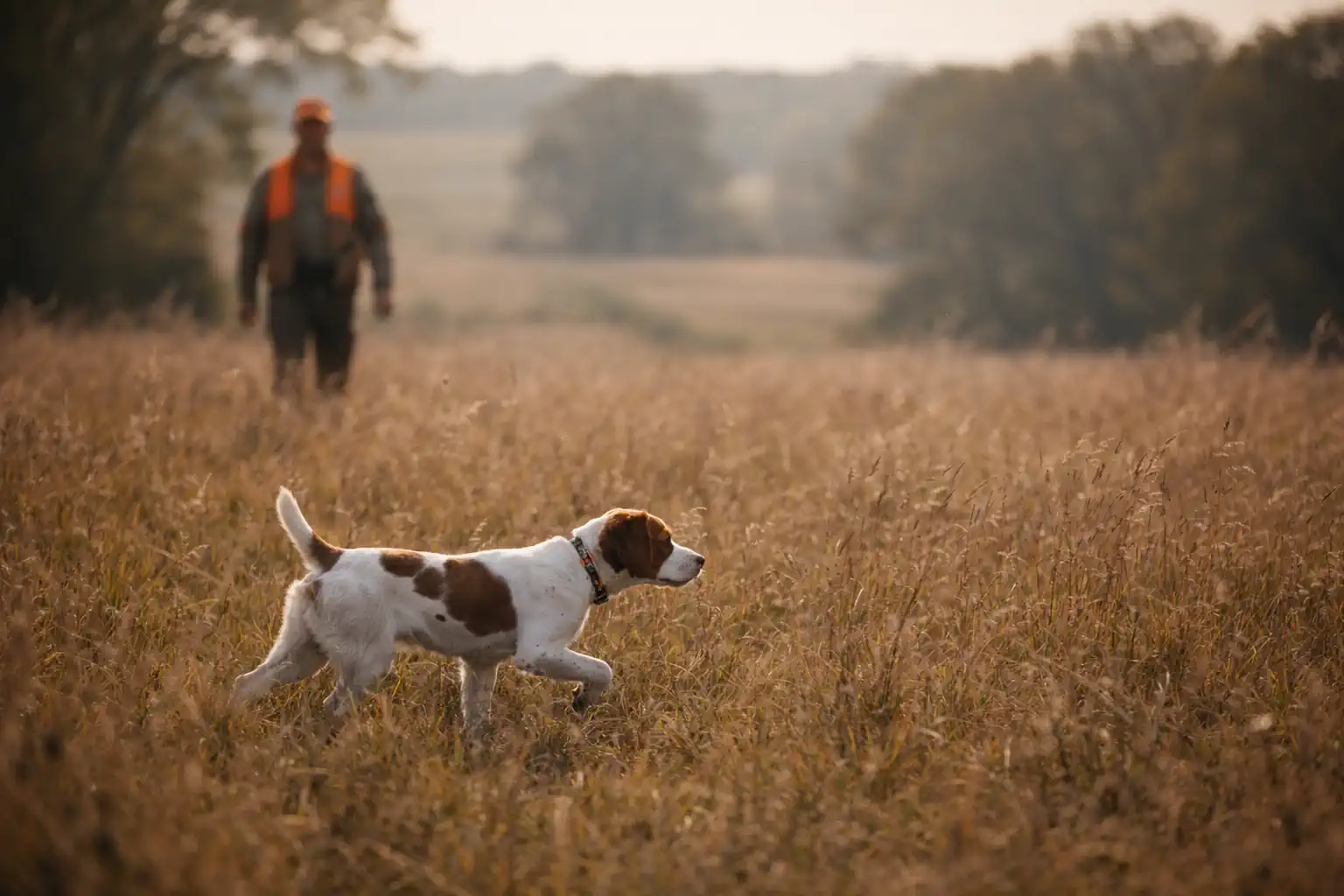
A child's first outing with a pointing dog can be about watching, asking questions, and deciding whether they want to come again. Plan around that experience, with an easy way to leave. A bird count is a poor measure of whether the visit worked for the child.
The word “behind” in the title is not a positioning instruction. There is no universally safe place behind a dog or shooter. Where firearms are present, recognized hunter education, supervised practical instruction, and qualified on-site safety judgment are prerequisites for the adults responsible. This article helps organize the planning conversation; it cannot certify an outing as safe.
Decide whether the child is observing or hunting
For this first observer visit, the child's job is to watch and ask questions. They carry no firearm and have no shooting, flushing, dog-handling, or retrieval assignment. Being an observer does not mean nobody nearby will be hunting.
A youth taking part as a hunter needs a different plan: current legal eligibility, the required licenses and education or lawful mentoring arrangements, and supervised practical preparation. A certificate or exemption alone does not establish readiness. The U.S. Fish & Wildlife Service's youth-hunting guidance emphasizes supervision, feelings, and individual readiness rather than a universal starting age.
Check the rules for the actual location, land, and activity, including whether observers may attend. Official requirements differ: Wisconsin's mentored-hunting rules and Texas's hunter-education requirements are starting points for those states, not interchangeable guidance. These sources were checked on November 5, 2026; check current requirements before a trip.
Give the child and dog separate attention
For a first observer outing, plan for a named adult whose main responsibility is the child and a separate competent adult handling the dog. This is a conservative planning recommendation, not a universal staffing rule. It helps avoid the vague assumption that someone else is watching.
The handler gives the dog its cues. The supervising adult listens to the child, checks their comfort, and keeps their agreed role clear. If dog management and child supervision compete, simplify or postpone the activity. Harvesting a bird must not displace either responsibility.
Agree on a plain-language stop signal that anyone, including the child, can use. Check that everyone can recognize and acknowledge it while protective gear remains on. If communication fails around gunfire, stop the activity rather than removing hearing protection to continue. Make clear that the child may ask to leave without having to justify it.
Agree where the child will stay
For this first observer visit, a prudent approach is to ask a qualified instructor to help the supervising adult assess an appropriate arrangement for the actual people, dog, terrain, and conditions. This is a planning recommendation, not a general legal requirement or a validated protocol. Before entering cover, everyone must understand the agreed arrangement. If an appropriate arrangement cannot be established, do not proceed.
The child does not independently follow the dog, approach a point or flush, or pursue a retrieve. A place agreed at the start may become unsuitable as visibility, terrain, or the group changes. Texas Parks & Wildlife's firearm-safety guidance stresses reassessing and communicating arrangements as a hunt progresses. It does not supply a universal child-observer location.
Keep companions and the dog accounted for. Any uncertain or unsafe shot must be declined. A distance, diagram, or instruction to “stay behind everyone” cannot replace those responsibilities.
Discuss what the dog already does
Have the dog's regular handler and a competent reward-based trainer consider these questions before involving a child:
- Can the handler recall and stop or hold the dog in the relevant environment, rather than only at home?
- Is the dog's behavior around people, a point, a flush, and retrieval familiar to the handler, without chaotic chasing or loss of control?
- Can the handler regain control and secure the dog when the activity ends?
- Is the dog comfortable and physically prepared for the planned terrain and duration?
These are discussion prompts, not a validated readiness test. A training title or the label “finished” cannot establish that an outing is safe. Texas Parks & Wildlife warns that dogs can move unpredictably even on a leash.
Keep unfinished training separate from the child's visit. The child should not become a distraction test, and the outing should not become a correction lesson. The American Veterinary Society of Animal Behavior recommends reward-based training. Physical preparation matters too: the University of Minnesota's hunting-dog guidance highlights fitness, terrain, breaks, and leg and paw checks.
Prepare protection and an easy way out
Hearing protection is for observers as well as participants wherever gunfire is present. The National Institute on Deafness and Other Communication Disorders includes attending shooting sports among situations requiring protection. Check fit with the child's glasses and hat, which can affect an earmuff seal, and confirm that the communication plan works with protection worn.
Include suitable eye protection and conspicuous clothing. Texas Parks & Wildlife's hunting-safety guidance covers these precautions; verify the exact visibility garments legally required for the particular outing.
Pack water, food, and weather-appropriate clothing. Know the route back and have emergency contacts and a realistic return plan. Texas Parks & Wildlife's guidance on taking children outdoors recommends short initial trips. Build in opportunities to turn back rather than promising a fixed duration or completing a loop at all costs.
An appropriately managed visit without firearms in use may be a better first step. It still requires attention to terrain, weather, dog behavior, and any other hunters nearby.
Make leaving an ordinary option
End the visit if the child asks, becomes frightened or distressed, is too hot, cold, or tired, or cannot follow the agreed instructions. Lost visibility, failed communication, an unaccounted-for person or dog, unsafe firearm handling, an unexpected nearby hunter, or a difficult crossing also calls for stopping and reassessing.
Stop the dog's work for fear, loss of control, altered gait, signs of pain, or possible overheating. Suspected heatstroke needs urgent veterinary attention, as Cornell's canine heat-safety guidance explains. Do not rely on a fixed rest timer to make continuing acceptable.
Keep supervision and dog-handling responsibilities in place while ending the activity. Afterward, ask what the child enjoyed, what worried them, and whether they would like another visit. A short outing that respects their answer is a useful beginning.
Where to go next
Choose the step that matches the question you still need to answer.
Prerequisite
Keep dog preparation separate from a child visitA first-season learning plan does not establish that the dog or setting is suitable for a child observer.
Related problem
Review the dog care and stopping questionsThe child outing should not become a test of unfinished training or physical readiness.
Browse guides by question or find your training starting point.