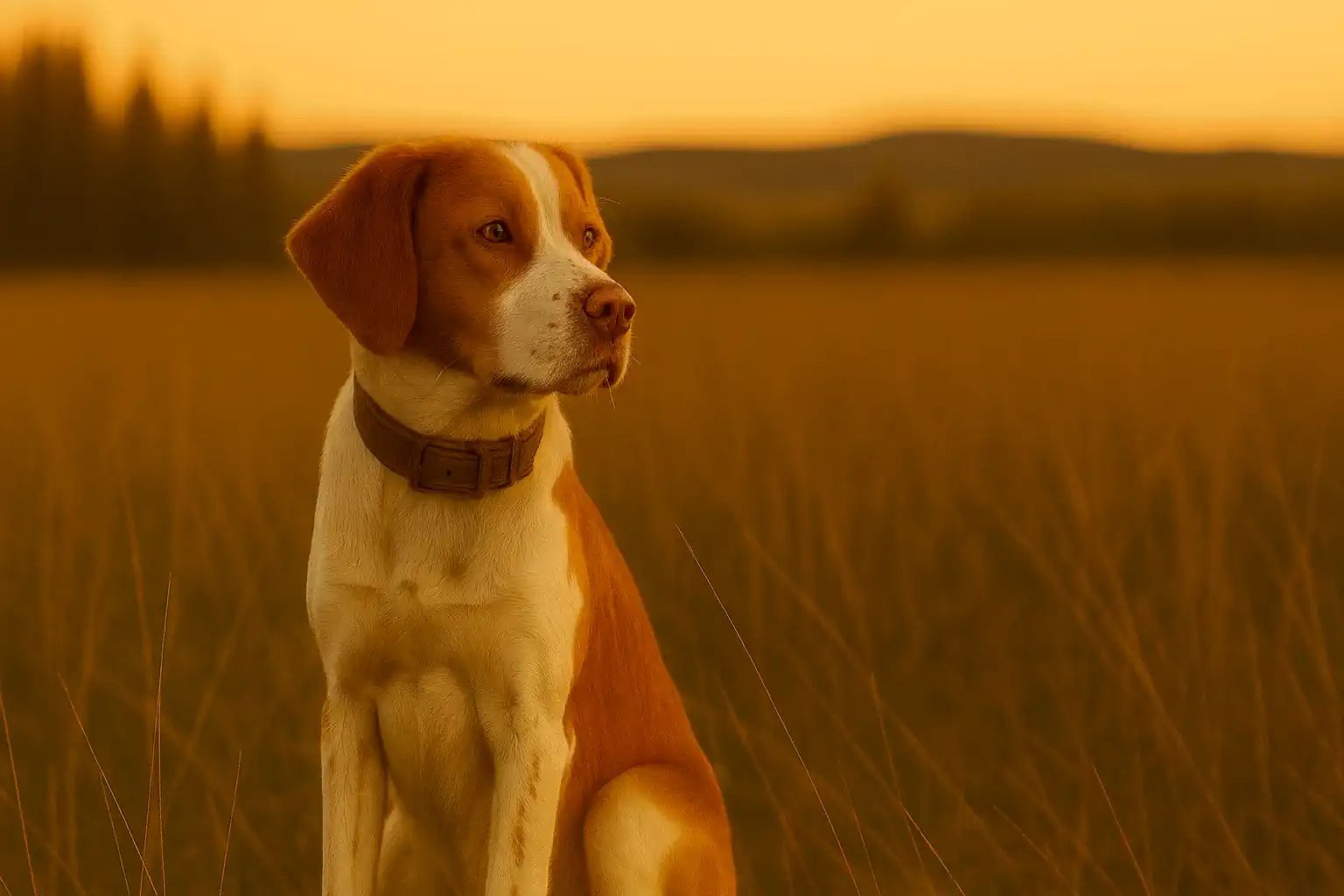
Early bird work
Keep early bird encounters manageable: curiosity comes before trained steadiness. Stop before pursuit, distress or loss of control; no final result is required.
Frequently asked questions
What is the goal of early bird work?
Observe curiosity in a manageable setting, not a finished point or trained steadiness. Stop before pursuit, distress or loss of control; a final result is not required.
Should I correct chasing during early bird encounters?
Do not punish an unexpected response or wait for pursuit to become chaos. Manage the setup so you can stop before pursuit, distress or loss of control, then simplify rather than repeating the encounter to get a good result.
Should I use recall or a stop cue around birds?
Build recall and a stop cue separately with rewards. Do not turn an early encounter into an obedience test, but safety still takes priority: this is not a rule to withhold recall when the dog is at risk.
Training approach: AVSAB humane-training position. This supports reward-based methods, not a particular bird-contact or gunfire sequence.
Does enthusiasm for birds mean the dog is ready for gunfire?
No. Keep these introductory encounters free of shooting. Review the dog’s history with a qualified reward-based professional rather than firing a test shot.
When does formal steadiness belong in training?
Formal steadiness is a later, separately planned progression. Early observation does not establish readiness for wing, shot or fall; teach the needed skills separately and progress at the individual dog’s pace.
Keep building the foundation
Use these topics as introductions. Decide whether to repeat a manageable version, simplify, stop or ask for help; reading the next page is not a test of your dog’s readiness.
Explore the foundations