Force-Fetch for Pointing Dogs: Do You Need It, and When Does It Make Sense?
· 7 min read · HuntWithDog
Force-fetch divides pointing dog trainers. Here is an honest look at when a trained retrieve is necessary, when a natural retrieve is enough, and what breaks down in between.
On this page
- The Honest Question
- What Force-Fetch Actually Is
- When a Natural Retrieve Is Enough
- Where Natural Retrieve Breaks Down
- Hard Mouth
- Drop on Delivery
- Refusals and Selective Retrieving
- Competition and Hunt Tests
- Alternatives Before Committing to Force-Fetch
- Where Force-Fetch Fits in the Training Sequence
- Should You Do It Yourself or Use a Trainer?
- FAQ
- Does every pointing dog need force-fetch?
- At what age should I start force-fetch on a pointing dog?
- Will force-fetch ruin my dog's bird drive or pointing instinct?
- What is the difference between force-fetch and hold training?
- Can I use play retrieve to replace force-fetch entirely?
- My pointing dog points great but won't retrieve at all — is force-fetch the answer?
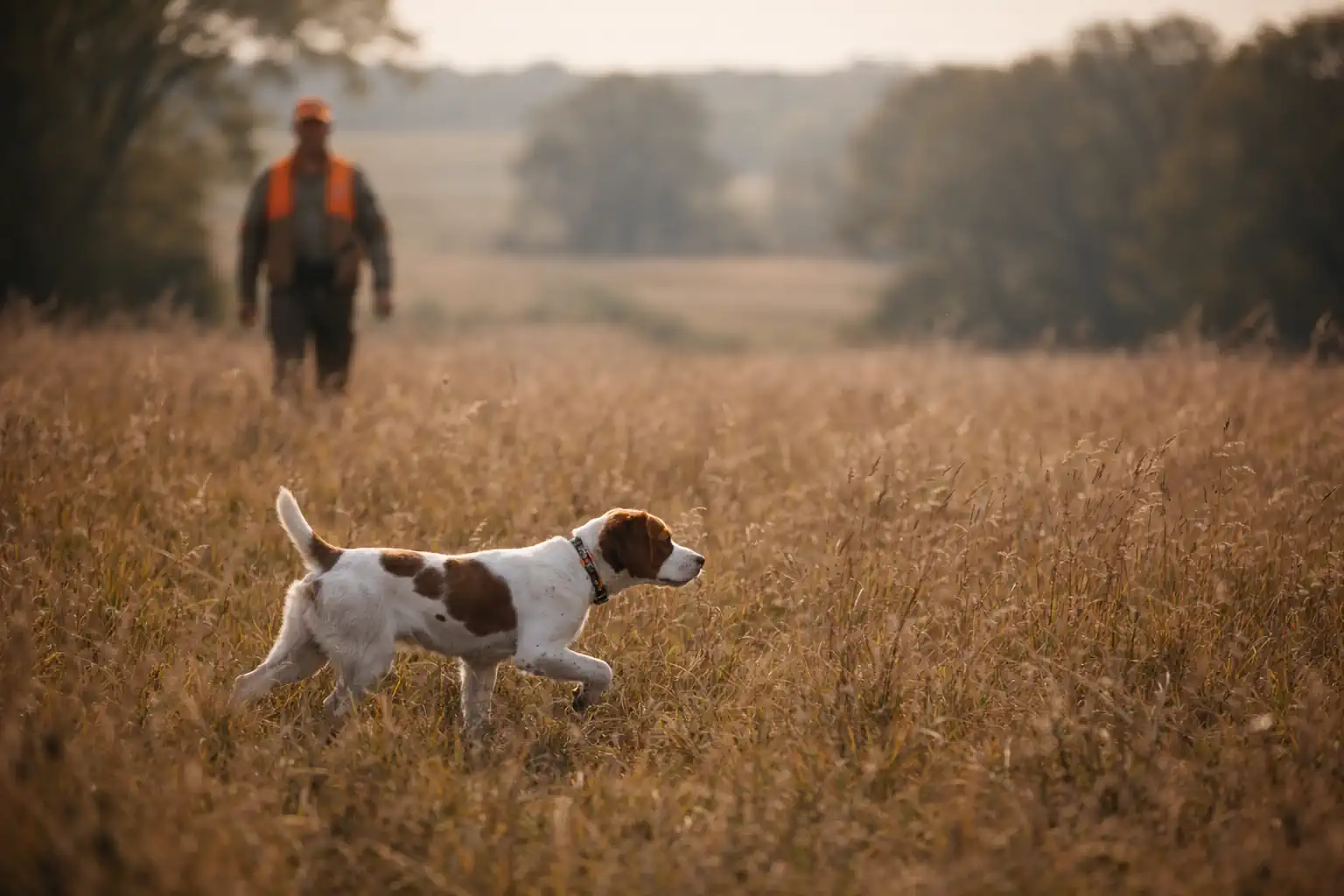
The Honest Question
Force-fetch — also called trained retrieve — is one of the most debated subjects in pointing dog training. Ask five experienced handlers whether a pointing dog needs it and you will get five different answers, all delivered with complete confidence.
The disagreement is partly semantic and partly real. What most people are actually asking is this: does my dog need to be force-fetched to be a useful hunting companion? And the honest answer is: it depends on what your dog does naturally, what hunting you are doing, and what retrieval problems you are willing to live with.
This article is not going to tell you force-fetch is mandatory or that it is cruel. It is going to explain what it is, when it solves real problems, when alternatives are sufficient, and how it fits into a pointing dog's training sequence.
What Force-Fetch Actually Is
Force-fetch is a systematic training program that teaches a dog to pick up and hold an object on command, reliably, under any condition and without choice. The result is a retrieve that the dog performs not because it feels like it, but because the behavior is as trained and reliable as a sit or a heel.
The program traditionally uses a combination of ear pinch or toe hitch — mild, controlled discomfort — to create an escape-based learning loop: pick up the bumper and the pressure stops. Done correctly and patiently, the dog learns quickly that picking up and holding the object makes life comfortable again. The discomfort is low-level and brief. The goal is not punishment — it is the creation of a conditioned, voluntary behavior that generalizes across contexts.
Modern trainers also complete this process using e-collar at low levels, which allows more precise timing and reduces the handling required for ear pinch. Both methods work. Both require the handler to understand what they are doing before they start.
What force-fetch is not: a punishment for a dog that doesn't retrieve. Applying it to a dog that is afraid of birds, lacks bird drive, or has other foundational gaps will not solve those problems and may create new ones.
When a Natural Retrieve Is Enough
A large number of pointing dogs — particularly Brittanys, English Cockers, and many individual Pointers and Setters — retrieve naturally and with enthusiasm. For these dogs, all that is needed is encouragement and a little shaping: reward the dog for bringing the bird back, keep early sessions short and fun, and never punish a dog for dropping a bird or not completing a retrieve in the early months.
If your dog consistently picks up dead birds and brings them within reach — even if delivery is loose rather than to-hand — and does so reliably across different bird species and hunting conditions, you likely do not need force-fetch. The natural retrieve, polished with repetition, will serve most upland hunters fine.
This is especially true if you hunt with one dog in accessible cover where a bird runner or a cripple can be quickly tracked by the dog and found on its own initiative. A hunting companion that enthusiastically retrieves most birds to foot — even if not every time to hand — handles the practical job for most upland hunters.
Where Natural Retrieve Breaks Down
The natural retrieve is not a trained behavior. It is a predatory drive expression that depends on the dog feeling like retrieving. That creates specific points of failure.
Hard Mouth
Some dogs bite down on birds excessively — chewing or crushing them rather than carrying them. This may start mild and worsen with experience if the dog learns it can eat or kill birds at will. A trained retrieve teaches a dog to hold an object gently and consistently, which directly addresses hard mouth when the program includes hold training before the fetch.
Drop on Delivery
A dog that picks up a bird and then drops it ten feet in front of the hunter is common in natural retrievers. The dog has completed what instinct requires — found and carried the bird — and has no trained obligation to complete the delivery. Force-fetch, combined with hold and come-in drills, creates a reliable finish: pick up, carry, deliver to hand, hold until released.
Refusals and Selective Retrieving
Some dogs retrieve enthusiastically on birds they find exciting — say, quail — but refuse or are reluctant on others: pheasants with spurs, ducks in cold water, cripples that fight back. A trained retrieve removes the variable of mood. The dog picks up what it is sent for, regardless of what the bird is doing.
Competition and Hunt Tests
If you run your dog in AKC or NAVHDA events, a reliable and stylish retrieve to hand may be scored. Natural retrievers often pass early stakes. At higher levels — NAVHDA Utility, for instance — a trained, consistent delivery matters more. Force-fetch is almost universal among dogs competing at that level.
Alternatives Before Committing to Force-Fetch
Before entering a full force-fetch program, there is a middle path worth exploring: play retrieve building combined with structured hold training.
Play retrieve building means starting with the dog's highest-value object — whatever it most wants to carry — and shaping the retrieve from pick up through delivery. Short sessions, high reward, no pressure. You are building a habit and a positive association with the retrieve act itself. Many dogs with sloppy natural retrieves improve significantly through this method alone.
Hold training teaches the dog to hold an object in its mouth without chewing or dropping, released only on command. You start with a comfortable dumbbell or canvas bumper, reward the hold, and extend the duration over sessions. This alone fixes many drop-on-delivery issues without formal force-fetch.
If these methods produce consistent results on your specific problems, force-fetch is not necessary. If they produce partial improvement that regresses under real hunting conditions — live birds, cover, excitement — force-fetch is probably the right next step.
Where Force-Fetch Fits in the Training Sequence
Force-fetch is not a puppy exercise. It should not be started until the dog has solid foundational obedience — sit, here, heel, whoa — and has real bird experience behind it. Most trainers wait until the dog is at least a year old, and many prefer to wait until after a first season of bird work so the dog's bird drive and point behavior are established before introducing a program that involves pressure.
The sequence matters for a specific reason: a dog that is force-fetched before it has had positive bird exposure can develop associations between pressure and birds. That is how you create a retrieve-reluctant pointing dog, or worse, begin the path toward blinking. Bird work should feel good to the dog. Training programs that involve pressure belong later, after that foundation is solid.
A reasonable sequence for a pointing dog that needs force-fetch looks like this: foundational obedience, first bird work and field introduction, natural retrieve encouragement through the first season, then force-fetch program in the off-season after year one, followed by re-introduction to birds with the new trained retrieve integrated.
Should You Do It Yourself or Use a Trainer?
Force-fetch done well is methodical and patient. Done poorly — rushed, too harsh, or applied to the wrong problem — it can damage a dog's willingness and create a different kind of retrieve failure. If you have never done it before and are working on a dog you care about, getting at least one session with a trainer who has completed the program many times is worth the cost.
That said, many handlers successfully force-fetch their own dogs using detailed written programs or video resources. The skill ceiling is not as high as the debate around the topic suggests. What matters is understanding each phase — fetch, hold, carry, deliver — and progressing only when the current phase is solid, not when the calendar says it has been long enough.
FAQ
Does every pointing dog need force-fetch?
No. A pointing dog with a reliable, enthusiastic natural retrieve that delivers to foot or to hand consistently does not need force-fetch to be a useful hunting dog. Force-fetch solves specific problems — hard mouth, drop on delivery, refusals, selective retrieving — that not every dog has.
At what age should I start force-fetch on a pointing dog?
Most trainers start no earlier than twelve months and many prefer to wait until after a full first season of bird work — so closer to eighteen months. The dog needs foundational obedience and established bird drive before entering the program. There is no advantage to rushing it.
Will force-fetch ruin my dog's bird drive or pointing instinct?
Not if it is done correctly and at the right time. Force-fetch is conducted on dummies and dead birds away from field bird-work sessions. A dog that has strong bird drive coming in will keep that drive. The risk is when force-fetch is introduced before bird work is established, or when the program involves pressure near live bird work.
What is the difference between force-fetch and hold training?
Hold training teaches the dog to hold an object in its mouth without dropping or chewing. Force-fetch extends that to include the fetch command itself — picking up an object on command from the ground. A complete force-fetch program includes fetch, hold, carry, and delivery as distinct phases.
Can I use play retrieve to replace force-fetch entirely?
For some dogs, yes. If play retrieve building produces consistent, reliable delivery to hand across all conditions and bird types, it has effectively done the job. For dogs where the natural retrieve is intermittent, degrades under pressure, or shows hard mouth, play retrieve alone is unlikely to hold up.
My pointing dog points great but won't retrieve at all — is force-fetch the answer?
Not necessarily the first answer. A dog with no retrieve drive should first be evaluated for whether retrieve is actually important for how you hunt. Many hunters use a pointing dog purely as a finding and locating tool and handle dead bird recovery themselves or with a separate dog. If you want a complete gun dog that retrieves reliably, force-fetch can install that behavior — but set realistic expectations for the timeline and be prepared for the work involved.
Frequently asked questions
Does every pointing dog need force-fetch?
No. A pointing dog with a reliable, enthusiastic natural retrieve that delivers to foot or to hand consistently does not need force-fetch to be a useful hunting dog. Force-fetch solves specific problems — hard mouth, drop on delivery, refusals, selective retrieving — that not every dog has.
At what age should I start force-fetch on a pointing dog?
Most trainers start no earlier than twelve months and many prefer to wait until after a full first season of bird work — so closer to eighteen months. The dog needs foundational obedience and established bird drive before entering the program. There is no advantage to rushing it.
Will force-fetch ruin my dog's bird drive or pointing instinct?
Not if it is done correctly and at the right time. Force-fetch is conducted on dummies and dead birds away from field bird-work sessions. A dog that has strong bird drive coming in will keep that drive. The risk is when force-fetch is introduced before bird work is established, or when the program involves pressure near live bird work.
What is the difference between force-fetch and hold training?
Hold training teaches the dog to hold an object in its mouth without dropping or chewing. Force-fetch extends that to include the fetch command itself — picking up an object on command from the ground. A complete force-fetch program includes fetch, hold, carry, and delivery as distinct phases.
Can I use play retrieve to replace force-fetch entirely?
For some dogs, yes. If play retrieve building produces consistent, reliable delivery to hand across all conditions and bird types, it has effectively done the job. For dogs where the natural retrieve is intermittent, degrades under pressure, or shows hard mouth, play retrieve alone is unlikely to hold up.
My pointing dog points great but won't retrieve at all — is force-fetch the answer?
Not necessarily the first answer. A dog with no retrieve drive should first be evaluated for whether retrieve is actually important for how you hunt. Many hunters use a pointing dog purely as a finding and locating tool and handle dead bird recovery themselves or with a separate dog. If you want a complete gun dog that retrieves reliably, force-fetch can install that behavior — but set realistic expectations for the timeline and be prepared for the work involved.