Bird Dog Heat Exhaustion: How to Recognize It, Stop It, and Prevent It
· 8 min read · HuntWithDog
Heat exhaustion can kill a bird dog in minutes. Learn how to recognize the early signs, what to do in a field emergency, and how to make smart decisions on hot hunting and training days.
On this page
- Why Heat Kills Fast in Pointing Dogs
- Heat Exhaustion vs. Heat Stroke: The Difference Matters
- Early Warning Signs in the Field
- Early signs (act now)
- Serious signs (emergency response immediately)
- Field Emergency Response Step by Step
- Cooling steps in order
- What to Carry in the Field
- Prevention and Field Decision-Making
- Before you go
- During the hunt
- After a Hot Day in the Field
- FAQ
- At what temperature is it too hot to run a bird dog?
- Can I use ice water to cool a dog in a heat emergency?
- Is a dog that recovered from heat exhaustion more vulnerable in the future?
- How much water does a working bird dog need?
- What does a dog's gum color tell me in the field?
- Should I cancel a training session if it looks hot but the dog seems fine at the start?
Why Heat Kills Fast in Pointing Dogs
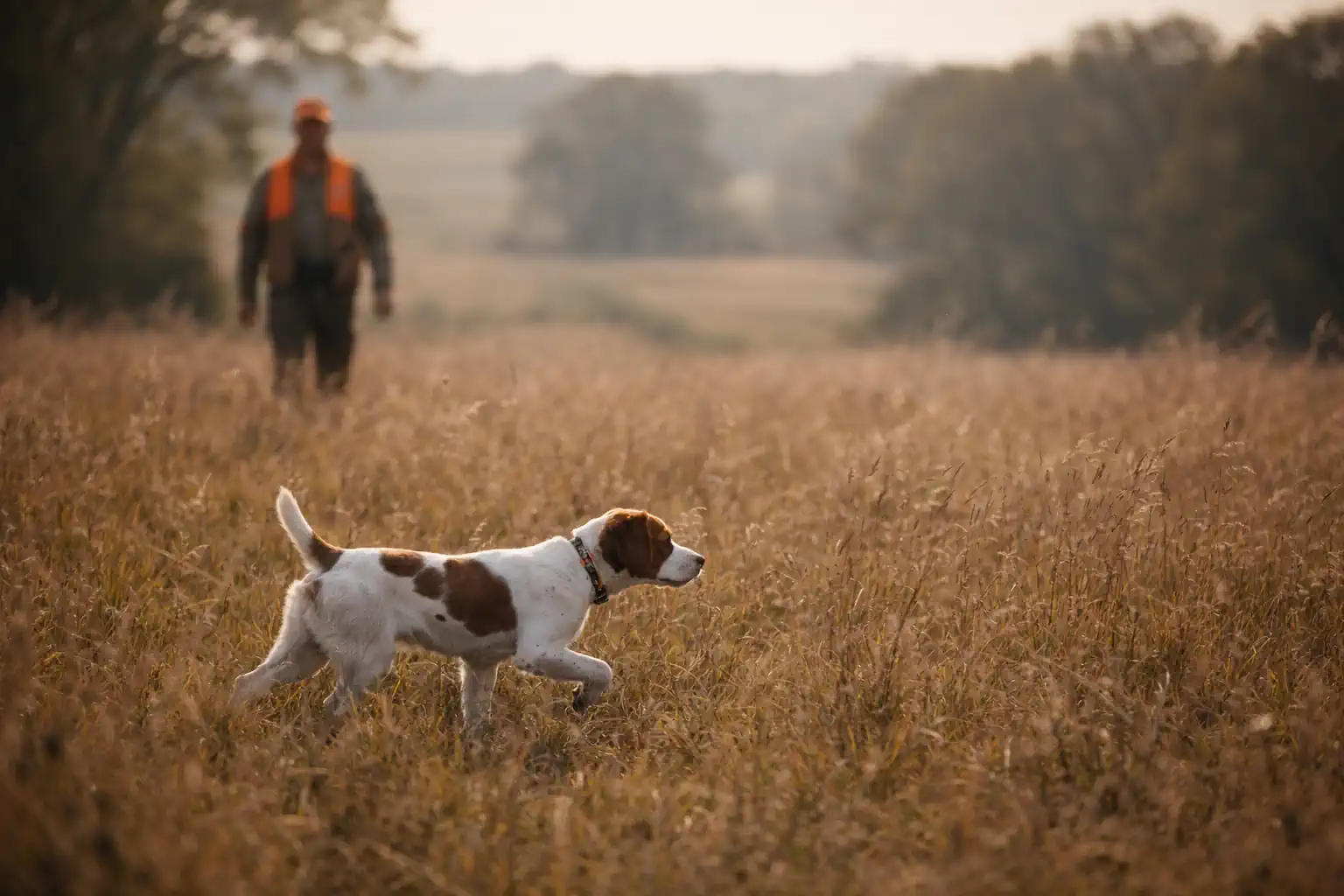
A bird dog running hard through cover in warm weather can go from fine to critical in under twenty minutes. That is not an exaggeration. Pointing breeds — Brittanys, German Shorthaired Pointers, English Setters, Vizslas, English Pointers — are built for sustained, high-output work. When the temperature rises and humidity stays up, their bodies generate heat faster than panting can dissipate it. Unlike humans, dogs cannot sweat through their skin. Their only real cooling mechanism is panting, and when core temperature climbs faster than the pant can compensate, the system goes into failure.
Heat exhaustion is not just a theoretical risk for early-season hunters or summer trainers. It happens to experienced handlers with fit dogs on days that feel manageable. The problem is that a driven bird dog will not self-regulate. A dog locked on bird scent will run until it collapses. Recognizing the warning signs, carrying what you need, and making good decisions before things go wrong is part of responsible field work.
This article covers the difference between heat exhaustion and heat stroke, how to recognize trouble early, what to do in the field when a dog goes down, and the practical steps that prevent the emergency from starting.
Heat Exhaustion vs. Heat Stroke: The Difference Matters
Heat exhaustion is the earlier stage. The dog is overheated and struggling, but the body's compensatory systems are still active. Heat stroke means internal temperature has climbed so high — generally above 104–106°F (40–41°C) in dogs — that organs begin to suffer damage. Heat stroke is a veterinary emergency with a real fatality risk. Heat exhaustion, caught early, is manageable in the field. The boundary between the two can pass in minutes.
You cannot tell a dog's core temperature by looking at it. You can only read behavioral and physical signals and act before you need a thermometer. The time to act is at the first signs, not after the dog stops moving.
Early Warning Signs in the Field
Learn the sequence, not just the individual signals. By the time you see multiple signs together, you are already behind. React at the first one.
Early signs (act now):
- Excessive, rapid panting that seems out of proportion to the work being done
- Slowing down noticeably, moving with less drive than usual
- Seeking shade, lying down on their own without being called in
- Bright red gums or tongue — normal is pale pink; red or dark red is a warning
- Thick, ropy saliva instead of thin, watery drool
- Stumbling, weaving, or a gait that looks uncoordinated
Serious signs (emergency response immediately):
- Vomiting or diarrhea in the field
- Glazed or unfocused eyes
- Muscle tremors
- Collapsing or inability to stand
- Loss of responsiveness to voice or touch
If you see any of the serious signs, stop the hunt, begin cooling immediately, and get the dog to a veterinarian as fast as possible. Do not wait to see if the dog improves on its own.
Field Emergency Response Step by Step
The goal of field cooling is to lower core temperature without shocking the system. Cold water applied correctly buys time; it is not a substitute for veterinary care when the dog is showing serious signs.
Cooling steps in order:
- Stop all work immediately. Call the dog in or go to it. Do not let it keep moving.
- Move to shade. Direct sun accelerates heat retention. Get the dog out of it.
- Apply cool water — not ice water. Wet the paws, armpits, groin, and back of the neck first. These areas have good blood flow near the surface. A wet cloth on the ear flaps also helps. Avoid packing ice directly on the dog — sudden extreme cold can cause peripheral vasoconstriction, trapping heat in the core.
- Encourage slow drinking if the dog is alert and can swallow. Small amounts, not large gulps. A dog that is disoriented or vomiting should not be given water by mouth — aspiration risk.
- Fan the wet dog. Evaporative cooling is more effective than just wetting the coat. Use your hat, vest, or anything available.
- Check gum color every two minutes. Gums returning to normal pink is a good sign. Gums staying red or turning pale/white is serious — move faster toward a vet.
- Transport prone in your vehicle with air conditioning running. If the dog can walk, help it into the vehicle. Do not let it keep moving under its own power.
Even if the dog appears to recover fully in the field, a same-day veterinary check is the right call after any heat emergency. Internal damage from heat stroke can be present without outward signs, and a veterinarian can assess organ function, hydration status, and whether further treatment is needed. This is not overcaution — it is what responsible ownership looks like.
What to Carry in the Field
You cannot cool a dog without water. This sounds obvious, but it is the single most common failure point. Hunters carry water for themselves and leave the dog dependent on finding a stream or puddle that may not exist in the terrain they are hunting.
Minimum field kit for any hot-weather outing:
- Water. More than you think you need. A hard-working pointing dog in summer heat can need 8–16 oz every 20–30 minutes of active work. Carry a collapsible bowl.
- A wet cloth or small towel. Useful for direct application to high-blood-flow areas and ear cooling.
- Knowledge of the nearest veterinary clinic. Find it before you go. Cell signal may not exist where you hunt. Know the route.
Some hunters carry a rectal thermometer for remote trips. A reading above 104°F warrants stopping; above 106°F is critical. In practice, most hunters read the dog's behavior and gum color rather than taking a temperature, but for a dog with known heat sensitivity the thermometer is a useful tool.
Prevention and Field Decision-Making
The cleanest outcome is not managing a heat emergency — it is not having one. Most heat emergencies in bird dogs are preventable with better decision-making before and during the hunt.
Before you go:
- Check the temperature and humidity together. A 75°F day with 85% humidity is more dangerous than an 85°F day with 30% humidity. Heat index — the combination of temperature and moisture — is the number to care about. Dogs cool by evaporating moisture from their airways; high humidity prevents that evaporation.
- Know your dog's individual risk factors. Short-nosed breeds have more restricted airways and less cooling efficiency. Overweight dogs retain heat. Older dogs and very young dogs are more vulnerable. A dog that had a prior heat emergency is more susceptible to future ones.
- Schedule early morning or evening sessions in warm months. The ground radiates stored heat in the afternoon. Morning air is cooler, humidity typically lower, and the dog starts fresh. In September and October in the South, this scheduling decision alone prevents most heat emergencies.
During the hunt:
- Water breaks on a schedule, not on demand. A dog in full drive will not stop to drink. You enforce the break. Every 20–25 minutes of hard work in warm conditions is a reasonable baseline. Offer water; do not force large volumes.
- Watch the dog's pace. A dog that starts to move differently — slower casts, less urgency, lower head carriage — is telling you something. Those changes precede visible distress. Respond to them.
- Use terrain to your advantage. Hunt draws, creek bottoms, and shaded edges in the middle of the day. Open dry-grass flats in full August sun are the worst possible combination.
- Be willing to end the hunt. This is the decision most hunters resist. The birds will be there another day. The dog does not understand that the work is optional. Making the call to stop — before any visible distress, just because the conditions say to — is the clearest expression of putting the dog first.
After a Hot Day in the Field
Recovery matters as much as what happens in the field. A dog that worked hard in heat needs time and access to cool water before being crated or loaded for a long drive. Body temperature continues to drop over 20–30 minutes after work stops — giving the dog this cooling period before confining it in a crate inside a hot vehicle is important. Crates in closed vehicles can reach lethal temperatures within minutes, even on mild days. Park in shade, crack windows, or use a battery fan. Never leave a dog in a closed vehicle in warm weather, even briefly.
A dog that returns from a hot day should have continued access to water for several hours. Eating a full meal immediately after heavy exertion in heat is not ideal — a small amount is fine, but the priority is rehydration first. Watch for any delayed symptoms — vomiting, lethargy, or loss of appetite over the next 12–24 hours can indicate lingering effects that need veterinary attention.
FAQ
At what temperature is it too hot to run a bird dog?
There is no single safe temperature cutoff because humidity changes the risk significantly. As a practical starting point, many experienced handlers limit hard field work when the heat index — temperature and humidity combined — exceeds 80–85°F. Above 90°F heat index, short sessions with frequent water and shade breaks are the responsible approach. Above 95°F heat index, resting the dog is almost always the right answer.
Can I use ice water to cool a dog in a heat emergency?
Cool water — from a tap, cooler, or stream — is what to use. Ice-cold water or ice packs applied directly can cause blood vessels near the skin to constrict, which actually traps heat in the core longer. The goal is steady, progressive cooling. Cool water moving over high-blood-flow areas (armpits, groin, neck) is more effective than extreme cold applied to the coat surface.
Is a dog that recovered from heat exhaustion more vulnerable in the future?
Yes. A prior heat emergency, especially heat stroke, can damage the body's temperature regulation mechanisms. Dogs that have had a serious heat episode often have reduced heat tolerance for months or permanently. If your dog has had a heat-related emergency, discuss this with your veterinarian before returning to field work, and manage conditions more conservatively than you did before.
How much water does a working bird dog need?
Active field work in warm conditions typically requires 8–16 oz every 20–30 minutes for a medium-to-large pointing dog. This varies with the dog's size, the temperature, the terrain, and how hard it is running. Err toward offering more, not less. A dog that is well-hydrated at the start of a session handles heat far better than one that began mildly dehydrated from the drive out.
What does a dog's gum color tell me in the field?
Pale pink is normal. Bright red gums in a working dog typically indicate elevated body temperature and early heat stress — time to stop and begin cooling. Very pale, white, or grayish gums suggest circulatory failure and are a serious emergency. Dark purple or blue gums indicate oxygen deprivation and require immediate emergency veterinary care. Making a habit of checking your dog's gums at rest and during work helps you recognize your individual dog's normal baseline.
Should I cancel a training session if it looks hot but the dog seems fine at the start?
The conditions matter more than the dog's attitude at the start. A bird dog will always look eager and ready — that is not useful information when you are assessing heat risk. Make the call based on the heat index, time of day, humidity, and terrain, not on whether the dog is bouncing at the truck. If the conditions are marginal, shorten the session, increase water breaks, and watch the dog closely rather than running a full training day.
Frequently asked questions
At what temperature is it too hot to run a bird dog?
There is no single safe temperature cutoff because humidity changes the risk significantly. Many experienced handlers limit hard field work when the heat index exceeds 80–85°F. Above 90°F heat index, short sessions with frequent water and shade breaks are the responsible approach. Above 95°F heat index, resting the dog is almost always the right answer.
Can I use ice water to cool a dog in a heat emergency?
Cool water is what to use, not ice-cold water. Ice water applied directly can cause blood vessels near the skin to constrict, trapping heat in the core longer. Use cool water over high-blood-flow areas — armpits, groin, neck — for steady, progressive cooling.
Is a dog that recovered from heat exhaustion more vulnerable in the future?
Yes. A prior heat emergency, especially heat stroke, can damage the body's temperature regulation mechanisms. Dogs that have had a serious heat episode often have reduced heat tolerance for months or permanently. Discuss this with your veterinarian before returning to field work.
How much water does a working bird dog need?
Active field work in warm conditions typically requires 8–16 oz every 20–30 minutes for a medium-to-large pointing dog. This varies with size, temperature, terrain, and intensity of work. A dog that is well-hydrated at the start handles heat far better than one that began mildly dehydrated from the drive out.
What does a dog's gum color tell me in the field?
Pale pink is normal. Bright red gums indicate elevated body temperature and early heat stress — stop and begin cooling. Very pale, white, or grayish gums suggest circulatory failure and are a serious emergency. Making a habit of checking your dog's gums at rest helps you recognize your individual dog's baseline.
Should I cancel a training session if it looks hot but the dog seems fine at the start?
The conditions matter more than the dog's attitude at the start. A bird dog will always look eager and ready. Make the call based on the heat index, time of day, humidity, and terrain. If the conditions are marginal, shorten the session, increase water breaks, and watch the dog closely rather than running a full training day.