Best States for Pheasant Hunting in America
· 10 min read · HuntWithDog
A current 2026 comparison of five strong pheasant destinations, with official season dates, access programs, population signals, and bird-dog considerations.
On this page
- 2026 pheasant-state comparison
- South Dakota: the most established pheasant destination
- North Dakota: strong 2026 survey numbers and room to move
- Kansas: a favorable 2026 habitat story
- Nebraska: excellent mapping and access for a DIY trip
- Montana: more scouting, broader upland opportunity
- How to choose the right state for you and your dog
- 1. Choose access before reputation
- 2. Match cover to the dog you actually own
- 3. Pick a season window, not just an opening day
- 4. Build backup areas every day
- Pointing-dog strategy for pheasant trips
- Bottom line
- 2026 sources and regulation links
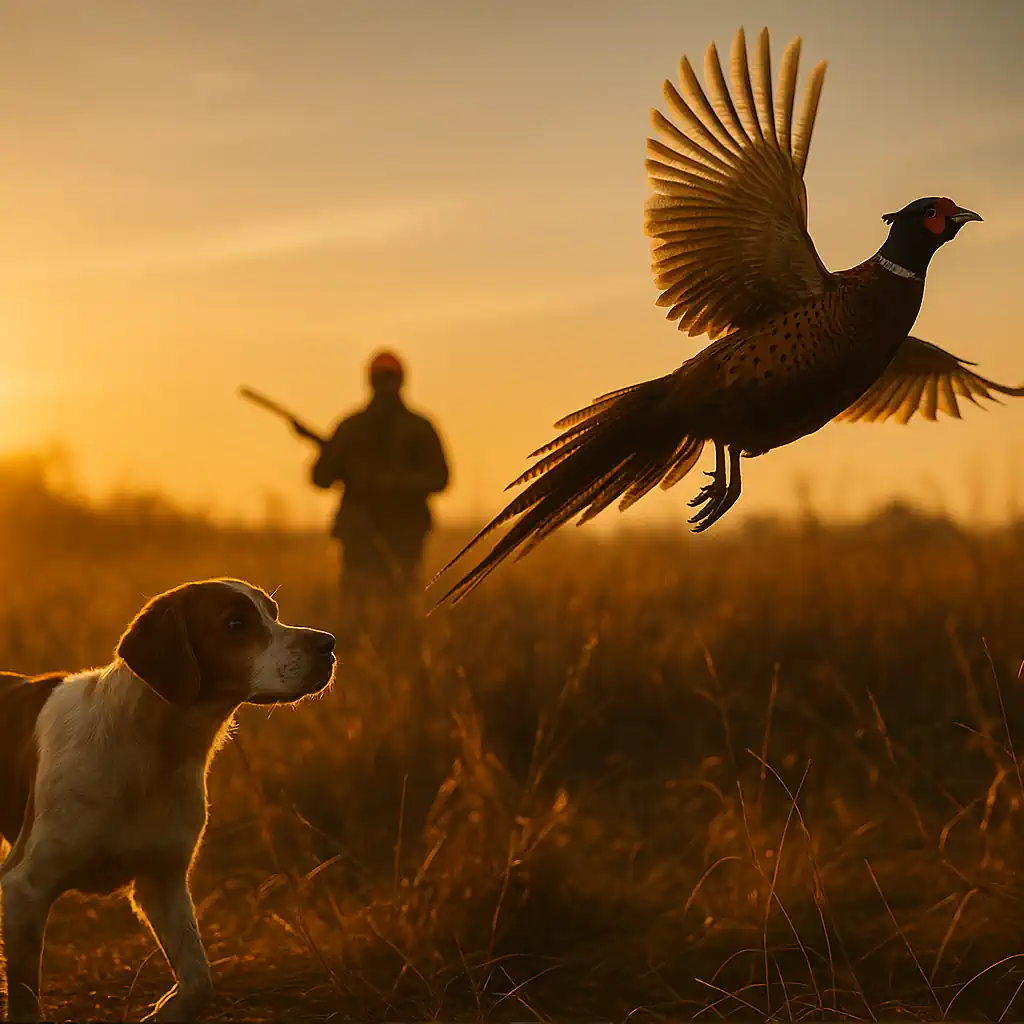
If you are planning a pheasant trip for the 2026 season, there is no single state that wins for every hunter. South Dakota offers the most established destination experience, North Dakota combines strong current bird numbers with big-country hunting, Kansas pairs long tradition with a favorable 2026 habitat outlook, Nebraska has unusually useful walk-in access, and Montana rewards hunters willing to scout a more spread-out resource.
The better question is not simply "Where are the most pheasants?" It is "Which state fits my dog, my tolerance for pressure, the amount of scouting I can do, and the access I can realistically hunt?" This guide uses current 2026 agency dates and access information plus the latest Pheasants Forever forecast available as of September 22, 2026.
2026 pheasant-state comparison
| State | 2026–27 regular season | Current signal | Public-access angle | Good fit for |
|---|---|---|---|---|
| South Dakota | Oct. 17–Jan. 31 | Cautiously optimistic; strong recent harvest | Walk-In Areas plus state/federal ground | Hunters wanting a proven pheasant destination |
| North Dakota | Oct. 10–Jan. 3 | Roadside survey up from 2025; west-central strong | PLOTS, WMAs, other public lands | Mobile hunters with dogs comfortable in big country |
| Kansas | Nov. 14–Jan. 31 | Wet year and strong habitat; 2026 outlook positive | WIHA plus public lands | Hunters who can scout western and central regions |
| Nebraska | Oct. 31–Jan. 31 | Regional, not uniform; southwest and Panhandle worth watching | More than 1.3 million publicly accessible acres statewide | DIY hunters who value mapped walk-in access |
| Montana | Oct. 10–Jan. 1 | More localized pheasant opportunity | About 6.8 million acres in 2026 Block Management | Hunters mixing pheasants with broader upland opportunity |
Important: regulations, access rules, closures, and property enrollment can change. Use the linked state agency pages immediately before travel rather than treating a planning article as a regulation book.
South Dakota: the most established pheasant destination
South Dakota remains the easiest state to recommend when the trip itself is centered on pheasants. The state reports a 2026 traditional season from October 17 through January 31, with a daily limit of three rooster pheasants. Shooting hours during the traditional season begin at 10 a.m. Central Time.
The current Pheasants Forever 2026 forecast describes the state as cautiously optimistic after a mild winter and warm, dry spring. The same forecast notes that hunters harvested more than 1.35 million roosters in 2025. That does not mean every county will hunt equally well, but it is a useful indicator of the scale of the resource.
For a dog handler, South Dakota's appeal is variety: grass, CRP-type cover, crop edges, cattail sloughs, shelterbelts, and late-season concentrations can all require different range and relocation decisions. Walk-In Areas are privately owned lands leased by South Dakota Game, Fish and Parks for public hunting, and the state also has other public and leased access.
Dog note: do not judge a pointing dog only by how far it ranges here. In open grass a wider cast can be useful; in narrow shelterbelts or around roads, tighter handling is safer. Running roosters can also force a dog to relocate rather than hold a picturesque point forever.
North Dakota: strong 2026 survey numbers and room to move
North Dakota's regular 2026 pheasant season is finalized for October 10 through January 3. The state's 2026 hunting outlook says preliminary late-summer brood counts pointed to a similar number of adult birds and somewhat more juveniles than 2025, with the west-central region expected to offer some of the better opportunities.
Pheasants Forever's 2026 forecast adds a useful statewide number: 79 pheasants per 100 survey miles, up 8 percent from 2025. Roadside counts are not a promise about a specific parcel, but they are much more useful than generic claims that a state simply has "lots of birds."
North Dakota's PLOTS program opens enrolled private land to public hunting, but nonresident hunters need to know an important first-week restriction: during the first seven days of pheasant season, nonresidents may not hunt game on North Dakota Game and Fish Department wildlife management areas or Conservation PLOTS areas, except PLOTS land they own. That rule can materially change an opening-week trip plan.
Dog note: be prepared to move. Large landscapes can look perfect and still be empty because weather, harvest, grazing, or local production shifted birds. A GPS tracking collar can be valuable for location awareness in big cover, but it does not replace recall or road awareness.
Kansas: a favorable 2026 habitat story
Kansas opens its 2026–27 regular pheasant and quail season November 14 and runs it through January 31. The Kansas Department of Wildlife and Parks lists a daily pheasant limit of four cocks.
The 2026 Pheasants Forever forecast is notably positive on habitat. After several drought years, repeated summer rainfall improved cover across much of the state. The forecast quotes the organization's Kansas coordinator expecting bird numbers to be consistent with or higher than last season overall, while still warning that local conditions vary. Western Kansas remains the core pheasant region, with central Kansas also worth attention.
Kansas is especially practical for DIY hunters because of its Walk-In Hunting Access program. Do not assume every WIHA parcel is pheasant cover, though. The highest-value scouting question is what the ground looks like now: nesting cover, crop edges, food, escape cover, grazing pressure, and recent weather matter more than the fact that a parcel is colored on a map.
Dog note: wind is often part of the hunt. Work crosswind when practical so a pointing dog can sample cover efficiently, but adjust for roads, property edges, and other hunting parties before worrying about textbook patterns.
Nebraska: excellent mapping and access for a DIY trip
Nebraska's ring-necked pheasant season runs October 31 through January 31 in 2026–27. The state is also celebrating its 100th pheasant season.
The most compelling reason to consider Nebraska is not a claim that it has more pheasants than the Dakotas. It is access. The 2026–27 Public Access Atlas identifies more than 1.3 million acres of publicly accessible land statewide. Nebraska Game and Parks also reported more than 471,000 acres of private land enrolled in Open Fields and Waters, its walk-in access program.
The 2026 pheasant picture is regional. Pheasants Forever's forecast describes statewide conditions as mixed but points to stronger recent survey signals in parts of the southwest and Panhandle. That makes Nebraska a scouting state: use the atlas to build several backup areas instead of committing the entire trip to one county.
Dog note: Nebraska can shift quickly from open prairie to crop edges, rough draws, and shelterbelts. A dog that changes range with cover is more useful than one trained to maintain a single distance everywhere.
Montana: more scouting, broader upland opportunity
Montana's general 2026 ring-necked pheasant season is October 10 through January 1. Montana Fish, Wildlife & Parks also notes that nonresidents hunting public land and private land in a hunting-access program begin hunting most upland species 10 days later than residents, so nonresident trip dates need an extra regulation check.
Pheasants are more localized in Montana than in South Dakota, but the access system is substantial. For 2026, Montana's Block Management program has about 1,200 participating landowners and approximately 6.8 million enrolled acres. Block Management provides free public hunting access to participating private lands, with property-specific rules and sign-in procedures.
Montana makes particular sense for a hunter who values a broader upland trip rather than a pheasant-only scoreboard. Depending on region and season, pheasants may overlap a trip focused on sharp-tailed grouse or Hungarian partridge.
Dog note: big country magnifies weaknesses in conditioning, recall, and location awareness. Build the dog for the actual mileage and terrain before the trip rather than expecting the first hunting day to create fitness.
How to choose the right state for you and your dog
1. Choose access before reputation
A famous state does not help if your realistic options are overcrowded or inaccessible. Download current access maps, identify several clusters of ground, and understand whether permission, sign-in, reservations, or nonresident restrictions apply.
2. Match cover to the dog you actually own
A close, cooperative Brittany can be excellent in smaller parcels and broken cover. A bigger-running dog may shine in broad prairie if recall and location awareness are reliable. Neither style is automatically better; the ground decides what is useful.
3. Pick a season window, not just an opening day
Opening weekends can offer fresh birds but more pressure. Later trips can mean educated roosters, colder weather, denser escape cover, and shorter daylight. Choose the tradeoff that suits your dog and your experience.
4. Build backup areas every day
Weather, crop harvest, grazing, road conditions, and hunting pressure can change a parcel overnight. A productive traveling hunter spends as much time building options as choosing a state.
Pointing-dog strategy for pheasant trips
- Hunt the wind, but never at the expense of safe gun handling or property boundaries.
- Expect roosters to run. Give an experienced dog room to relocate rather than constantly calling it off moving scent.
- Use edges intelligently: grass-to-crop transitions, shelterbelts, cattail margins, and changes in cover often concentrate travel.
- Carry water for the dog even in cool weather and monitor workload during warm early-season days.
- Check paws and eyes after abrasive stubble, burrs, cattails, and heavy grass.
- Use blaze orange and maintain clear shooting zones when hunting with partners and dogs.
Bottom line
For a first dedicated pheasant trip, South Dakota is still the most straightforward place to start. North Dakota has one of the strongest current 2026 survey signals. Kansas has a favorable habitat story and a long regular season. Nebraska stands out for mapped DIY access, while Montana offers huge access acreage and a broader mixed-upland experience. The best choice is the one where current bird information, legal access, travel logistics, and your dog's hunting style overlap.
2026 sources and regulation links
- Pheasants Forever — Pheasant Hunting Forecast 2026
- South Dakota Game, Fish and Parks — Pheasant
- South Dakota Game, Fish and Parks — 2026 Key Dates
- North Dakota Game and Fish — Pheasant Hunting
- North Dakota Game and Fish — 2026 Hunting Season Outlook
- Kansas Department of Wildlife and Parks — When to Hunt
- Nebraska Game and Parks — 2026 Upland Season Dates
- Nebraska Game and Parks — 2026–27 Public Access Atlas
- Montana FWP — Upland Game Bird Regulations
- Montana FWP — Block Management
Frequently asked questions
What is the best state for pheasant hunting in 2026?
There is no single best state for every hunter. South Dakota is the most established destination; North Dakota has a strong 2026 survey signal; Kansas has favorable habitat conditions; Nebraska offers excellent mapped access; and Montana works well for hunters who want a broader mixed-upland trip.
When does South Dakota pheasant season open in 2026?
South Dakota's traditional pheasant season opens October 17, 2026 and runs through January 31, 2027. Check South Dakota Game, Fish and Parks immediately before hunting for current regulations and area-specific rules.
When does North Dakota pheasant season open in 2026?
North Dakota's regular pheasant season opens October 10, 2026 and closes January 3, 2027. Nonresidents should review the first-seven-days restriction on state wildlife management areas and Conservation PLOTS.
When does Kansas pheasant season open in 2026?
Kansas' regular pheasant and quail season opens November 14, 2026 and runs through January 31, 2027. The Kansas Department of Wildlife and Parks lists a daily pheasant limit of four cocks.
Which pheasant state has good public walk-in access?
Several do. South Dakota has Walk-In Areas, North Dakota has PLOTS, Kansas has WIHA, Nebraska has Open Fields and Waters plus a statewide Public Access Atlas, and Montana has Block Management. Enrollment and property-specific rules change, so use the current agency maps.
Which state is best for hunting pheasants with a pointing dog?
Match the state and cover to the dog. Open prairie may reward a wider search, while shelterbelts and smaller parcels favor tighter control. A cooperative dog that adapts range to cover is more useful than one trained to hold one fixed distance everywhere.
Are 2026 pheasant forecasts reliable enough to plan a trip?
They are useful planning evidence, not guarantees. Statewide surveys and habitat reports cannot predict a specific parcel. Combine the latest forecast with current access maps, weather, harvest, grazing, crop conditions, and local scouting.